Blog Archives
Carbon-Neutral Villages, British And Czech Alike
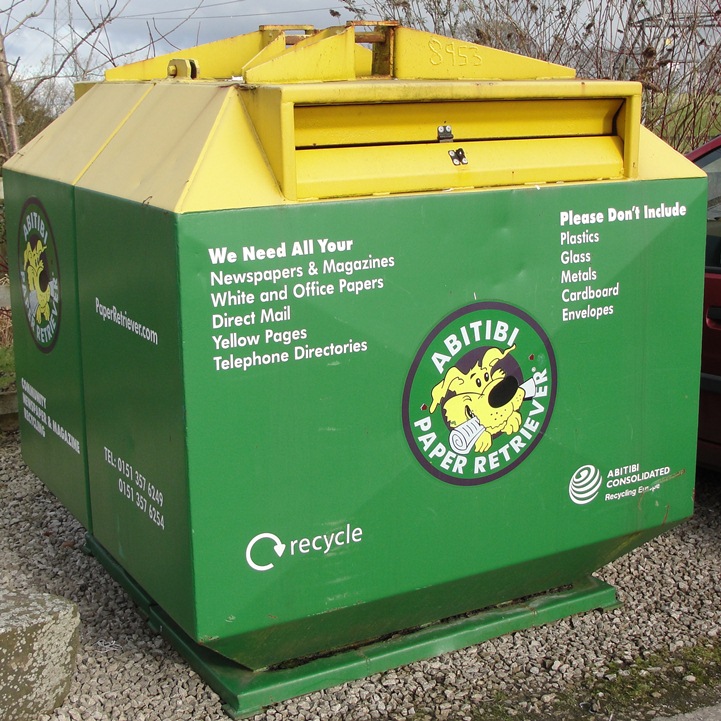 Self-sufficiency in energy is an ambition shared by many. Increasingly we are recognising that carbon-neutral living must be for real. Communities in Ashton Hayes, near Chester in the U.K., and Knezice, an hour east of Prague in the Czech Republic, provide different real-life examples of how this might be achieved.
Co-incidence or, perhaps, rather more than that? Perhaps the renewable energy agenda is at last becoming mainstream.
Liverpool Anglican Cathedral And St. James’ Cemetery And Gardens
 The Cathedral Church of Christ, Liverpool, designed by the then-22-year-old (later Sir ) Giles Gilbert Scott’s, is built on St. James’ Mount at the southerly end of Hope Street Quarter. Bishop Francis James Chavasse, second Bishop of Liverpool, decided to build it in 1901 and King Edward VII laid the Foundation Stone on 19 July 1904. The Cathedral was consecrated twenty years to the day later, but not until October 1978 did Queen Elizabeth II attend a service to mark completion of the largest of our Cathedrals in Britain. And now the civic value of St James’ Cemetery and Gardens is also recognised.

See more photos of Liverpool’s Cathedrals and celebrating communities on Hope Street here [Liverpool’s Two Cathedrals] and below….

>


>


Read more about:
Hope Street Quarter
Liverpool Cathedral
St. James’ Cemetery And Gardens
The Friends of St James’
Liverpool’s Two Cathedrals
Dame Elisabeth Frink (1930-1993; Risen Christ was installed was installed one week before Frink’s death)
Tracey Emin (b.1963; Emin’s Cathedral work, Roman Standard – or ‘bird on a stick’ – was her first public art installation; she intends to do another one for the cathedral in 2008)
See also photgraphs at
Liverpool Metropolitan Cathedral of Christ the King and
Calendar & Camera .
Liverpool’s Ancient Chapel Of Toxteth, Dingle Gaumont Cinema, The Turner Nursing Home & Dingle Overhead Railway Station
 One of Liverpool’s most significant and fascinating historic areas is barely known even by the city’s own residents; so Monday Women arranged a visit. The area lies in the heart of Toxteth – Dingle, comprising four adjacent sites: the early seventeenth century Ancient Chapel of Toxteth (the original place of worship of astronomer Jeremiah Horrox or Horrocks), the Turner Nursing Home built by Alfred Waterhouse in 1882-5, Dingle Overhead Railway Station, constructed deep underground and opened in 1896, and the Dingle Gaumont Cinema, erected on the site of the old Picturedrome in 1937.

The general perception is that Liverpool has few really serious historic sites. Interesting architecture, Yes, in abundance; ‘old’ buildings, No. On Saturday 16 November 2006 several dozen members, families and friends of Monday Women and CAMPAM set out on a beautifully sunny afternoon to discover why this perception is not always accurate.
The Ancient Chapel of Toxteth

We congregated first in the Ancient Chapel of Toxteth, opened especially for us by its warden, Annette Butler. She and local historian Christina Clarke (to both of whom we owe enormous thanks) had a remarkable tale to tell about the history of this simple and appealing building, constructed variously at times between 1604 and 1618. The Chapel is now owned, and used, by the Unitarians, but was built and developed by Puritan dissenters from the Church of England.
The site of the Chapel is that of the thirteenth century royal hunting Park in Toxteth, sold late in the sixteenth century to the Earl of Derby. He in turn sold it to Puritan families from around the Lancashire towns of Bolton and Ormskirk who were seeking more freedom of conscience in their religious practices, using a place which had been Crown property and was thus not subject to parish law or to enforcement of regular attendance at the parish church. [See: The History of the Royal and Ancient Park of Toxteth


 Even with sunshine outside, the inside of the Chapel feels dark and close (perhaps in part because the winters of the seventeenth century were bitter), the pews being closely placed, but with an appealing and open gallery area above them, and an impressively large pulpit at the centre of the south wall. Over the centuries the building itself has been considerably extended, not least to adapt the previous schoolhouse (built in 1611) into the access point for the organ loft.
In contrast to the closeness of Toxteth Chapel itself, our visit to the graveyard found it calm and airy, with dappled light through the mature trees, as we examined the columned arcade and headstones of such local luminaries as Richard Vaughan Yates , who devised Princes Park, and the cartographer Richard Horwood [A to Z of Regency London
Jeremiah Horrox or Horrocks (1618 or 1619 – 1641)
 Amongst other fascinating plaques inside the Chapel is one commemorating the brief life and momentous work of Jeremiah Horrox (as spelt on this plaque; or Horrocks as often spelt in the reference books). Horrocks was the youthful astronomer who first observed the transit of the planet Venus, on Sunday 4 December – 24 November by reference to the Julian Calendar then in use – 1639. (There is an anecdote, possibly apocryphal, that he calculated this rare occurrence and had to pre-empt much of the Curate’s duties he may have performed in Hoole, Lancashire, that day, in order to observe the transit via a telescope he constructed himself, reflecting the sun’s image onto a piece of card.) [Jeremiah Horrocks,Astonomer (1618? – 1641) and His Times: No.6 (Chorley Civic Society Occasional Papers)
Dingle’s Gaumont Cinema
 Toxteth Chapel is on the north-western corner of Park Road (running parallel to the River Mersey) and Dingle Lane (which goes from Princes Park directly towards the river). On the south-western side of this junction is a cinema now unused for its original purpose, the Gaumont, designed by W. E. Trent FRIBA, FSI (Chief Architect of Gaumont-British) specifically to accommodate the large fan-shaped curve of the roads at this corner, and opened on 29 March 1937.
The Gaumont Cinema, an art deco building erected on the site of the old Dingle Picturedrome (photo in Edwardian A-Z and Directory of Liverpool and Bootle: South Liverpool Part 3
It is said that the projection room was the first in Britain to have the Gaumont ‘projectomatic’ system which automatically changed the reels during projection of films, as well as controlling the houselights and stage curtains. There was also a Western Electric Mirrorphonic sound system.
Sadly, the Gaumont lost its originally intended function in September 1966, to become a Top Rank Bingo Club which opened in January 1967. We were not therefore able to go into the building to see more as we passed on to the south-eastern corner of this ‘site visit’ and the next venue of our Monday Women trip in November.
The Turner Nursing (or Memorial) Home
 The story behind the Turner Nursing Home is very sad, but the outcome is a testament to the positive thinking of Mrs Charles Turner, wife of the Liverpool Member of Parliament who was also first Chairman of the Liverpool Docks and Harbour Board – the tale of which Board we shall continue at the next and final stop of our Dingle-Toxteth ‘tour’. The entire Turner Memorial Home project commemorates Anne Turner’s husband Charles Turner MP (13 June 1803 – 15 October 1875) and their son Charles William (16 October 1845 – 13 September 1880), who died tragically.
 In memory of her husband and son Mrs Turner commissioned the architect Alfred Whitehouse to build a strikingly asymmetric and strangely attractive ‘home’ for retired and ‘distressed’ gentlemen – a function which it still has. In the entrance lobby there is a lovely marble statue of the two male Turners, father and son, created for the opening of the Home in 1885 by the London-based sculptor Sir William Hamo Thorneycroft R.A. (1850 – 1925). This sculpture seemed to fascinate our younger companions on this visit, perhaps because it is actually so sympathetic and life-like.

 The red ashlar, turreted Home has a chapel, almost church-sized, with an arcade of octagonal columns and stained glass windows (by Heaton, Butler and Bayne); and beyond the spacious communal living areas we saw wide lawns sweeping down towards the River Mersey. This is a gracious reminder of times gone by, still of great value to the community, which shows us just how elegant Dingle and Toxteth must have been a century or more ago.
Dingle Overhead Railway Station
 Finally on this special afternoon, as the light drew in, we retraced our steps to Kedlestone Street, the road opposite the Ancient Chapel of Toxteth, and to what appeared to be a short side-alley leading to a mechanics’ garage. Few of us had any idea what would come next…. As we approached, the owner, Nigel, opened the doors and we were led down an alarmingly steep slope to another world – the world of the legendary Liverpool Overhead Railway designed by leading engineers of the time, Sir Douglas Fox and James Henry Greathead…. a return to the time of the ‘Dockers’ Umbrella’ and Liverpool’s great era of engineering and transport.
 This was the site of Dingle Station, the final stop of the Overhead Railway route from Southport, Seaforth, Litherland and Aintree, via the city centre and the frantically busy docks, to the south end of the city. Interestingly, especially in the light of current-day debates elsewhere in Liverpool, the Mersey Docks and Harbour Board had on a number of occasions from 1852 onwards had travel route proposals rejected or returned for modification in the light of the increasing demands for public transport to and from the city centre.
 Eventually however, in 1888, a group of prominent businessmen formed the Liverpool Overheard Railway Company and obtained the powers of the Dock Board by an Act of Transfer. Work on the elevated railway therefore began in October 1889. [See: Seventeen Stations to Dingle: Liverpool Overhead Railway Remembered

Dingle Station opened for passengers on 21 December 1896 and closed to the public fifty years ago, on 30 December 1956. The station platform (a full 170 feet by 28 feet) has now been demolished, but the tunnel and entrance subway remain in use as a car repair business, Roscoe Engineering. There is also an astonishing extension to the station – a kilometer long passage from this point to an opening on the Herculaneum Dock ‘down by the river’, and thence to the docks via the factory site of the Herculaneum Pottery which, though the company closed in1840, must have triggered a lot of local industry.
Some of us, hugely curious, then made our wary unlit way down to the Herculaneum tunnel entrance and  back, and others, less nimble, used the time to learn more from our host Nigel about the remaining features of the station (the red buffer
  hidden behind mechanics’ equipment; the sturdy hooks and notices…). And finally we returned to Park Road as the day ended, much enlighted by our visit and debating energetically how future generations would see the places we had visited – places which (as evidenced by the enormously ambitious commissions in Toxteth – Dingle a century or so ago, engaging the most prestigious architects, designers and engineers the nation had to offer) had in times past witnessed great wealth and opportunity and then, nearer to the present day, distressing poverty and huge challenges.
‘Which way now?’ was the question on everyone’s lips as we hit the road for home.
See also: History of Liverpool
Sudley House: Victorian Home Of A Mayor Of Liverpool
Read the discussion of this article which follows the book ‘E-store’…..
The National Theatre Museum Has Closed
 The National Museum of the Performing Arts closed ‘for good’ yesterday. This is a disaster for London (where it has had its home, in Covent Garden) and for the whole of the U.K. If the Trustees of the Victoria and Albert Museum – in whose ‘care’ the Theatre Museum resides – cannot maintain the collection as an entity, perhaps the Theatre Museum should pass to those who can do better? The Chair of the V & A has close Merseyside connections; why not re-open the Theatre Museum in Liverpool?
No-one believed it could happen, but the announcement has been made – the National Museum of the Performing Arts in Covent Garden, London, closed yesterday (Sunday 7 January 2007) because the Trustees decided they couldn’t commit further resources to the venue. This is despite the description of the Museum by its own Trustees, the Victoria and Albert Museum Board, as a ‘world-class collection’.
The protests of people as diverse as Alan Ackbourne, Judi Dench (Guardians of the Theatre Museum) and Ken Livingstone have, it seems, had no effect. Somehow,
the performing arts are not compelling to the Museum Trustees. Apparently there is to be a website and some collections are to be shown at the V & A in Kensington in 2009, but basically that’s it. Just at the time when London is preparing to host the 2012 Olympics, and when Covent Garden can never have been a more popular visitor attraction, the doors have closed. Firmly.
Nonetheless, after the experience we as CAMPAM had in the late 1980s / 1990s of ‘resurrecting’ the Liverpool Everyman – which actually went dark – and the Royal Liverpool Philharmonic Orchestra (which just about clung on) I don’t think anyone should give up all hope yet.
So come to Liverpool
I have already suggested that, if Londoners really don’t want their Theatre Museum, it should come to Liverpool. Here, up
North, we’re preparing for an event even more imminent than the Olympics. 2007 is Liverpool’s 800th Anniversary, and 2008, as everyone knows, will be our year as European Capital of Culture. The arguments for Liverpool taking this venture on have already been rehearsed; and I have been assured (though I await the evidence) that the City Council is considering things, as, one gathers from recent Minutes of the V & A Board, are the NWDA and Blackpool Council.
In the meantime, though, there is one other interesting aspect of this strange situation: The Chair of the V & A is Paula Ridley, a person with strong connections on Merseyside. It would be fascinating to know her view of the proposition that the Theatre Museum come to Liverpool.
Read more articles on the National Theatre Museum.
Sefton Park, Liverpool: Winter Solstice 2006
 Today is the Winter Solistice – the shortest day of the year, if by ‘day’ we mean daylight hours. Yet, in this so-far extraordinarily warm Winter, even at this point in the annual cycle of birth and rebirth there is much to see when we venture out into the great urban spaces such as Liverpool’s Sefton Park.

 This is the Winter Solstice, a time when little is expected of an urban park, a time of anticipated bleakness and dank dark days. Yet in this month of nothingness Liverpool’s Sefton Park, just a mile or two from the city centre, has life in abundance. The small creatures of the secret places continue to roam their tracks, there are birds both of the water and of the air, and humans too, of every sort, take their ease with their companions, their children, their partners and their four legged friends.
A park for all
 Here are young and older couples, parents and children, kids looking for a bit of fun by the lake, people exercising seriously and people intent on doing nothing. The short day offers no excuse for staying indoors, whether there be sunshine or showers. The opportunity to take the air remains, for so far this Winter there have not been many really wild or soakingly wet days when the only place to be is home. Even in this, the solstice week, walking in the park is what the people of Liverpool have been doing.
Mists and mellowness, not biting winds


 This is still, in Winter 2006, the season of mists and shadowy silhouettes against the sky. It is not as yet the season of ice and snow, though doubtless this will prevail as the year turns on the coming Spring equinox, for a short while
covering everything in a shining blanket of white.
But for now the mildness of Autumn stays with us whilst the temperament of Winter fails to claim the expectations of the park. The days are short but the fierceness of wind and sleet which usually accompanies this brevity of light has not on the whole been forthcoming. We continue, urban ramblers at our leisure, unchallenged by the elements in the brief hours of light and even sunshine which this strange solstice is affording.
The sun, golden
Yes, we have seen rain – and on a few days much rain, though not bitingly cold and cutting – but we see also setting suns against the faded former glories of the bandstand, we watch that same sunset against the snowy-looking clouds behind the trees, and we gaze until it disappears at the liquid gold of the lake, reflecting the sky which illuminates all below it.


Waiting for Winter
This is a time of waiting. The solstice will very soon be forgotten as Christmas takes a hold on the park, the city and, it seems to us from where we stand, the entire world. Perhaps this year the many strollers who occupy Sefton Park on Christmas Day and Boxing Day will be sporting not their usual new, thick Winter  scarves and woolly hats, but the lighter attire of Autumn and Spring. This year we may, it seems, be spared the cruel inclemencies of deep Winter, thereby
Liverpool Hope Street Farmers’ Market Gets Going
 The regular calendar of Farmers’ Markets in Hope Street has at last begun. From now on the third Sunday every month is scheduled as Market Day for Hope Street Quarter. Farmers’ Markets are something different to look forward to: a great day out for adults and children alike, with fun opportunities to learn where our food comes from and who grows it.
 After a false start in October, yesterday was the long-awaited commencement of the regular calendar [see schedule at the end of this article] of Hope Street Farmers’ Markets. At last, with luck, we have lift-off, and not a moment too soon.
And we were incredibly lucky with the weather, brilliant sunshine for the duration, not even really cold. The atmosphere of the event was cheerful and relaxed, just the right ambiance for a happy family Sunday outing – though I have to say I was surprised just how few children were actually around….
It’s really good to see the grown-ups enjoying themselves in such a time-honoured and positive way, but are we missing a bit of a trick here if we don’t bring the kids? Perhaps someone will begin now to think how this could be an occasion for them as well. It’s not often the opportunity arises naturally in the city centre for youngsters to meet people who have themselves grown the food and prepared the produce displayed before us.
Varied and fresh


 Having said that, here was produce for everyone. Vegetable and fruit – including a variety of cauliflower (romanesca, a brassica with stunning tiny, spiral green florets) that I’d never seen before – plus cheeses, food of all sorts to eat right now, and much else, including candles and preserves for the coming festive season. Judging from the public response, everyone loves this sort of browsing and shopping.
One of the many attractions of farmers’ markets is that much of this produce had been grown or made by the actual people who were selling it – not a connection which is often so direct these days, when much of what we buy comes shrink-wrapped and complete with a fair number of attached food miles.

 This was an opportunity for locally-based people to purvey their wares; hand-made goods and food which may well still have been in the field a few hours before.
Trading busily
 The people running the stalls were pleased to be there, trade was brisk. I suspect that over time the current size of the market will grow considerably, if the regulations allow – already it stretches all the way along the Hope Street wall of Blackburne House.
We know of course that, locals though some of the growers and sellers may be, Geraud Markets, the organisation behind the venture, is big business; but someone has to organise all the detailed arrangements which these events entail. It seems Geraud now have a contract with Liverpool Council to do just that on several sites around the city.
Knowing more and feeling good
That however is only part of the story. This is the sort of enjoyable meeting-friends event that offers, especially, young people in the city a chance to see that fruit and vegetables don’t of necessity arrive covered in plastic.
It gives us a feel, too, for seasonal food. It reminds us, walking out in the open air as we make our purchases, that there is a cycle to things; we can eat for a whole year without bringing produce from across the world, should we decide to do avoid doing so. We can be ‘eco-‘, and enjoy, at the same time.
The market reminds us about nutritional quality – seeing produce presented so directly perhaps also helps us to think more carefully about what we are actually eating. Of course, food sold in supermarkets can also be fresh and nutritious – canned can be as good as ‘fresh’ – but the connection with its production is less overt.
Encouraging a healthy life-style
 By a strange co-incidence, just today there have been articles in the local Daily Post about vegetables and health -the local Primary Care Trust has a Taste for Health campaign -and The Guardian, which offers thoughts by Zoe Williams on <a href="‘Vegetables and how to survive them’).
Liverpool people have the worst health in England and we owe it to our children to make sure their diet is as good as it can possibly be, encouraging them to understand the connection between what they eat and where it comes from. How better could we do it than by bringing them to a farmers’ market where they can see for themselves what it’s all about?
Liverpool City Council have contracted with Geraud to provide farmers’ markets. Perhaps they can now follow the example of the authorities in continental Europe (where Geraud began) such as Valencia and Aix-en-Provence, where, as I have seen for myself, the local markets make children really welcome?
It would do us all good, in every sense of the word.
~ ~ ~ ~ ~
Calendar of Geraud Farmers’ Markets in Liverpool [subject to change, please contact to check as below]:
Monument Place Farmers’ Market (Lord Street) ~ Every 1st & 3rd Saturday of the month
Lark Lane Farmers’ Market ~ Every 4th Saturday of the month
Hope Street Farmers’ Market (Blackburne House end) ~ Every 3rd Sunday of the month
Other Geraud Markets in Liverpool:
Broadway (Indoor) Monday ~ Saturday
Garston ~ Friday
Great Homer Street ~ Saturday
Monument Place ~ Thursday, Friday & Saturday
Speke ~ Thursday
St Johns’ (Indoor) Monday ~ Saturday
Tuebrook ~ Thursday & Saturday
Toxteth ~ Tuesday
For more information contact: 0151 233 2165 / info@geraudmarkets.co.uk
The Garston Christmas Camel
 Garston is rather unfashionable part of Liverpool’s hinterland – which hasn’t stopped Alex Corina and others from campaigning for an arts village, complete with massive festive camel designed by local schoolchildren.

Impressions Of Prague
 Prague is much more than a ‘great city’; it is testament to a people who have within easy living memory overcome enormous odds. When this is combined with the depth of history and the spectacular cultural vistas of the city, Prague becomes irresistible. Yet, to thrive in the twenty-first century Prague must also take in its stride challenges of a very contemporary kind – the influx of a myriad visitors and of modern investment capital. Perhaps lessons might be learnt from experience elsewhere.
I’ve been to Prague quite a few times in the past decade or so.
 My first few visits were in the company of musicians in the Royal Liverpool Philharmonic Orchestra, who have a very real relationship with that city – the Orchestra’s Conductor Laureate is Libor Pesek KBE, the feted international maestro who over the years has done such great things with his Liverpool colleagues. The RLPO, with Pesek, was the first-ever non-Czech orchestra to open the famous Prague Spring Festival.
And then, more recently, I have visited Prague on my own as part of my work with European Renaissance, which of course brought a whole new perspective to my experience. So I’ve now seen a little of Prague through the eyes both of artists and of business people. What good fortune.
So much to see and learn
 This is a city I could never tire of. As I’ve learned to navigate Prague’s historic heart I’ve realised you could explore forever – always the mark of a great capital city. First, one finds the physical place, where things lie; and then the depth of history and culture starts slowly to unfold. Why is that statue there? Why did that building survive, but not the one next to it? What’s the story behind this type of trade or that kind of cultural offering?
There are things which will always stay in one’s mind: The enormity of Staromestske Nam, the beautiful cobbled old town square, which has seen such extrordinary events over the centruries. The dramatic beauty of adjoining Tynsky Chram, the Church of Our Lady before Tyn, backed by its intimate piazza cafes and boutiques. The fact that Vaclavske Namesti, Wencelas Square, scene of the Velvet Revolution, is in reality a central shopping boulevard with Narodni Muzeum, the striking National Museum, towering above that boulevard at its furthest point from the river.
Then there’s the majesty of Katedrala Sv. Vita, St. Vitus’ Cathedral, and the attached area of Prazsky Hrad, the Castle, approached from the old town via the Vltava River (Moldau) over Karlov Most, Charles Bridge. How could one not be
eternally taken with all this?
Living heritage
 All these splendours unfold before you even get to the ancient Josafov (Jewish Quarter), huddled, heart-achingly small, down near the river and the Rudulfinum with its Dvorakova Sin, the Dvorak Concert Hall, home of the Czech Philharmonic Orchestra.
Nor, on this ‘virtual tour’, have you yet seen the great triangular Obecni Dum (Municipal House, with its concert halls, including the Smetana Hall, home of the Prague Symphony Orchestra), at the other end of the historic quarter.
Nor indeed, until you have crossed back across Charles Bridge with its painters and jewellers, then travelling on high up to the Castle once more, have you viewed the contrast from the mighty symphonic halls which is found in the tiny, ancient, craft workshops of Zlata Ulicka (Golden Lane).
All these venues are alive with artists and artisans exercising their skills much as they might have done some centuries ago.
Big changes

 Prague is nonetheless a modern city, changing all the time. It has lost its grey, concrete sadness, imposed for so long by the Soviet authorities, in favour of a cosmopolitan , almost festive, demeanour. Now the city centre is bedecked by art works of all sorts, some of them huge and eye-catching if not always demure.
Nothing illustrates these changes better than Duta Hlava, the Architects’ Club situated by Betlemska Kaple in Betlemska Nam (Bethlehem Chapel and Square) in the Stare Mesto, the Old Town. The first time I encountered this underground cafe-restaurant was a decade or more ago; the best way to descibe it then would have been ‘bohemian’.
When we last dined there, fairly recently, it could have been described, instead, as suffering from its own success: it was much smarter, heaving with well-heeled people (the students seemed to have migrated elsewehere) and the serving staff were stretched to the limit.
Commercial vs. nostalgia?
And much the same applies to the commecial and retail centre of Prague, based around Wenceslas Square. More cyncially savvy commentators may deplore the arrival in the Czech Republic of Marks and Spencer, Debenhams and Tesco, but these surely are seen by others as indicators of the business coming-of-age of this extraordinary country.
To compete and develop in the international market Prague needs these stores, as indeed they need Prague. There is no doubt that the citizens of Prague will need to keep their wits about them as they emerge even more into the gaze of international capital and all that comes with it. But the costs of not doing so, especially in a state where until so recently the autonomy of the market did not (officially) exist, would be unthinkable to most.
Here is a city on the move but with its heritage very largely still intact. Long may it stay so.
Challenges and opportunities
 Much of what Prague offers is priceless. With care, even more of it could be. As in other cities – Liverpool in the U.K. amongst them – there are opportunities which as yet have not been fully grasped. These include a reliably consistent level of delivery, especially in some public services.
But Prague has the huge advantage of having seen how other European cities have dealt (or not) with such challenges. No two situations are identical, but there is enough commonality in the scenarios to learn the lessons, one city from another.
The uniqueness of Prague lies elsewhere, in the very heart of this capital city. That is what Prague must defend and develop for itself.
This article is also published (as ‘Prague: The Must-See Western European City’) on the European Renaissance website.
~ ~ ~ ~ ~
Free Enterprise Moves East: Doing Business from Prague to Vladivostok

Liverpool Metropolitan Cathedral Of Christ The King
 Sometimes the sun seems to beam right along Liverpool’s Hope Street as though it had a special route to the heart of the city. When dark clouds lie behind the Cathedral, the effect of this noonday shaft of light is dazzling.

See more photos of Liverpool’s Cathedrals and celebrating communities on Hope Street href=”http://www.hilaryburrage.com/hope_street_liverpools_cultural_knowledge_quarter/liverpools_two_cathedrals/”>here [Liverpool’s Two Cathedrals] and below….
Read more about Hope Street Quarter.
Information on Liverpool Metropolitan Cathedral is available here.


See also photgraphs at Calendar & Camera and Liverpool (Anglican) Cathedral.
Liverpool 2007 And 2008 – Different Emphases, Similar Opportunities?
 Liverpool is excitedly preparing for its big years in 2007 (the city’s 800th anniversary) and 2008 (the European Capital of Culture year). With such a long and dramatic history of diaspora, who knows what the city will be like by the end of the celebrations? The scope for enterprise – both in Liverpool and by other cities and regions – to build relationships across Europe and beyond is enormous.
 BBC Radio 3 hosted a fascinating Free Thinking event in Liverpool’s FACT building last weekend, with presentations, discussions and performances by an impressively eclectic array of debaters and artists. And, perhaps appositely, the very next day the City launched its initial plans for the 2008 European Capital of Culture year.
One of the sessions at the BBC event focussed on the question, ‘Is Liverpool an English city?’. ‘Everyone in the country knows Liverpool is special – and unique,’ says the blurb, ‘but do they secretly mean it’s “unenglish”?’
Sadly, I couldn’t be at the debate, but it’s an interesting question – and one that, although I’ve lived in Liverpool for over three decades, I’d find difficult to answer. All of us have only one shot at life, so comparisons are difficult, but is it usual for people who have been resident in a place for over a third of a century still to be asked where they ‘come from’?
Ports are meeting places for the world
Working up the hill, away from the ports in the education and cultural sectors, it actually took me a while to realise that for some of my fellow citizens, Liverpool’s maritime history is the city’s autograph feature. Indeed, until the Heseltine interventions in the 1980s it was not even possible really to see much of that history. At least the reclamation of the southern docks for retail and leisure use (the Tate Gallery and Maritime Museum are situated there) helped us to see what an important port Liverpool was – and in fact still is, for freight rather than passengers.
So Liverpool is cosmopolitan in a particular way. In the mid-eighteenth century that one port was involved with 40% of the world’s trade. Liverpool is therefore home to many whose predecessors reached the city by sea, or who in some cases had intended to travel onwards, but halted when they got this far.
We have communities of several generations from the Caribbean and parts of Africa, from China (Liverpool’s China town is a large and important feature of the city) and the Indian sub-continent, who travelled from the West; and, from Eastern and Central Europe, reached us from the East. With these historic influxes has come of plethora of religious and cultural understandings – Muslim, Sikh, Jewish, Orthodox and many others.
Ireland and Continental Western Europe
What is less evident in our overt cultural mix is the direct influence of Southern Europe – though it is certainly there, especially in the sometimes overarching ethos of Roman Catholicism and Southern Ireland (Eire). And then there is the strongly Protestant Orange Order influence of Northern Ireland (Ulster), whose descendants in Liverpool, like their southern counterparts, have traditionally lived siloed in tight-knit communities with little knowledge or tolerance of other ways of seeing the world.
As is well known, the clash of Southern and Northern Irish influences (Catholics ‘versus’ Protestants) was only be resolved when, in the 1980s and ‘90s, the leaders of Liverpool’s two great cathedrals (Bishop David Sheppard and Archbishop Derek Worlock) by their personal example called time on this damaging friction.
Liverpool 2007 – 800 years and proud of it
 Given the particular diasporas from which Liverpool has benefited historically, it will be fascinating to see what the city can make of its opportunity to shine on the world and European stage in 2007 and 2008. There are a number of factors here, even apart from the celebrations as such, which should enhance the opportunities for Liverpool at this time – amongst them, the massive privately funded Grosvenor ‘Liverpool 1’ commercial development (at £950 million reputedly the largest project of this kind in Europe) which is currently taking root in the heart of the city centre.
The 2007 event will celebrate Liverpool’s 800th Anniversary. (The city’s charter was signed in 1207.) This surely is the opportunity of a lifetime to acknowledge and embrace the rich and diverse cultures and traditions of the city, to look back at our past but also forward – not only to what follows in 2008, but also much further into the future.
This is in a very real sense ‘Liverpool’s year’, a ‘birthday’ (as the locals insist on calling it) worthy of pulling out the stops. 800 years as a city, even if others can also claim it (Leeds’ charter is also dated 1207), is an important milestone.
The birthday party will be for the people of Liverpool. Others will be very welcome to join us – what’s a party without honoured guests? – but the style, the scene itself, needs to be determined by those, the citizens of Liverpool, whose ‘birthday’ it is.
Liverpool 2008 – European Capital of Culture
But what does Liverpool’s history mean for its year as European Capital of Culture? It has consistently been said that it was ‘the people’, Liverpudlians themselves, who won this award. Is there a danger that 2008 could be ‘more of the same’, an extension of the scenario for 2007?
If we return to our first question, is Liverpool “unenglish”?, we need to note that, so it is said, some 60% of Liverpudlians have never even been to London (and I’d guess that maybe 90% of people living in England outside the North West have as yet never been to Liverpool).
Given this situation, we must ask how many of the citizens of Liverpool so far have a real knowledge of Europe outside the influences we have already noted? How many are fluent in other European languages? How many have business or other formal connections across Europe? The answer is surely that here is a city at the start in every way of its journey into the twenty-first century.
Unique opportunity
 Liverpool 2007 / 8 offers a unique opportunity to establish two-way connections with the city. The very next day after the BBC debate on Liverpool’s ‘englishness’ or otherwise, the city launched its initial programme for the 2008 year with a grand civic event in St. George’s Hall, and another one in London for the wider world. 2007 is for Liverpool; 2008 is intended for the world,
2008 offers business and cultural entrepreneurs from around Europe and beyond a real chance to establish themselves in the city, whilst Liverpool’s eyes are firmly fixed on the global stage – and, we hope, theirs on us.
The full extent of the outward-facing Liverpool ‘offer’ for 2007 and especially 2008 remains to be seen – there is increasing confidence that something interesting and worthwhile will be made of these unique opportunities.
The scope for inward investment, connection and synergy with elsewhere is however already established as truly enormous.
Here is a city ripe for growth of every kind, and increasingly ready to jump at the chance. This is a virtuous circle for anyone enterprising enough to recognise it.
Global players
 Whether Liverpool is “unenglish” we must leave the BBC debaters to determine. Whether that same city is now positioned once again to take its place as a major player at the European and global levels we can answer for ourselves.
The answer is Yes.
And, in contrast to the last time Liverpool was a great trading city, when the odds were stacked against ‘outsiders’, this time Liverpool will be trading on an even playing field with its external partners.
~ ~ ~ ~ ~
This article is also published (as Liverpool: Ripe For Growth in 2007 And 2008) on the European Renaissance website.


 Dreaming Realist