
Introducing Elegant Music ~ Classical Music & Easy Listening For Events
 Elegant Music is a long-established, independent free-lance ensemble of fully professional classically-trained musicians who provide high quality music and easy listening for private, family and corporate events, after-dinner and soiree concerts, and special occasions. As individual players and singers we appear in our own rights with the North West’s most prestigious symphony orchestras and other performing arts organisations; and we come together as Elegant Music to offer classical music and lighter musical entertainment in venues across the region and beyond.
From Salon to Celebration, from Intimate to Corporate, we have music to suit your requirements. Please contact us, or read on…
Amongst Elegant Music‘s many previous engagements are concerts, dinners and weddings in venues as varied as Liverpool Town Hall, St. George’s Hall, Blackburne House, Croxteth Hall, Sefton Park Palm House and many hotels in the region – including the opening event of the Liverpool Crowne Plaza – as well as at numerous private parties and exclusive corporate events.
In addition to the numerous events which have been organised by private individuals and families, our clients have included the the Liverpool Chamber of Commerce, the University of Liverpool, Sefton Flower Show, Liverpool’s Met Quarter and many professional and commercial organisations.
Every occasion is unique
Elegant Music treats every occasion as unique. We know that you, the client, will have particular requirements, preferences,
themes or whatever which will make the occasion special for you, and we are happy to collaborate with you to produce a tailor-made programme of music, formal or light entertainment, which will be exactly right for that specific event.
A small but flexible group
Generally, Elegant Music comprises three to five performers (perhaps a string quartet – two violinists, a violist and a ‘cello; or maybe a trio with keyboard, strings and / or a singer); but we can provide any number of performers from one (say, a pianist, singer, violinist or organist) or two up to, e.g., a whole Viennese or symphony orchestra, to suit your requirements.
Contact us early to discuss musical options
We suggest you contact us as early as possible in the preparation of your event planning, to discuss the sort of music you would
like; with notice we can usually meet a wide range of requirements. But if you prefer, we can of course offer a ready-made package, should time or other pressures make this the best option.
Jazz or classical, modern or romantic, Beethoven or Beatles, we have the music to meet your needs.
Styled to suit
And similarly with presentation – we know that how things look is also important. The style of the event is yours to choose. Jazzy waistcoats to full evening dress, day wear to black tie, your Elegant Music musicians will be pleased to perform in whatever dress code you select!
Advice to help you decide
We will happily provide information on our fees, answer any
questions and, if perhaps you are new to organising events (e.g. for a family wedding), guide you through the preparations which will ensure that the music for your special occasion is just as you want it.
We are also of course very pleased to discuss options and possibilities with the organisers of larger and / or corporate events.
No obligation discussion
For a no obligation discussion, please contact us with your phone number and information about your general requirements via this link.
We look forward to hearing from you!

The Live-A-Music Children’s Workshops, 5 April 2007: A Fun-Packed Family Day
 The Live-A-Music Children’s Workshops on 5 April in Mossley Hill Parish Church Hall, Liverpool 18 were action-packed, with much creative sparking between the children, musicians and ‘supporting cast’ of accompanying (grand) parents and younger brothers and sisters. Themes included ‘Music, Myth and Magic’, ‘Animal Samba’ and ‘Symphony’ – with the children also performing a work of their own.


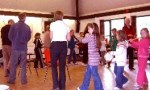



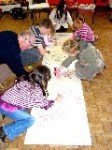


These Live-A-Music workshops ran during the day on Thursday 5 April 2007, in Mossley Hill Parish Church Hall, Rose Lane, Liverpool 18. Background information about the workshops is available on this website. Further workshops are planned for the Summer school holidays.
For more details of the Summer arrangements, or to discuss how Live-A-Music can work to support your own educational / social engagement proposals, please email us.
Don’t Just Re-cycle, Freecycle!
 Recycling things we don’t need or want anymore can be time-wasting and even counter-productive, if it’s a big hassle to get done. So one very good idea is using the that global force, the internet, to share news of offers and requirements for items on a strictly non-commercial basis between people who live in a local area. This is what the Freecycle Network sets out to do.
I’ve just ‘discovered’ the Liverpool Freecycle Network – and all because I was bemoaning my recent failure to find a recipient for the vast number of old plant pots we (as in, my garden-hut-clearing other half) found when there was a big garden hut clear-out.
‘What?!’ cried my Monday Women companions when I mentioned trying to find a good allotment home for the pots. ‘You should have used LiverpoolFreecycle!’.
Freecycle across the globe
And so I should. I’ve joined now, and have learnt that the Liverpool group of Freecycle is part of a huge chain of such local organisations around the globe. There are over 4,000 Freecycle ‘Communities’ with more than 3 million individual members across several continents – and it all started in May 2003 to
promote waste reduction in Arizona USA, in Tucson’s downtown, to help save desert landscape from being taken over by landfills.
It’s a grassroots and entirely nonprofit movement of people who are giving (& getting) stuff for free in their own towns. Each local group is moderated by a local volunteer. And, also just like Monday Women, membership is free.
How does it work?
When you want to find a new home for something – whether it’s a chair, a fax machine, a piano, or an old door – you simply send an e-mail offering it to members of the local Freecycle group. (Keeping it local saves fuel and energy of course.)
Or, maybe you’re looking to acquire something yourself. Simply respond to a member’s offer, and you just might get it. After that,
it’s up to the giver to decide who receives the gift, and then to set up a pickup time for passing on the treasure.
But the first step is to join… so why not get Freecycling now, just in time for your own Operation Garden Shed / Spare Room / whatever over the coming Spring Bank Holiday long weekend?
SuperLambBanana
 SuperLambBanana may be kinda cute, but, made of steel and concrete and 17 feet tall, he’s no lightweight. Created in 1998 by Taro Chienzo for the Art Transpennine Exhibition, he abides in Liverpool city centre, be/amusing all. He’s been Friesian (black and white), pink and sometime graffitied, but ‘really’ he’s yellow.

See more photographs of The City of Liverpool here: Photographs of Liverpool & Merseyside;
and photographs of elsewhere, here: Camera & Calendar
Click here for more information on Super Lamb Banana, alias ‘Superlambanana’.
HOTFOOT 2007 Gets The Go-Ahead!
 The annual ‘HOTFOOT’ Concert in Liverpool’s Philharmonic Hall – set this year for 7 p.m. on Sunday 22 July – has been a Midsummer favourite for over a decade now. HOPES: The Hope Street Association, the charity which promotes and produces the concert, is delighted that the 2007 concert will receive support of £5,000 from the Liverpool Culture Company.
Read the rest of this entry
World Water Day (22 March 2007)
 World Water Day, today, is a little-remarked event but concerns an absolutely vital aspect of life. Wherever we live, and whatever we do, we can’t be without water. This is an opportunity to pause and take a check (should we say, a ‘raincheck’?) on how we view this most critical commodity, and on what we can do to help.
Coping With Water Scarcity is the theme of World Water Day 2007. There can be few themes as important as this.
World Water Day as an initiative grew out of the 1992 United Nations Conference on Environment and Development (UNCED) ‘Earth Summit’ in Rio de Janeiro.
Marking the day
One interesting idea about how to mark WWD 2007 has been to send an e-card, with a choice of pictures and stamps. This helps to spread the word that we all need to think carefully about water and what it means for everyone. Other years have seen initiatives such as the Celebrating Water for Life booklet, published on the internet in 2005.
Central and critical
To those of us in Western Europe and North
America water is a commodity which seems to amount to a right. We know there are issues about water and sustainability, but we never really doubt it will be there for us.
In other parts of the world there is neither enough water for health and hygiene, nor any acceptable way to get access to it; I was shocked recently to read that in some parts of the world the fetching and carrying of water is a task undertaken by young girls, daily walking many miles, who thereby miss out on huge chunks of their schooling.
Take action to help
I have mentioned before that WaterAid is a charity set up simply to get clean water to people who desperately need it. Supporting this focused and straightforward objective [here] is something we can do any day, not just on World Water Day.
See also: Water, Water…
Monday Women ’07: On The Move To Dragon, Berry Street, Liverpool 1
 Monday Women, the informal no-cost group of women from across Liverpool and beyond, is on the move again.
From April 2nd our first-Monday-in-the-month meetings will be held at Dragon on Berry Street, starting 5.45 pm, till about 7.30. There is no admission charge and all women are welcome.
 After several great years meeting in Liverpool’s Everyman Bistro, and a short but very happy sojourn at Heart And Soul, the Monday Women group is going to Chinatown. As of Monday 2 April (5.45 pm) our venue for monthly meetings will be Dragon, 48 Berry Street, in Chinatown, Liverpool,
L1 4JQ. (Tel: 0151-709 8879)
[Street map here.]
 Originally called St George and the Dragon, the current owner (Mary) of this venue has given it an oriental feel and renamed it simply… Dragon. The venue is now a cafe-bistro bar, serving home-made meals and drinks from 5.30-11 pm Mondays to Thursday, and noon – 2 pm on Fridays and Saturdays. Sunday opening is 3-11 pm. Dragon runs a number of themed nights during the week (including acoustic and stand-up comic evenings), of which that for Monday early evenings is now…. Monday Women.

 Location and landmarks
Locating Dragon is easy. It’s close-by Liverpool’s famous Chinese Arch and The Blackie, and not far in the other direction from the ‘bombed out church’ (St Luke’s), but on the opposite, Bold Street side. Almost next door to Dragon is an unremarked but amusing landmark – a life-sized model of a man on a ladder, apparently painting the front of his shop at first-floor height.
On foot, by car, or public transport?
Only a couple of minutes’ walk from Leece Street and Renshaw Street, there are many bus routes which can be taken in and out of town, and the central train services are very accessible. There is also car parking nearby, in the Knight Street facility just behind the China Palace Restaurant opposite Dragon.
Menu
Dragon‘s owner, Mary, and her colleagues are developing a menu which meets various requirements. Currently there is a somewhat focused choice of food, but the menu always includes a veggie option and a soup.
Mary is keen to learn how her Monday Women friends and customers would like the Monday menu to be developed!
All women welcome

 Monday Women is a very informal grouping of well over two hundred women who live, work or have an interest in Liverpool and Merseyside. The group is very firm in its idea
that this should be a group to which all women are welcome just as themselves, and there is therefore no joining fee, registration or any other formal arrangement. People can simply attend the informal meetings, or be a ‘member’ of the Monday Women email group, or both, with involvement just as often or as infrequently as they choose.
Pass the word
The only ‘rule’ is that people come expecting to find others who are also friendly and welcoming, and who have a huge range of interests, ideas and experiences to share. Please pass on the invitation to become a Monday Woman….
Or, if you live somewhere other than Merseyside, why not start your own group? There’s room for us all!
Things To Do When You’re 19 – 21
 You’re very likely at college now, or learning on-the-job. Enjoy these new experiences! Ages 19, 20 and 21 for most young adults are ‘me time’, time to spread your wings and test the limits. Whatever you’re doing, use your freedom and energies to invest in your future, whilst you have some fun right now.
You’ll already have devised your own Be Happy Rules; and only you can be sure what’s right for you. But have you considered these ideas as you consider the options ahead ….?
Climb a mountain
Did you know there are well over two hundred Munroes (mountains over 3,000 feet) in Scotland? Can you name the highest peaks in England, Scotland and Wales? (or whichever country you live in?) Why not face the challenge, and get to the top of a mountain every year?
But treat your mountains with respect; they require knowledge, the right gear, fitness and large quantities of common sense, even if you simply walk up them. So do it properly, perhaps with your college sports advisers or the Youth Hostel Association (YHA). Get prepared, form a team and reach the peak/s in style. That way you’ll return safely and come to a whole new understanding of how aching limbs can be the mark of real achievement.
Sort your gap year – or not
Are you planning a gap year? Can you say clearly why this is a good choice of how to spend your time? If you can, then go for it; the world is your oyster.
But if you don’t in all honesty know why you want that year out, maybe you need to think again. There are plenty of other ways to have adventures, without the enormous costs, and interruption to your studies / employment which a gap year imposes.
Step outside the stereotype
Is your idea of a good night out a visit to the pub? Or a concert? Or maybe just staying in with a new computer game? Just a few times a year, why not try something completely different? Sports, if you’re arty, the theatre if you’re an action (wo)man, a brisk walk in the park if you’re a bookworm? But be prepared. You’ll enjoy it more if you’ve got your head round the new experience – find knowledgeable friends, discover the plot of the play, pack a picnic and plan your route (or choose consciously to explore) – all before you start.
Penetrate the political
You’ve already discovered the practicals of actually how to vote, and in truth you do know you really must to use that vote. So now’s the time to get a proper grasp. If you don’t understand why the mainstream political parties spend so much time and energy disagreeing with each other, make it your business to find out.
There are fundamental differences between politicians’ perceptions of how the world works, and it’s these you’ll need to explore before you decide how to mark that ballot paper.
Eat well, stay well
We all need treats but we also know that food is fuel. It’s what makes us whole. What sort of a body do you want? How do you feel about the things that happen to food – its origins or its carbon footprint – before it reaches your plate?
Perhaps you could experiment occasionally with different styles of eating. Keep a diet (as in ‘food’, never as in ‘not eating’) diary and see how you feel after a few days with a particular mode for your meals. Does low GI help? Are you a high-cal person? Do you enjoy veggie? What we eat is what we are and only you can determine that for you, for the long-term.
Learn another language
Here’s a good excuse to get an InterRail card, or even to make your inter-continental booking to an adventure. Tell everyone you’re off to study another language…. and then do just that. It’s a lot easier to learn new languages – especially ones unlike your mother tongue – when you’re young, than later on!
You can find introductory ‘foreign’ language courses everywhere these days; you could even get a programme for your iPod. Then, when you’ve got to grips with the basics, pack your phrase book and passport, and practise on real people in the country of your choice. (No cheating, ‘letting’ people practise their English on you instead.) You’ll be amazed how much you can pick up in just a week or two if you try.
Re-think your family
Everyone sees their family as the backcloth to their lives. But now you’re fully independent, you can do a double take. Your parents aren’t just Mum and Dad any more, they can become people in their own right as much for you as they already are for their neighbours, colleagues and friends.
Why not choose to spend some time with family members, actually talking to them about their past experiences and their hopes for the future? There are doubtless many tales to be told, and perhaps some dreams still to be realised. So offer a listening ear, and explore a whole new way of looking at your nearest and dearest.
Play mind games
No, not by psyching other people out, but by having a go at new mental challenges – chess, cards, computers, what you will. A busy brain now will stay active longer, and nurturing ‘mental fitness’ is probably the biggest investment in your personal future that you could make.
Plus, it’s fun….
Be an eco- envoy
Whatever your situation, you can do your bit for the future. Even if you’re ‘between jobs’ (ask yourself, Why?, if you are…) you can do things to help your community along.
For instance, many young people say the environment is a big concern. Perhaps you can find a role at work, college or wherever you are, turning this concern into positive action? This is truly an area where every little helps.
Believe in yourself
Nobody finds life a doddle. No matter how old and wise or hard and cynical they might seem, almost everyone worries about whether they’ve done the ‘right thing’ and whether they are liked by others. And, whether they recall it or not, they, like you, have had to negotiate the tricky years of young adulthood.
So, be gentle as you judge yourself. Conceit may not take you far, but self-belief is essential. Accept the ‘failures’ and mistakes, and learn from them; but much more importantly, do build on your successes. They are the base-line of your life ahead.
Have you read….?
Things To Do When You’re 16 – 18
Things To Do When You’re 22 – 25
What To Do At Any Age – Be Happy
* Life is not a rehearsal
* Smile when you can
* Do acts of random kindness
* Try no-TV days
* Be cautious sometimes, cynical never
* Use your pedometer
* Treat yourself daily to a ‘Went Right’ list
And why not share your alternative ideas here, too? You can add your own take on Things To Do When You’re 19 – 21 via the Comments box below…
The Independent: Climate Change & Bottled Water
 Today’s Independent newspaper offers us a mixed message. Under a front page story entitled ‘The Climate Has Changed’ it features a special issue on ‘the bill which makes action on global warming a reality’. And then, at the point of sale, it proposes a special offer of a free plastic bottle of water…. Celebration of a major breakthrough in environmental legislation is greatly to be welcomed. But toasting this particular achievement with such an environmentally unfriendly product tells us a lot about the contradictions of the market.
The Independent has long featured environmental issues as important news, and for that it should be applauded. A headline like today’s ‘Blair hails ‘historic day’ in battle against climate change‘, with a full seven pages of analysis, is indeed something to be welcomed.
But why on earth (to use an apt metaphor) did The Indy decide to promote sales (in some train stations at least), today of all days, by offering free bottled water – just at a time when large numbers of organisations are acknowledging the importance of good old water-from-the-tap?
Joined up thinking, this is not. Priority of marketing over content, it might well be. There’s a way to go on the eco agenda yet…
Graduate Retention Strategies: Ageist, Sexist Or Just Shortsighted?
 Graduate retention is a serious aspect of any decent policy for regeneration. But the emphasis on new / young graduates alone is strange, when there are always also other highly qualified and more experienced people who might offer at least as much in any developing economy.
A recurring theme in the regeneration of cities and regions is the emphasis on retention of graduates. This is an entirely reasonable focus, given the cost of producing graduates and the potential which they have in terms of economic value. The flight of bright graduates from regional to capital cities is a well-marked issue for most regional economies.
Reducing the loss of graduate talent is generally a task allocated to the regional universities which have educated them. There is a whole sector of most regional knowledge economies which is dedicated simply to training and retaining graduates in the hope that they will enhance the economic performance of that region.
Extending the scope for retention
There are also now schemes which train ‘women returners’, women who have taken time out to raise a family or who have
only later in their working lives decided to develop their formal skills. Generally these schemes give good value for the ‘returners’ and their future employers, at least in terms of providing competent middle-level practitioners and professionals; and certainly they can make a really significant difference to the lives of the women who undertake the training.
Overlooked and under-used
But there is another group of people with high skills who are often simply not geared into their local and regional economy in any meaningful way. These are often older, highly qualified and experienced graduate women who are no longer working (but are usually not registered as unemployed), and who may remain living in an area because they have family or other personal commitments there.
These women generally do not need any further training (except in the same way that other practising professionals might need it) and they often undertake a good deal of voluntary and unpaid work in their communities. Little of this work however is given any formal economic value, and even less of it is focused strategically on the requirements of their economic location.
How could their activities be strategically focused, when these women, often for reasons beyond their individual control, may have almost no continuing professional connection in their communities?
Invisible people
In an economy with a significant proportion of women leaders and decision-makers the ‘invisible’ older female graduate might be identified as a person with serious economic potential,
someone for whom every effort should be made to find or create suitable high-level employment or enterprise opportunities commensurate with her qualifications and experience.
Highly qualified men are likely, we might suppose, to move to a job elsewhere which meets their requirements; the women may have no choice but to relinquish their employment, if their family moves elsewhere or if circumstances mean their job disappears. In many challenged regional and local economies however the scope to realise this female potential remains unperceived by those (mostly men) who decide the strategy for their local economies.
Doing the audit
Has anyone tried to estimate the numbers of ‘non-economically-productive’ highly qualified older women in a given regional or
local economy undergoing regeneration? Does anyone know what these women currently contribute informally to their economies, or what they could contribute formally in the right contexts?
Older women are often seemingly invisible. My guess, from many private encounters, discussions and observations over the past few years, is that here is an almost totally untapped resource.
Nurturing all available resources
Retention of young graduates is of course critical to economic renaissance; but so is the gearing in of the potential of older and more experienced graduates. This is another example of why economic regeneration strategists need to appreciate and nurture more carefully what they already have, as well as what they would like for the future to procure.
This article is also linked from the New Start magazine blog of 14 March 2007.


 Dreaming Realist