Category Archives: Sustainability As If People Mattered
August Moon And Little Cat On Lykavitos (Lycabettus) Hill, Athens
 Tonight is full moon in Athens, Greece, when by tradition everyone attends free events till late on the ancient sites; and this year there’s also a partial lunar eclipse over the city. But for this feral kitten, silently padding the very highest point atop Lycabettus Hill in search of restaurant diners’ scraps, it’s just business as usual.

Every year since 1953, the August Moon Festival in Athens on the night of the full moon – believed to be the most beautiful such event of the year – has been a celebration open to everyone, with free performances of opera, traditional dance and classical music on the Acropolis and Roman Agora, as well as events located in other unique and incomparable historic sites of Athens such as the Odeion of Herodus Attikus .
This is truly an occasion, if you are in Athens at the right time, not to be missed! (And if you’re somewhere else in Greece, you may still be lucky anyway – consult the Greek Ministry of Culture for possible events in other locations.)
From Regeneration To Sustainability: A Northern Take On Knowledge
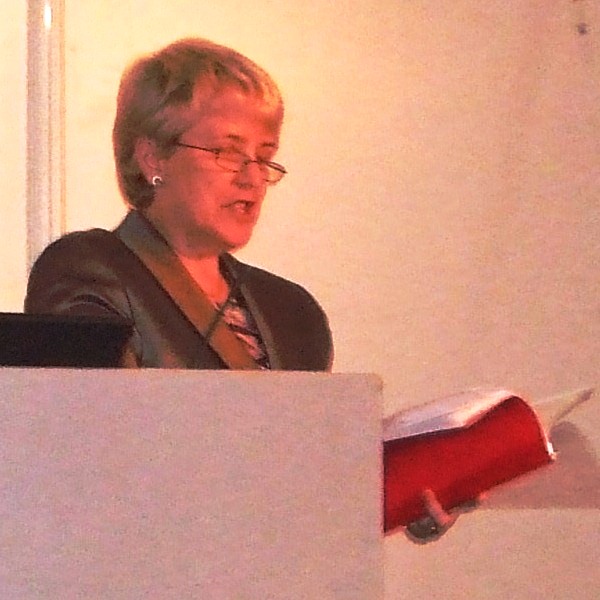 Summary: This is a version of the Keynote Lecture I gave at the NUREC 2008 conference, in Liverpool on 28 July 08.
In it we explore the connections between Knowledge Economies and Ecologies, and Big Science and Regeneration, especially in regional and sub-regional settings, and in respect of issues around Sustainability.
My basic thesis is that Knowledge is not yet recognised for the fundamental resource it surely is.
A complete version of this paper can be found on Hilary’s professional website, here.
World Population Day: Important In Britain Too
 Today is World Population Day. On this day in 1968, world leaders proclaimed that individuals have a basic human right to determine the number and timing of their children. Forty years later, population issues remain a real challenge even in Britain, where greater cohesion is still needed for policy in action.
Inevitably much of the focus since then has been on women, and especially maternal health and education.
There can be no doubt at all that a failure of health care during pregnancy and birth takes a terrible toll on lives, both maternal and infant. Multiple unplanned pregnancies are a leading cause of premature death and tragic disability for many women and their children, especially in very poor countries.
Access to family planning
UNFPA, the United Nations Population Fund, says active use of family planning in developing countries has increased from 10-12% in the 1960s to over 60% today. But despite these improvements, a World Bank report just released says that 35 countries – 31 of them in sub-Saharan Africa – still have very high fertility rates and grim mortality rates from unsafe deliveries or abortions.
According to this World Bank report, women in developing countries experience 51 million unintended pregnancies each year because of lack of access to effective contraception That is a great deal of heartache, even apart from the enormous issues it raises for global ecosystems.
Not just a a ‘Third World’ issue
But this is not a problem only for people in the poorest developing countries.
Most of us are aware that people in the ‘developed’ countries use hugely more energy and other resources than do those in poor countries. Even with our much lower fertility rates we are currently much more of a threat to global sustainability than are people in Africa.
Blighted lives in the Western world too
“Promoting girls’ and women’s education is just as important in reducing birth rates in the long run as promoting contraception and family planning,” says Sadia Chowdhury, a co-author of the World Bank report.
That is also true even in places such as today’s Britain. Teenage pregnancy – and unintended pregnancy overall – remains a serious issue for many families in the U.K. even now.
There is an essential synergy between prospects for women in education and employment, and elective motherhood. Each benefits from the other. And each also brings benefit for the children who are born, including better prospects even for their very survival.
IMR inequalities relate to social class
Currently differences in infant UK infant death rates can be huge, and can often be attributed to occupational and class differentials. In 2002-4 a baby born in Birmingham was eight times more likely to die before its first birthday than one in Surrey, with rates of 12.4 and 2.2 infant deaths per thousand live births respectively. (Bradford is another very high-risk area, and set up its own enquiry to see how to improve.)
This is not an easy matter to discuss politically, but it could not be more important, even in Britain, one of the wealthiest nations in the world.
Improving family health
One main health objectives of the British Government is to improve infant mortality rates (IMR: the number of babies who die before their first birthday, against each one thousand born), so that the infants of poorer parents have better outcomes, like those of more advantaged parents.
The target for England is a 10% reduction in the relative gap (i.e. percentage difference) in infant mortality rates between “routine and manual” socio-economic groups and England as a whole from the baseline year of 1998 (the average of 1997-99) to the target year 2010 (the average of 2009-2011).
Life outcomes and expectation
To focus this up: for each baby in the UK who dies before his or her first birthday, there will be about ten who survive with enduring disability, and often with diminished life expectancy.
At present, often through lack of knowledge, or sometimes difficulties in accessing appropriate care, this distressing outcome is much more likely to affect families where women are poorly educated, than those where women have a good education and good jobs or careers.
Preventable tragedy
It does not have to be like this.
The Government is absolutely right to tackle this difficult matter, but effective action requires co-ordinated delivery by all who provide care and support for parents and children. There must be no room for professional maternity care in-fighting, such as is reported by Sir Ian Kennedy, chair of the Healthcare Commission to exist between obstetricians and midwives.
Children’s Centres as a way forward?
The national transition from Sure Start to the encompassing provision of Children’s Centres, underpinned by the fundamental philosophy of the Every Child Matters initiative, is now underway.
To date there has been little discussion about how family planning support needs to be built into this really important development.
Professional obligation
This may be a tricky issue, but it’s one where the professionals could, if they chose, much help the Government to help all of us.
When are we going to hear those who provide early years and family support saying, loud and clear, that ‘every child a wanted child‘ is a basic requirement for everyone in Britain as well as elsewhere?
A not-to-be repeated opportunity?
The need for effective family planning in parts of the developing world remains desperate, and must be met.
But that doesn’t excuse skirting the issue here at home, just at a point when new and joined up services focusing directly on families and children are being created, with the aim of eradicating child poverty and increasing wellbeing for everyone.
And given the political sensitivities, surely it’s the practitioners – in health, education, welfare and the rest – who have to lead the way?
Read more articles about Public Service Provision.
Recycling: Remove Sticky Tape Before Saving Planet
 ‘Saving the planet’ is a project which must surely involve everyone; but apparently not all designers of domestic recycling technology agree. For recycling to be effective, design should logically follow, not lead, function. This requires an understanding of how ordinary people will use recycling opportunities – before systems are designed, not as an afterthought.
Stories abound of people who have been fined for recycling things in the ‘wrong’ way – collections with mixed content, paper with an individual’s name on it as ‘proof’ that they put items in the wrong repository, using a compost heap inappropriately – all make good stories to create media martyrdom to the recycling regulations.
Short-term technology before people
Almost anything can be recycled, but at present it seems Local Authorities decide for themselves what they will and will not process. Often immediate costs are not measured against the long-term implications of not taking action now. Despite challenging targets set by central government, few of us are yet holding local decision-makers to account for by-passing future sustainabilty…. if we were, there would be more conversations around involving ‘ordinary people’.
The factors which feature most in local decision are likely to be the economics of recycling, available recycling technologies and where to locate recycling facilities (including the NIMBY – ‘not in my backyard’ – factor). Public understanding of the very serious situation we are all in is rarely discussed.
What repeated stories of fines and public naming show is how very far officialdom may be from the real need to get the public on-board, and quickly.
Silly civic expectations
Our own City Council is party to non-automated recycling processes which still do not accommodate some recyclable plastics. Yet the need is to raise the currently very poor performance of the city, at just 7.6% – when one council already achieves 50%, the Government target for all councils by 2020.
Doubtless, those who have designed the process see it as innovative and positive; and certainly it is better than what preceded it.
But is the City Council serious? I however will continue to have my doubts whilst the Council briefing, issued to every household in the City, includes the instruction to ‘Please remove sellotape‘ before recycling gift wrapping paper – an instruction which was even issued as part of the recycling initiative last Christmas. (How else would one spent Christmas afternoon?)
Citizens as wrong-doers or as partners?
Whether individuals intentionally break the rules, or do so unknowingly, the outcome if detected is the same: a news story which makes others wary of doing anything at all.
The physical technology exists to recycle pretty well everything; processes are available for all domestic waste, if the budget and machinery are up to it.
Making people into media stories because of their recycling behaviour will simply encourage their fellow citizens to cynicism and an unwillingness to recycle at all, for fear of wrong-doing.
Sustainable behaviours are not optional
The imperative to get recycling is urgent.
We need, very soon, to get much cleverer about how to help everyone be part of the solution, not the problem.
Read more articles on Environment and Sustainability:
Conserve, Recycle & Sustain and
Sustainability As If People Mattered.
The British Sociological Association (BSA)
 The British Sociological Association, founded in 1951, promotes the work of sociologists and social scientists as practitioners and scholars, in the UK and, through links, much further afield. Sociology offers an analysis which helps surprisingly large numbers of us make sense of what happens in our ever-changing world.
I recently re-joined the British Sociological Association, of which I was an Executive Committee member when I worked in further and higher education, much earlier in my career.
It’s fascinating to see how things have evolved since that time, back in the 1980s.
Battles now won
Then we were battling to ‘save’ the Personal, Social and Health curriculum, which Sir Keith Joseph, then Secretary of State for Education under Prime Minister Margaret Thatcher, was keen to remove or at the very least side-line. History in schools was to stop at 1945, the end of the Second World War and before the arrival in 1948 of the National Health Service (NHS) and Welfare State; Section 11 legislation made it almost professional suicide to teach about HIV / AIDS; the Social Science Research Council (SSRC) had to be renamed the Economic and Social Research Council (ESRC) lest anyone should think that social research was scientific – in retrospect a far cry attitudinally from current demands for ‘evidence-based’ policy at the highest levels.
All this we addressed, through the Executives of the BSA and other professional associations, via FACTASS, The Forum of Academic and Teaching Associations in the Social Sciences, of which I was Convenor. Now there is no need for FACTASS. We managed to hang on in there, and it’s unlikely that any mainstream politician in any modern democratic country would want to see it otherwise; the PSHE curriculum and entitlement of children to understand their world is, along with positive resolution of the GCSEs-for-all debate, now established.
Fundamentals
But the fundamental emphases of the BSA on social equity; on understanding the interactive social constructions which give meaning to our daily lives, continue, developed and debated by people who have now spent a lifetime exploring how human societies and communities work and are understood by the people in them.
The ‘classics’ – gender, ‘race’ and ethnicity, age and life transitions, and social class – remain (alongside matters such as health and medicine, work and employment, and so forth) the fundamental building blocks of sociological analysis, keeping us constantly aware that big and sometimes invisible forces shape our day-to-day experience, even to the extent that they often determine our actual life expectancy.
New social analysis too
And beyond that, there is a new and critical emphasis on our physical world, on sustainability and green issues and how societies and communities will find themselves responding to the challenges we all face.
It may be too soon to say that Human Geographers and Sociologists have found completely common ground, but it looks as though a convergence may slowly be developing, after a decade or more when the gathering of empirical data on population change and socio-economic impacts was sometimes perceived to be enough to take governmental programmes and political policy forward.
Contextualising for the future
There is now a recognition that ‘social research‘ must inform, e.g., environmental as well as community, health and education policies. (I was recently a co-author of the Defra Science Advisory Council report on Social Research in Defra – a fascinating and I hope very fruitful experience.)
The BSA, I note, has a growing Section (interest) Group on Sociologists Outside Academia (SOAg). I intend to sign up for it.
See more articles on Social Science , and
History Lessons Need More Than ‘Hitler And Henry’
Social Geographers Take The Lead In Social Policy
National Vegetarian Week
 Today marks the start of UK National Vegetarian Week. The arguments for a balanced vegetarian diet are persuasive – it ‘saves’ energy, it uses less carbon and water, it can respect the seasons, it has potential to make a huge contribution to resolving global hunger, and it’s good for us. So how can vegetarianism become more often the diet of choice?
Sefton Park Renovation: The Protests
 Renovation of Liverpool’s Sefton Park has not lacked controversy – especially concerning the removal of healthy trees (and thereby wildlife habitats) in order to improve sightlines for monuments. In protest at this there has been both formal objection from Friends of Sefton Park and anonymous direct action.







See also Liverpool’s Sefton Park Trees Under Threat – Unnecessarily?.
More articles on Sefton Park, Liverpool.
Food, Facts And Factoids: What Do We Need To Know?
 Food is rising rapidly up the agenda. Allotments, biofuels, calories, customs, eating disorders, famine, farming, fats, fibre, foodmiles, GM, health, organic, packaging, processing, salt, seasonal, security, sell-by, sustainability, vitamins, water…. Where do we begin with what to eat and drink?
Workable Regeneration: Acknowledging Difference To Achieve Social Equity (Equality And Diversity ‘Regeneration Rethink’)
 Regeneration is a crowded field. It’s the market place to resolve the competing demands of social equity indicators as varied as joblessness, family health, carbon footprint, religious belief and housing. But it’s obvious something isn’t gelling in the way regeneration ‘works’. Could that something be the almost gratuitous neglect of experiential equality and diversity?
BURA, the British Urban Regeneration Association, is squaring up to this fundamental challenge.
Discuss equality and diversity issues with any group of regeneration practitioners, and just one of two responses is likely.
Some respond immediately: Yes, critical for everyone; what took you so long?
For others, the feeling seems to be more : Great idea, but not much to do with me.
So where’s the common ground?
Balancing strategy and everyday reality
How can we balance large-scale strategies for a sustainable economy with the immediate human reality that, as an example, women born in Pakistan now living in Britain have twice the U.K. average risk that their babies will die before age one?
The Board of BURA, the British Urban Regeneration Association, has during the past year thought hard about where in all this some commonality might lie, and what that means for the future. Whether as a practitioner, a client or recipient of regenerational endeavours, an agent for economic development, or a policy maker seeking sustainable futures for us all, questions of social equity matter a lot.
But the case for equality and diversity is easier for practitioners and decision-makers to see in some parts of regeneration than others.
Large-scale and micro impacts
No-one doubts, for instance, that new roads and other infrastructure can attract businesses and enhance employment opportunities for disadvantaged areas.
Some will acknowledge the physical isolation which new highways may impose on those without transport, now perhaps cut off from their families, friends and local amenities.
Almost no-one considers how regeneration might reduce the tragic personal realities behind high infant death rates in poor or ‘deprived’ communities.
Differential impacts
The point is that these impacts are differential. The elderly or disabled, mothers and young children, people of minority ethnic heritage: overall the experience of people in these groups is more community disadvantage and fewer formal resources to overcome this disadvantage.
But for each ‘group’, the tipping points are different.
The scope for examination of differential equality and diversity impacts – of infrastructural arrangements, of process, of capacity building and of everything else to do with regeneration – is enormous, and would go quite a way towards reducing unintended consequences and even greater serendipitous disadvantage for some people.
This work has hardly begun, but it is I believe a basic requirement and tool for making progress towards genuinely remediated and sustainable communities.
One size does not fit all
It is obvious that currently something isn’t gelling in the way that regeneration ‘works’. That something, to my mind, is the almost gratuitous neglect of difference. However one looks at it, one size simply does not fit all in the greater regenerational scheme of things.
But if you zoomed in from outer space, you’d be forced to the conclusion that one size does in fact fit almost all when it comes to senior decision-makers and influencers. There are amongst leaders in regeneration some women, a few non-white faces, and perhaps even smaller numbers of influencers with personal experience of, say, disability; but not many.
This self-evident fact has, of course, been a matter of deep concern to those in the regeneration sector over the past few months.
Meeting social equity requirements – or not
In the final three reports it published before its amalgamation last September into the Equality and Human Rights Commission, the Commission for Racial Equality (CRE) demonstrated very clearly that regeneration bodies at every level, including 15 Whitehall departments, are failing to meet their race relations obligations. They also showed very compellingly that people from ethnic minorities are more likely to live in poverty, experience poor health, and encounter the criminal justice system.
Causal factors cited as underlying the CRE’s findings encompass most of what regeneration is supposed to do well. Failures of leadership, impact assessment, legal framework and recruitment are all lamented in the reports.
And we can add, alongside the CRE’s analysis, inequalities arising from gender, belief and other factors such as disability, as well as the wider issue of the invisibility and powerlessness of people of all kinds who are on low incomes – who, as it happens, are the main ‘recipients’ (perhaps we should call them ‘clients’?) of regeneration.
Evident disparities
There is a huge disparity here. Look round pretty well any significant regeneration-facing board room or policy think-tank, and it’s apparent that the majority of those wielding influence (on behalf, we should note, of people whose communities are to be ‘regenerated’) are comfortably-off, able bodied, white men.
In this respect, as everyone involved freely admits, the BURA Board fits the mould. Each BURA (elected) Director brings something special to the table; but few of them can offer at first hand a personal perspective divergent from the stereotype. We have therefore decided, unanimously, to address head-on this increasingly serious challenge to our capacity to deliver as leaders in regeneration.
Business benefits
But the BURA Board focus on equality and diversity, whilst driven primarily by the impetus to uphold best practice in regeneration, is not entirely altruistic. This is also good for business.
There is plenty of evidence from well-grounded research that sharing different understandings of any complex situation, right up to and including at Board level, brings benefit all round – including to the bottom line.
Our resolve to implement equality and diversity good practice throughout BURA has required that we look anew at how we function. The BURA Board recognises that we will need to be receptive to new ideas, willing to change things where needs be, and transparent in our own processes and activities.
The BURA programme for action
The BURA action plan, launched in Westminster on 20 February ’08, is therefore to:
· conduct an equality and diversity audit of all aspects (including Board membership) of our organisation’s structure and business, and to publish our outline findings and plan for action on our website;
· monitor and report on our progress towards equality and diversity;
· dedicate a part of the BURA website to offering up-to-date information on equality and diversity matters, in a format freely accessible to everyone;
· develop our (also open) Regeneration Equality and Diversity Network, launched in February this year (2008), to encourage very necessary debate and the exchange of good practice;
· appoint from amongst elected Non-Executive Directors a BURA Equality and Diversity Champion (me), to ensure a continued focus on the issues.
In all these ways – developing inclusive partnerships at every level from local to governmental to international, supporting new initiatives and research of all sorts, keeping the equality and diversity agenda in the spotlight – we hope to move regeneration beyond its current boundaries, towards a place from which we can begin to establish not ‘just’ remediation of poor physical and human environments, but rather true and responsive sustainability.
Regeneration is complex
Regeneration is more than construction, development or even planning; it has to address for instance the alarming recent finding by New Start that sometimes ‘race’ concerns are focused more on fear, than on entitlement or social equity.
Delivery of our ambition to achieve genuine best practice will require the courage to move beyond current and largely unperceived hierarchies of inequality and diversity – not ‘just’ race, but gender / sexuality too; not ‘just’ faith / belief, but also disability – towards a framework which encompasses the challenging complexities of the world as people actually experience it.
No comfort zones
There can be no comfort zones in this enterprise. Acknowledging stark contemporary truths and painful past failures is essential if we are to succeed.
The purpose of regeneration is not to make practitioners feel good, it is ultimately, rather, to do ourselves out of a job; to improve, sustainably, the lives of people who are often neither powerful nor visible in the existing wider scheme of things.
Moving from piecemeal regeneration to sustainable futures makes two demands of us: that we see clearly where we all are now; and that we ascertain properly where the people of all sorts on whose behalf we are delivering regeneration would wish to be.
Multiple aspects of diversity
When we can balance constructively, say, the carbon footprint concerns of a businessman in Cheltenham, and the ambition to influence childcare arrangements of an Asian heritage woman in Bury, we shall be getting somewhere.
Diversity in its many manifestations – age, belief, (dis)ability, gender, race or whatever – is part of the human condition.
Consistent focus on the many factors underpinning that condition would be a powerful impetus towards sustainability. It would also be also a huge professional challenge.
Taking the lead as regenerators
That’s why we as regeneration leaders and practitioners must make equality and diversity a critically central theme, both within our own organisations and in the services which we deliver.
And it’s why we must start to do this right now.
We hope you will want to join us on our journey.
A version of this article was published as Regeneration re-think in Public Service Review: Transport, Local Government and the Regions, issue 12, Spring 2008.
Hilary Burrage is a Director of BURA, the British Urban Regeneration Association.
Read more articles:
Social Inclusion & Diversity
Regeneration
Should We Keep British Summer Time All Year?
 U.K. clocks go forward on Sunday morning, 30 March ’08, and the lighter evenings which British Summer Time brings will cheer up almost everyone. But there would also be many other anticipated benefits, from road safety to energy conservation and healthier lifestyles, were we to keep ‘Daylight Saving’ all year. A Downing Street petition has now been set up to urge a continuous BST trial period of three years, with research to establish the extent of these benefits.
‘Daylight Saving’ is an issue which won’t go away. And now there’s a Petition to the Prime Minister, asking him to not to let that precious extra hour of afternoon light go away in the Winter either.
Downing Street petition
The Downing Street petition aims to ‘make better use of the limited daylight we receive’. It reads as follows:
We the undersigned petition the Prime Minister to consider a change to the current system of British Summer Time / Greenwich Mean Time (BST/GMT). This could consist of a trial period (similar to that adopted 1968 to 1971) and could take the form of a move to year round BST, or a 1 hour shift to GMT+1/GMT+2. Research shows that such a move could reduce carbon dioxide emissions, reduce road deaths, facilitate business with Europe, potentially boost tourism, increase outdoor activity, promote healthier lifestyles and enhance the well being of UK citizens.
You can read more detail of the Petition, and / or sign it, here.
BST Facebook group
There is also a Facebook group, set up like the Downing Street petition by Dave Alexander, which seeks to ‘raise support of and debate the possibilities and benefits regarding changes / trials of different time zone options for Britain…..This could reduce carbon dioxide emissions, reduce road deaths, facilitate business with Europe, potentially boost tourism, increase outdoor activity, promote healthier lifestyles and enhance the well being of UK citizens.‘
An enduring idea
This is by no means a new proposal, as we have already established very firmly on this website, but the need to get some action becomes greater with each year. If further debate is needed, the BST: British Summer Time & ‘Daylight Saving’ section of this weblog remains a forum where everyone from the South coast to scattered Scottish isles is welcome to share their ideas.
Discussion is however no substitute for evidence-based action. Health, energy sustainability and accident prevention are too important to ignore.
This article was also published as a New Start external blog.
Read more: BST: British Summer Time & ‘Daylight Saving’ (The Clocks Go Back & Forward)


 Dreaming Realist