Category Archives: Photographs And Images
Sefton Park Boating Lake Shortchanged: A Half-Done Restoration?
 The upheavals as Sefton Park is ‘restored’ have been grim. Trees and habitats destroyed, birdlife disrupted and months of mud and noise – though at least, we all believed, for future benefit. But will the Boating Lake, largest and most public of the waterways, now remain a dumping ground for waste as before? Apparently the money may be running out. If it does, I’d say, so is our civic pride.

Is this (above) the view of Sefton Park Boating Lake which will stay with us after all the heritage and landscape restoration is finished? Will the people of Liverpool, already said by Bill Bryson to have celebrated a ‘Festival of Litter’, permit what is arguably the City’s most significant park to retain within it a dumping ground for anything their careless fellow citizens have over the decades jettisoned into the Boating Lake?
… and this proposed ‘cost-cutting’, so it is said, all for a saving which is probably less than the amount already spent on destroying perfectly healthy trees in Sefton Park because they ‘block the view’?
The photographs below show some of the garbage which lies below the normal waterline of the lake, together with a view of the area which the dredger has cleaned up (by the top island), and the boating fence which, as things stand, may delineate the divide between the restored area and the much larger part of the lake which it’s feared will be left in neglect.
Will the powers-that-be ensure, despite the rumours, that the whole lake will be cleared? Or has this City really still so little civic pride? We await the evidence that all will be well, hopefully very soon.


Read more articles on Sefton Park
and see more photographs at Camera & Calendar.
Liverpool: In England, But Not Of It?
 Much of the outside of Liverpool Lime Street train station is clad with art work celebrating the UK’s choice of the city as European Capital of Culture 2008. So what should we make of the cladding’s message, that Liverpool is ‘In England, but not of it?’
The idea of covering ugly and unused buildings with celebratory artwork is excellent.
Lime Street, as Liverpool’s railway terminus, epitomises our ‘Gateway to the World city‘ (as Liverpool’s ports did and, commercially, still do). It is therefore fitting that visitors in 2008, our year as European Capital of Culture, be greeted on arrival with vibrant images reflecting Liverpool’s arts and cultural offer – an offer which draws on the traditions and experience of centuries of migration to Liverpool, with people arriving from across the globe:

But what are we to make of the claim, as part of this greeting, that Liverpool, whilst still ‘Gateway to the World’, is also ‘In England, but not of it’?

How can we, the people of this historic port, expect to progress and prosper, if we choose consistently not just to be ‘on the edge’ of Britain, but so it seems actually over that edge, in another place altogether?
What sort of civic identity and message does that give to our own fellow citizens?
And, critically, what does it say to those in the rest of the country with whom we must do business and confer on many issues, if Liverpool is to move forward successfully in the twenty-first century?
Read more articles on Strategic Liverpool
and on Liverpool, European Capital of Culture 2008.
More photographs: Camera & Calendar
The Liverpool Orrery Comes To Hope Street
 The Liverpool Orrery came to Hope Street last week, to the Suitcases plateau; and with it came lots of happy and excited children, eager to see the universe from the Unity Theatre’s special SplatterFest! perspective. Using the public realm like this shows more clearly than any words how creativity can engage our communities and our imaginations.


Read more about the Hope Street Quarter and the ‘Suitcases’ (A Case Study).
See more photographs: Camera & Calendar.
What is an Orrery? Find out here; and read about Unity Theatre and SplatterFest!.
Operation Black Vote Is Launched In Liverpool
 Liverpool’s Operation Black Vote programme was launched today in our Town Hall. This ambitious movement intends to establish an emerging generation of politicians of all ‘races’, cultures and faiths, who have been mentored early in their careers by existing councillors. The event this evening demonstrated that OBV’s aim is shared by all our civic leaders, and that they believe they will indeed deliver.


Further information on Operation Black Vote.
Read more:
Social Inclusion & Diversity
Camera & Calendar
Sefton Park Renovation: The Protests
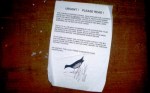
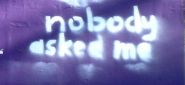 Renovation of Liverpool’s Sefton Park has not lacked controversy – especially concerning the removal of healthy trees (and thereby wildlife habitats) in order to improve sightlines for monuments. In protest at this there has been both formal objection from Friends of Sefton Park and anonymous direct action.






See also Liverpool’s Sefton Park Trees Under Threat – Unnecessarily?.
More articles on Sefton Park, Liverpool.
Spring, Four Strings And Four Seasons
 Daffodils in the sunshine take on a new aspect when they’ve just been background to a performance of ‘Spring’ from Vivaldi’s Four Seasons. Members of Elegant Music are here (below) relaxing in a break from rehearsals for a client’s special occasion.
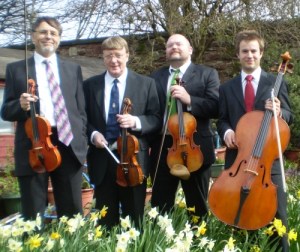
Martin Anthony (Tony) Burrage, Donald Turnbull, David Ruby and Alexander Holladay are members of Elegant Music (which also performs more formal concerts and recitals as Ensemble Liverpool).
For more photographs please see Camera & Calendar.
Read more articles at Music, Musicians & Orchestras.
Sefton Park Easter Fitness And Fun
 Sefton Park is the venue for a very organised fitness training programme. The wearers of these cheery Easter bonnets are amongst those for whom even the Bank Holiday weekend offers no let up on the exercise regime.

See more photographs at Camera & Calendar,
and read more about Sefton Park.
The Metropolitan County Councils, Abolished In 1986
 Incredibly, it was twenty two years ago that the Conservative government closed down the Metropolitan County Councils , thereby ensuring control from the national centre of power. The impact on local decision-making was huge, as was the effort subsequently required to rebuild the regional administrative decision-making process.
The Metropolitan County Councils, like the Greater London Council and the Inner London Educational Authority, were powerful bodies representing local and regional interests, and were seen as irritants on the national body politic. So Prime Minister Margaret Thatcher decided they ‘had to go’.
But as Dr Richard Beeching also demonstrated, when years earlier he closed many local and regional railway lines, it takes little time to destroy something which holds together the physical or political regional infrastructure – and an enormous amount of money and effort to reinstate it.

This is the invitation I received to the Merseyside County Council closure reception for ‘Workers in the Merseyside Arts Community’, on 20 March 1986, at Metropolitan House, Old Hall Street, Liverpool. The evening was hosted by Cllr Keva Coombes, a local lawyer and Leader of the Merseyside County Council.
See more photographs at Locations & Events and read more about Regions, Sub-Regions & City Regions.
Liverpool’s Hope Street ‘Suitcases’: A Case History
The Hope Street ‘Suitcases’, installed by John King in 1998, are at the junction with Mount Street, by LIPA (the old ‘Liverpool Institute’) and Liverpool School of Art, opposite Blackburne House Centre for Women. The labelled suitcases ‘belong’ to many of Hope Street Quarter’s most illustrious names and organisations.
Coming A Cropper On Global Warming
 It was quite a surprise to see the global warming slogans which appeared from nowhere in Liverpool city centre – especially given the name of the street itself! Someone’s been doing their homework on the stats; and the figures are truly scary…


See more photographs at Camera & Calendar


 Dreaming Realist