Category Archives: Liverpool And Merseyside
Hope Street Farmers’ Market Is Deferred – But Why?
 The Farmers’ Market scheduled for Liverpool’s Hope Street today has been cancelled because of pressures on officialdom. This is not a new scenario when it comes to efforts to enhance the local community’s engagement and enterprise. What could those ‘in charge of granting permissions’ do to prove themselves, rather, as partners and enablers?
The Daily Post this morning reports that the intended monthly Farmers’ Markets in Hope Street (third Saturday of the month) willl now begin in November, not today. After two very successful test runs (last October and during this year’s Hope Street Festival – though why not as we suggested before then, I don’t know) there was a real head of steam for the event today. People just love markets, with all their variety and colour!
But it seems the authorities can’t cope… not enough time for the policing (in Hope Street? – probably Liverpool’s most sedate throughfare till now at least), not enough notice, and so forth…. and the Farmers’ Market organisers, Geraud Markets, are upset.
Not a new problem
Sadly, this ‘not enough notice’ and / or ‘can’t be done without big payments’ scenario is not new. It caused the delay of this year’s Hope Street Festival, originally planned for June, and it has been the undoing of several other events along Hope Street (as well, I suspect, as elsewhere).
It is fair to say that perhaps Geraud Markets, who have a joint venture arrangement with the City Council, might well have made appropriate contact with the authorities earlier – they are a big organisation – but that doesn’t really explain the history of City Council ‘can’t do’ which seems to overarch so many attempts to engage and involve people in our local community. The thwarted efforts are too many to list here.
Basic objectives put aside
Whether you look at the very worthy stated objectives of the Farmers’ Markets joint venture with Liverpool City Council, or at those of much smaller organisations such as HOPES: The Hope Street Association, you will find a serious intent to improve the health, environment, general quality of life and enterprise climate of our Quarter.
The City Council may well claim to endorse these fine words – and individually some of its officers certainly go the extra mile in doing that – but overall their actions speak don’t do much to demonstrate the commitment when it matters.
Supporting local communities – or not?
The question that perhaps those in charge at Council HQ have to ask is, ‘What are we actively doing to help? And is it actually enough?’ No private organisation or individual is obliged to support the enterprise and engagement of Liverpool communities, and some of us feel sorely tested. But it seems the message still isn’t getting through.
London’s Theatre Museum Is Closing – So Why Not Bring It To Liverpool?
 The national collection of performing arts memorabilia, at the Theatre Museum in London, is to be dispersed when the Museum is closed in January 2007. So why not send it instead to Liverpool, as a ‘V&A Liverpool’, and let us up here have it as a very special part of our 2008 European Capital of Culture celebrations?
The sad news this week is that London’s Theatre Museum is to close. Its home in Covent Garden near the Royal Opera House is to be no more, and its exhibits will be dispersed by its parent body, the Victoria and Albert (V&A) Museum.
A loss for the arts world, and everyone else
 I’m sure there will be knowledgable people who will conclude that the merits or otherwise of the Theatre’s exhibits justify this decision, but to me it seems shocking. I visited it quite recently for the ‘Unleashing Britain – Ten years that shaped the nation: 1955-1964’ exhibition and, as I reported on this weblog, I found the whole place fascinating.
Perhaps the Theatre could be said to have been its own worst enemy, insofar as it always look closed even when it’s actually open – the doors seem blank and much of the exhibiiton is ‘below stairs’, in a wonderful but not-visible-from-the street warren of tunnels and small rooms; but the external visibility problems could easily have been resolved.
A bright idea?
 However, if people in London don’t want the Theatre Museum collection as an identity, I have an idea…. Why not bring it to Liverpool for us to enjoy, and to develop as a very special national element of our celebrations in 2007 and 2008? We have a great tradition of theatre (and opera) in this city, and the V&A could open the revived exhibition as a ‘V&A in the North’, as the Tate has done with Tate Liverpool.
And to the national exhibition we could of course add the archives of our own theatres, the Royal Liverpool Philharmonic’s archive and the history of Hope Street, Liverpool’s performing arts quarter.
There’s just about time to get the ball rolling, if we all started to work on this now. It would be a superb asset for Liverpool, and would keep the national exhibition in the public eye, when all our vitiors arrive for Liverpool’s 2008 European Capital of Culture Year. We have plenty of large buildings which could be put to good use in this way, and surely the maintenance costs could be found from somewhere, just as they will have to be if the artifacts stay in London anyway?
Benefits all round
If London really doesn’t want to keep the Theatre Museum as an identity, here’s an opportunity for them to do something really good as partners to help us ‘up North’ to gain even more value from our special years in 2007 and 2008, and beyond.
Read more articles on the National Theatre Museum.
Penny Lane, Not Any Lane (Liverpool)
 Penny Lane in Liverpool is one of Liverpool’s most famous streets. How sad then that the high hopes of this community have been dashed so many times, as they try to secure their dream of a Millennium Green and a Centre for visitors and locals alike. A decade waiting is quite long enough. Now there must be some action.
 Ten years is not a long time in the life of a city, but it can be in the life of a community. In that time people can arrive and depart, have families or see their youngsters leave. Many things determine the likelihood of any of these events, not least changes in the tone and appearance of that community’s actual location.
These thoughts came to mind as I recently made a visit to Penny Lane, that part of Liverpool’s inner suburbs, not far from my own home, which has been immortalised by our most famous sons, the Beatles.
Does it have to take a decade?
 Ten years ago local residents decided they would like a Millennium Green and a Centre for locals and the many visitors, on the Grove Mount site of fairly undeveloped land along Penny Lane. After much hard work they secured a promise of such an amenity as long as they were able to secure the land and produce a sensible business plan. As part of the celebratory activity following this promise, I took ‘before’ photographs of the area – which I had hoped would swiftly be superseded by the ‘after’ photos.
Three cameras and thousands of photographs later, I’m still waiting.
The City Council has made various vaguely encouraging noises over the years, but nothing of substance seems to be happening. The field still hosts very occasional children’s football matches, but is if anything is more derelict than before. It is strewn with litter and worse; and the building in the corner is in a serious state of collapse.
Community impact
 Unfortunately, much the same can be said of some people in the local community. Local youngsters (by no means a majority of them, but enough) use the field to hang out, disturbing and worrying other residents, whilst those who campaigned for the Millennium Green hand on grimly to their dream, never having imagined when they began that so much later still there would be no evidence of success.
Is this the way to treat people who give whatever they can of their time, imagination and enthusiasm in trying to improve their community?
People Power
 Someone once said that a theme to which I consistently return is People Power. Too right, if what is meant by that is respecting and helping decent folk to maintain the areas in which they live. This, in my books, is a requirement on us all.
For now, the only satisfied ‘resident’ of the proposed Penny Lane Millennium Green is the cat who suns himself on the entrance pillars to this sorry, derelict site. I really hope that before long the powers that be will get a grip, and that, before the humans decide to give up completely, this happy little felix will have to relocate.
In Praise Of Politics
 The benefits of modern democracy which we in the U.K. enjoy are diminished by the media when they invite us to confuse the real thing with synthetic ‘political entertainment’ concocted by those who then ‘report’ it. At a time when cyncism about politics is rife, people need to know about the realities of political involvement, so they can make informed judgements about whom they wish to support.
 I’ve just returned from the Labour Party conference in Manchester. Personally, I was impressed. The Prime Minister and Chancellor each spoke with great authority and conviction about what politics means to and for them, and I think it would be fair to say their orations resonated clearly with what the large majority of those attending believe and were looking to be affirmed.
My belief is that the Labour Party, whatever its blips and foibles, stands for a way of life which is fair, progressive and ambitious for everyone’s future. Other major parties in the U.K. can make their own case, but there is no doubt that those who seriously subscribe to these alternative credos also believe that their politic represents a way of life which makes sense to some people. I am content to acknowledge this – and where necessary to ‘take them on’, as Tony Blair urged in his speech. No doubt willingness to contest the political territory would apply in reverse for other parties, too.
Political debate about the future
The Labour Party national conference is one of the largest and without a doubt one of the most inclusive conferences in Europe. Women and men, first-time attenders and cabinet ministers, delegates of all ages, ethnicities, faiths and walks of life, meet in the course of that event as equals to bring their richly diverse experience and expertise to the issues of the day.
And the same applies to the democratic political process in the U.K. on a wider scale.
 The critical point is this. Where citizens are prepared to give their time and other personal resources to engaging in debate about the future of our country (and that of the globe), they should be respected for having the courage and conviction to do so.
Of course there are caveats to this general position. When opposing parties permit the debate to become unpleasantly personal, or when they step outside the boundaries of decency (as for instance the British National Party does frequently) they diminish fundamentally the democratic process and thereby lose the right to respect and engagement in that process.
Synthetic ‘news’
So what do we make of the media coverage this week?
Frankly, it has not so far been consistently of the best. I have no problem about considered critiques, or even criticism, of the political offer – that’s what politics is about – but I have plenty of reservations about lead stories concerning what Cherie might or might not have muttered to herself, or about the future prospects of John Reid and Gordon Brown, following the synthetic televised gruelling of a supposedly ‘representative’ (and, for its purpose, woefully small) focus group.
This is the media making the news, not reporting it…. Not an unusual occurrence, but one which does not deserve the headline reporting these matters were given. There are serious issues at stake, and the wider public needs to know about them. Such trivial issues are entertaining, but they don’t take us very far in understanding what the underlying politics is all about.
Politics as commitment
 Perhaps this needs to be said loud and clear: Many people are involved in politics with no expectation of personal reward. Most professional politicians go the extra mile and more (if they don’t, they deserve the abrupt termination of their political careers which is likely to follow).
Politics on the ground comprises hours of envelope stuffing and telephone calls; it requires rainy Saturday mornings in surgeries in what are now called challenging contexts; it involves knocking on the doors of not-always-appreciative strangers; it requires digging into one’s own pocket far more than filling it. And, critically, it demands the courage and conviction to stand up and say what one believes, and to take the reputational consequences.
And, most of all, decent politics at every level is underpinned by hope for the future – the belief that people can be persuaded to one’s view of what could be.
Politics as entitlement
I disagree fundamentally with the politics of the right, but I agree that sometimes the questions posed by right-wing politicians are valuable pointers to important issues which require resolution. I also accept that, within the bounds of decency and respect for other decent people (a requirement of us all), those who promote such right-wing positions have an entitlement to do so.
Political debate from the beginning of time has been the fairest way to decide who has the best ideas about what should happen, and who should be given the power to make that come about.
News, Politics or Entertainment?
If the media want to tell stories about what Cherie might have said to herself, or about a synthetic, manufactured event around the future of Gordon and John, no-one should stop them, self-serving of media pundits and distracting from serious debate though these stories are. Indeed, perhaps we are all complicit in this, at least insofar as the media would say we read this stuff and don’t challenge it.
But let’s at least ask that spurious ‘political’ stories be reported under the heading of Entertainment, not News; and let’s try to ensure that proper political reporting is delivered in ways which mark it out as Politics properly defined.
Politics is a difficult and sometimes even dangerous game; it needs, and democracy itself needs, the best people and the best efforts we can muster – and this in turn requires a modicum of underlying respect for those who still choose to make the effort.
Hope not cynicism
![Election Night (Lpool MPs) [smaller] 05.4.26 051.jpg](https://i0.wp.com/www.dreamingrealist.co.uk/Election%20Night%20%28Lpool%20MPs%29%20%5Bsmaller%5D%2005.4.26%20051.jpg) If there were a better way to run modern societies than democratic politics, someone would have invented it by now. At a time when the victory of cynicism over respect for engagement in the political process has probably never been greater, we, the public, damage ourselves as well as the politicians if we don’t insist at some level that politics is fundamentally about hope for the future; and that political media-created ‘entertainment’ and democratic politics are different things.
If there were a better way to run modern societies than democratic politics, someone would have invented it by now. At a time when the victory of cynicism over respect for engagement in the political process has probably never been greater, we, the public, damage ourselves as well as the politicians if we don’t insist at some level that politics is fundamentally about hope for the future; and that political media-created ‘entertainment’ and democratic politics are different things.
Hope Street, Liverpool: History And Festivals (1996 – 2006)
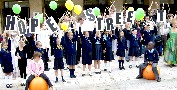 The Hope Street Festival in Liverpool, delayed from Midsummer, was on Sunday 17 September. This exciting milestone in Hope Street’s history, introducing of a start-of-season early Autumn ‘Feast’ to go in future alongside the Summer Festival, is however neither the beginning nor the end of the journey.
Liverpool’s Hope Street Festivals And Quarter (1977 – 1995)
 The first Hope Street Festival was in 1977, to mark the Silver Jubilee of HM The Queen. The next event, marking the Centenary of the Incorporation of the City of Liverpool, was in 1980. There followed a period of great concern for the cultural fortunes of Hope Street.
 During the 19803 and into the ’90s Hope Street’s cultural institutions were in great peril. From this time of peril however, in the early 1990s, emerged a community-led campaign -The Campaign to Promote the Arts on Merseyside (CAMPAM) – to ensure that Liverpool kept its flagship organisations; and from CAMPAM in turn emerged HOPES: The Hope Street Association, the registered charity which was to seek renewal of the Quarter and which was later to resurrect the Hope Street Festivals.
The original Hope Street Festivals were organised in 1977 and 1980 by a group of people who included Stephen Gray OBE and Andrew Burn, then managers at the Royal Liverpool Philharmonic Society, as well as the late Adrian Henri, one of the founding Liverpool Poets, and other local artists and restaurateurs such as Berni Start of Kirklands Wine Bar, and Paddy Byrne of the Everyman Bistro.
Talking to people in Liverpool today, many of them recall the 1977 event as tremendously exciting, taking part as school children in one of the most massive pageants imaginable – 17,000 participants enacting eight scenes depicting the four seasons along the length of Hope Street, from one cathedral to the other. (As those then involved will tell you, some children even had to run from one point to another, to enact different parts of the pageant!)
In both 1977 and 1980 there was much support from the business community. The list of sponsors contains names which sometimes take one down memory lane: Leighton Advertising of 62 Hope Street, Modern Kitchen Equipment of Myrtle Street, Ford Dealers J. Blake and Company of Hope Street, , WH Brady of Smithdown Road, Girobank, Littlewoods, Radio City, and Higsons Brewery amongst them, alongside further flung organisations like the Chester Summer Music Festival, Welsh National Opera, Theatr Clwyd and even Decca, who recorded much Royal Liverpool Philharmonic Orchestra (RLPO) music during that time… Strange to say, the first three businesses are now lost to Hope Street; but most of the others of course remain as current concerns in Liverpool. As we shall see, it was in part an enthusiasm once more to energise the business community in Hope Street Quarter which led to the resurrection of the Hope Street Festival in 1996.
1977 – The Queen’s Silver Jubilee
 The 1977 Festival was centred on celebration of the visit to Liverpool of Her Majesty the Queen, during her Silver Jubilee tour of the United Kingdom. Malcolm Williamson, Master of the Queen’s Music, wrote a pageant entitled The Valley and the Hill, to be performed in Hope Street on 21st June. (I know; I made thirty children’s ‘sheep’ costumes for the performance, whilst on a teaching practice!) This was recorded in 1983 with a choir of 2,000 local school children and the Royal Liverpool Philharmonic Orchestra (my violinist spouse was there…).
The 1980 Hope Street Summer Festival
 Then there was another Hope Street Festival in 1980, directed once more by Stephen Gray as General Manager of the RLPS, with his colleague Andrew Burn – again an impressive programme of concerts, talks and other events by leading performers and commentators, including the Allegri Quartet, Christian Blackshaw, John Cage, <a href%3
Cars, Motorists And Transport Strategies
 The debate about whether there should be a toll on the M62 between Liverpool and Manchester must not be hijacked by the pro-car lobby. There are plenty of reasons to treat the idea of motorway charging cautiously, but fundamental questions around sustainabilty of both the environment and the local economy are the real issues which must be addressed, and soon.
Sometimes car drivers just don’t get it.
There’s a new proposal from the Northern Way people that the M62 between Liverpool and Manchester become a toll road. This is to control traffic flow because already there’s gridlock every morning and evening, and in a few years’ time the situation will become untenable.
Instant response
Within two days the usual voices are being raised in opposition to this idea: It’s a tax on motorists! Another government scam to make us all suffer!
Well, actually, it isn’t. It wasn’t the Government’s idea, and in fact quite a few official responses have been along the lines that this should not happen, rather then welcoming the proposal to impose charges. There’s a big debate going on, for instance, about whether traffic calming measures (c.f. the M25) might work, or whether an extra lane could be added at the critical points along the motorway.
And, of course, there’s legitimate concern, articulated by the Liverpool Chamber of Commerce amongst others, about how putting an extra cost onto the only serious road route between Manchester and Liverpool would be damaging for trade and economic development.
The wider picture
All fair enough, and important considerations in their own right. But have we grasped the wider picture?
The suggestions now being put forward are based on the belief that the feared ultimate gridlock will occur in about fifteen years’ time; and the proposals are deliberately intended to reduce road traffic, despite the squeals of one or two car-driving letter writers in the Daily Post etc about how this is simply a tax on motorists which will do nothing to reduce traffic.
The reality is rather different: It seems we have about a decade maximum to get the balance right, and to work diligently on bringing together Liverpool’s and Manchester’s public transport systems, both the direct links and the ‘tributaries’.
Sustainability is the key
The debate should not be based on the usual car-owner cries of ‘unfair tax’, but rather about the significant issues which the Liverpool Chamber and others have raised, and about how these fit into a long-term strategy for sustainability in our economies and our environment.
If the Northern Way manages to get this discussion going, it will have done us all a favour.
Elected Mayors, Democracy And The Regional Agenda
 The campaign for a debate about elected Mayors promotes ideas of democratic involvement and public accountability. It is for these reasons, not as a short-hand way to achieve city-regions, that this campaign should be encouraged. Even if elected Mayors become the norm, towns and cities will still need major regional input if they are to be effective players within Britain.
It’s not reallly news that some major cities have problems pulling things together to achieve progress; and nor, to be frank, is it news that Liverpool often seems to be amongst that number.
This is why I believe people should support the campaign for a referendum on a Mayor for Liverpool. For the referendum to happen would require 5% of those elegible to vote in the city to support it… not many one may think, but actually quite a proportion to raise in Liverpool, the city with the lowest election turn-out in the country. In my view, almost anything which encourages people in places like Liverpool to think positively about voting is a good thing.
Elected Mayors as housekeepers
It doesn’t however follow that, because moves to consider elected mayors are supported, that wide-ranging powers for such persons should necessarily be the order of the day. Cities like Liverpool need a named ‘responsible person’, who can bang heads together to get things done, and who must be prepared to take the flack if things don’t work. This person could be seen as taking the role of housekeeper, ensuring that things happen as they should, and that, for instance, streets and parks are clean and safe, events occur to schedule and budget, bids and proposals are submitted on time and well prepared etc.
It would be important for an elected Mayor to have defined, and achieved a consensus on, for instance, what is his / her role, and what is that of the City Chief Executive / Directorates, and of elected Councillors.
Not city-regions
 Nor should it be assumed that an elected Mayor would take the lead role in the mooted city-regions. There may well be a role for city-regions as sub-regions, but that debate is still emerging and it is not for me convincing. In the end an excessive emphasis on city-regions not only loses the ‘hinterland’ of any metropoils, but also ignores the reality of regional infrastructure.
No toen or city in the UK outside London is on its own large enough to plan major transport, business development, or scientific investment. The things can only properly be addressed at regional level; as indeed they are in most parts of Europe.
Accountability
City regions and their merits or otherwise are a different debate from the current discussion about elected Mayors. If there’s now a decent debate about elected Mayors, that will be a good start. Maybe it will strengthen interest in the democratic process. And if it also encourages the idea that those who claim to give the lead require support, but must also be prepared to account very openly for their performance, that will be an excellent bonus.
A New Public Realm For Liverpool’s Hope Street
 Liverpool’s Hope Street Quarter has just been refurbished, with an exciting and imaginative scheme of new public realm work secured by genuinely ‘bottom-up’ community engagement and local stakeholder buy-in. But this is only a beginning, for what could be one of the most important arts and cultural quarters in Europe.
Dreamspace – A Wonderful Idea And A Tragic Event
 The Dreamspace concept has become a nightmare for those involved in the tragedy today, which is so far from the intended outcome of the people who created it and sought to bring us happiness and enlightenment.


The news earlier today that two people have died whilst visiting the Dreamspace installation is almost unbearable for anyone who experienced it as intended. For those who grieve it will be far beyond that sentiment – as, in a different way, it will be for those who created the idea and brought it to fruition.
Here was a wonderful idea, intended to bring happiness and a sense of well-being to those who came to experience it. I saw it whilst it was installed in Liverpool, right on the first day, before the deep unpleasantness of the incident with the young men who sought to damage it. Dreamspace is a huge concept, intended to mix beautiful light with music in an ever-changing interconnection with visitors who enter it, robed and shoe-less to increase the sense of unity with the idea itself. It is horrific to think that such a gentle sculpture could become so easily and mistakenly a place of disaster.
Art can never take priority over health and safety. It can never have priority over basic requirements for well-being. And nothing can be said to relieve the heartbreak and nightmare that for some Dreamspace has so unintentionally become. Perhaps however in the midst of this tragedy we will still know that there are artists, those who created Dreamspace amongst them, who seek sincerely to bring happiness and enlightment in their various ways to as many people as possible.


 Dreaming Realist