Author Archives: Hilary
HOTFOOT Concert 2008 – Cafe Europe (Liverpool)
 HOTFOOT 2008, in Liverpool’s Philharmonic Hall on Sunday 7 September [NB: 7 pm], is the twelfth such annual concert. Promoted as ever by HOPES: The Hope Street Association, the theme for the city’s 2008 European Capital of Culture year is ‘Cafe Europe‘, with music devised by local children working alongside professional musicians from HOPES.
Natural Vs. Physical Science Research Points Up Regeneration Added-Value
 Are the Natural and Physical Sciences squaring up for inter-disciplinary combat? Each requires huge sums of money to maintain research momentum, but who decides what research offers best value? How can we measure Particle Physics ‘against’ say, environmental technologies? With their vast ‘pure research’ budgets to secure, perhaps the Physicists will now also discover that evaluating research investment regenerational impacts supports their case.
The rumblings of dissent between the physical and natural scientists are getting louder. There is a view abroad that investment in areas like Particle and Theoretical Physics is too expensive, when we need urgently to develop sustainable, ‘One Planet Living‘ technologies.
Applied or fundamental research?
Today’s Guardian newspaper (6 September ’08) has an article about the Large Hadron Collider (LHC) – a facility (apparatus or laboratory) in Geneva which will cost £5bn over the next 20 years – which adds substance to these rumblings. Prof. Sir David King, previously the UK Government’s Chief Scientific Adviser, argues that ‘big’ money for scientific research is best spent encouraging top scientists to address climate change and related environmental issues; Britain has so far contributed about £500m to the LHC.
The Physicists however argue that thus far we know about only 5% of what constitutes the universe; we cannot stop exploration of the fundamental nature of matter.
Valid views
Both perspectives are valid. But which will hold sway?
The environmental research argument is compelling to people who know little about science, as well as many (often including natural scientists who feel short of funding) who do. The fundamental, ‘science for the sake of knowledge’ position is also persuasive, but perhaps only really to those who already perceive the deep intellectual challenges of exploring the nature of matter.
Political decisions
It was probably alright to leave science decisions to the scientists a century ago, when the Haldane Principle decreed that political involvement in research decisions was unacceptable. But things have changed, and science is now infinitely more expensive than it was then.
How, on behalf of UK plc, should the Government allocate its cash? Decisions on specific scientific programmes are still made by the Research Councils; but overall allocations are decided by the politicians.
The socio-economic case
Some while ago, practitioners in the Arts and Culture began to espouse the ‘socially useful’ position: what they do should be supported because it helps community development and regeneration generically, and makes jobs.
My expectation is that, finally, the physical scientists may catch on to the same notion.
Currently, there is little of any discussion about how investment in Big Science – the large research facility programmes – impacts on the locations in which it is placed. In the future this may change.
Jobs and infrastructure
Some 10,000 scientists are employed by (and were attracted to work in) the LHC; and that’s before we get to the armies of scribes and other support staff required for such a programme. This, inevitably, must have a huge impact on the various economies in which LHC is embedded.
Scientists until now have held the idea that ‘value-added‘ – the additional socio-economic regenerational (as opposed to simply business) impact of research investment, over and above its scientific value as such – is irrelevant to their decisions about which proposals to support. Research funds may be from the public purse, but regenerational impact, we are told, is irrelevant to decisions about where programmes are located.
Shifting criteria
This high-minded dismissal of non-science-related socio-economic impact, I predict, is about to come to an end. Many technologists and natural scientists, like their more arty colleagues, now make compelling cases for how useful their work will be to society, within quite short time spans.
This is the only way practitioners in the more abstract and fundamental physical sciences can go, in terms of short-term impact. They will have to begin, however reluctantly, to acknowledge the legitimacy of questions about the ways their huge budgets can, alongside unravelling the mysteries of the universe, provide improvements to local economies, infrastructures and regional regenerational prospects.
You read it here first.
Read also:
Science, Regeneration & Sustainability
From Regeneration To Sustainability: A Northern Take On Knowledge
Liverpool’s Hope Street HOTFOOT Tee-Shirts, 1996 –
 Every year from 1996 HOPES has produced a limited edition T-shirt for everyone involved to wear for the Hope Street Festival; and only in that first year was there no special performance at the Philharmonic Hall. So 1997 marked the first of the subsequently annual HOPES HOTFOOT concerts which celebrate the exciting and diverse communities in Liverpool’s Hope Street Quarter. That’s a lot of people – orchestra musicians, singers, helpers and supporters
Hot Water Bills In The Land Of 2000 Hours’ Sunshine
 Energy is a commodity with variable value, it seems, depending on where you are. ‘We Greeks,’ said a fellow-traveller on the train as we departed Athens, ‘could have free hot water and free lighting all year; but we prefer to pay… Why put an annual 2000 hours of sunshine to good use, when we can produce energy more expensively in other ways?‘ He was, of course, being ironic.
August Moon And Little Cat On Lykavitos (Lycabettus) Hill, Athens
 Tonight is full moon in Athens, Greece, when by tradition everyone attends free events till late on the ancient sites; and this year there’s also a partial lunar eclipse over the city. But for this feral kitten, silently padding the very highest point atop Lycabettus Hill in search of restaurant diners’ scraps, it’s just business as usual.

Every year since 1953, the August Moon Festival in Athens on the night of the full moon – believed to be the most beautiful such event of the year – has been a celebration open to everyone, with free performances of opera, traditional dance and classical music on the Acropolis and Roman Agora, as well as events located in other unique and incomparable historic sites of Athens such as the Odeion of Herodus Attikus .
This is truly an occasion, if you are in Athens at the right time, not to be missed! (And if you’re somewhere else in Greece, you may still be lucky anyway – consult the Greek Ministry of Culture for possible events in other locations.)
Rationales For Community Leadership (And Their Outcomes)
 How do people come to be leaders in their communities? Are they anointed or appointed? Do they take or earn the authority to represent their peers? What are the rationales behind their belief that they should lead? Do others agree? And what are their objectives, and why? It all depends on where you’re coming from, and what sort of ‘community’ it is. So how should those who work in regeneration with communities and their leaders approach this complex and delicate issue?
The answer to these questions is, of course, that there is in fact No One Answer.
People come to be leaders through many different routes. For some authority and legitimacy is always a struggle. For others it just comes with who you are.
Different ‘communities’ for different purposes
This is a tale of different ‘communities‘ in different places and at different times. Some communities are geographically based, some interest based, some economic, some cultural.
‘Communities’ can comprise locations defined by their mono-cultural base (whether Protestant, Punjabi or Presbyterian), whilst at the other end of the spectrum some exist only as loosely connected groups of people who enjoy Politics, Portsmouth City or Painting. Leadership in these different communities will obviously not be of just one kind.
Intentions and expected outcomes
The intended outcomes of the leadership role vary. Some people believe they’re there to uphold tradition and (in their mind) maintain stability in an unstable world. Others seek to be leaders precisely so they can change things.
Traditional leaders and those (at the opposite end of the spectrum) who are of the ‘change the world’ tendency often to see their remit as wide. Others have more piece-meal and modest expectations, perhaps to improve things in a specific and direct way.
Authority to lead
The really interesting thing is that traditionalists and revolutionaries alike usually derive their authority from (what they perceive as) universal social values or mores. But those who seek more modest and specific changes tend to legitimise their positions in reasoned ways, perhaps in terms of the avoidance of harm or similar logically justifiable and rational objectives.
There is a chasm between those who exert overall authority as such – whether to maintain the status quo or radically to alter it – and those who seek to manage specific change, which they believe can be demonstrated to be for the better.
And these forms of influence are not randomly distributed. They tend to be associated with differences in community / cultural experience, age, gender and class. One person’s assumption of power and influence may well become, without any such overt intention, another person’s disempowerment.
Competing beliefs and challenges
Community leadership and wider social interests are sometimes hard to bring together in a world where there are competing beliefs about what legitimate authority in a community might be; and indeed about what constitutes a ‘community’.
Here lies one of the biggest challenges for those of us who seek to work with people in their (and our) own localities. Delivering stability and change together is hard to handle well.
In diversity lies strength?
Where the bottom line is overt – in for instance FTSE 100 Board Rooms – the evidence is incontrovertible, that diversity of gender (e.g. The McKinsey Report: Women Matter) and culture enhances good decision-making.
But how can (or ‘should’) we apply that knowledge in communities where at present the bottom line is not overt (what exactly is being ‘lead’?) and is certainly not up for discussion?
Read also
Social Diversity & Inclusion
and
‘Workable’ Regeneration: Acknowledging Difference To Achieve Social Equity (‘Regeneration Rethink’)
Athens Music
 Music in Athens, Greece, comes in all sizes and modes – from ancient instruments through traditional music, jazz and classical concerts and back to simple melody and rhythm.
This is a city comfortable with accomplishment of all kinds and in many genres, with events listed and unlisted. In the Summer, when formal venues are closed, the streets become a natural location for the more adventurous performer.
This informal piece looks at some Summer musical offerings in Athens. It includes (below) a list of links to and phone numbers for events which I discovered, though not necessarily attended or checked out. If you know more about these or other events which readers might find of interest, please tell us via the Comments box at the end of this article. Thank you!

The range of ‘street music’ in the capital city of Greece, Athens, is an eye-opener to those of us from colder climes. Athens is a city where the traditions of ancient and non-Western people meet those of us accustomed to the folk music and formal classical music modes of Northern and Central Europe. Here is a place where the cembalon of Eastern Europe is heard alongside African percussion, the guitars and bouzoukis of the Mediterranean (and later Ireland) and the brass instruments of every part of the world.
So there’s plenty of music, much of it very relaxed and informal, for visitors in Athens – and if you know of other events not mentioned below, please do tell us about them via the Comments box at the end of this page.

Whatever your preference, there will be something to enjoy – and to engage your interest and imagination. One of the great things about ‘street music’ is that it’s for everyone, young and old alike. Just as we have found when occasionally we can perform in public spaces in Liverpool, it’s the children who stop and listen and watch, often keen that they should not be moved on by parents or carers until they have heard their fill.


For some musicians however this is serious stuff. They have instruments and recordings of their work to sell, music to make to earn a crust. For others perhaps it’s a bit of fun, a way of passing time during the Summer months. It’s not difficult as a listener to tell who has which intention; but only rarely is there simply no evidence of skill when the performance, however fleeting perhaps as players stroll between cafe venues, begins.


But not all music is performed on the street. Athens has the attributes of all great capital cities – concert halls, an opera house (even if it does perhaps require relocation and an upgrade) and museums such as that for Maria Callas dedicated with whatever degree of enthusiasm to Greek classical music performers and composers of Greece – some of whom are listed (along with the main cultural venues around Athens) below, drawing for composers’ names on the cataloguing work done during the Athens Cultural Olympiad of 2004.


Nonetheless, there are forms of music which occur throughout the year in any city. Jazz bands and stringed instrument performers can play wherever they can find a space, and in almost any combination of instruments and performers; just as traditional dancers can congregate and entertain wherever numbers can be mustered – though certainly this is not how things happen at the treasure which is the Dora Stratou Theatre, a national institution to encourage traditional dance forms, offering performances throughout the Summer.


The choice is the listener’s. Formal or informal entertainment? Go for something new, or stick with the tried and tested? In Athens it’s best to have one’s listening mode in gear, ready for the next experience. It could even be during an unsheduled coffee stop. And who knows, you could even end up buying an instrument all of your own…

See more of Hilary’s photographs: Camera & Calendar
and read more about Music, Musicians & Orchestras, Travel & Tourism and Cities in Transition.
If you have recommendations for, or if you promote, musical events and venues in and around the Athens area, please post details (with contact information, indicating whether the occasion is regular, or one-off) in the Comments box below.
Some Greek music composers:
Yannis Andreou Papaioannou (1901-1989), Dimitris Dragatakis (1914-2001), Nikolaos Halikiopoulos-Mantzaros (1795-1872), Manolis Kalomiris (1883-1962), Alekos Kontis (1899-1965), Georgios Lambelet (1875-1945), Loris Margaritis (1895-1953), Dimitri Milropoulos (1896-1962), Andreas Nezeritis (1897-1980), Georgios Poniridis (1887-1982), Mikis Theodorakis (1925-), Marios Varvoglis (1885-1967), Alekos Xenos (1912-1995)
More information on events:
Athens Concert Hall (Megaro Mousikis), Vas. Sofias & Petrou Kikkali Street, tel: (from UK) (0030) 210 728 2333
Athinais Cultural Centre, Kastorias 34-36, Votanikos, tel: (00 30) 210 348 0000
August Moon Festival (free, on the night of the full moon, at a variety of ancient historic sites in Athens))
Dora Stratou Dance Theatre, 8 Stouliou Street, Plaka (offices) and Philopappou Hill (theatre), tel: (00 30) 210 324 4395 / (0030) 210 324 6188
Hellenic Festival, various venues, tel: (0030) 210 327 2000
“Melina” – Municipality of Athens Cultural Centre, Herakliedon 66, Thissio, tel: (00 30) 210 345 2150
Municipality of Athens Cultural Centre, Akadimias 50, tel: (00 30) 210 362 1601
National Opera, Akadimias 59, tel: (00 30) 210 364 3725
Technopolis (and the Maria Callas Museum), Pireos 100, Gazi, tel: (00 30) 210 346 1589
Vyronas Music Festival, tel: (00 30) 210 766 2066 or (0030) 210 765 5748
Aegina International (Summer) Music Festival [Tickets available at the “Eleni” shop next to the Aegina Port Authority building, tel: (0030) 22970 25593, & on the door.]
And more Festivals and events…
The Royal Liverpool Philharmonic Orchestra At the BBC Proms
 The RLPO finished their season in style this evening, with a sell-out BBC Proms concert in London’s Royal Albert Hall. There was a real excitement as the audience departed after the performance, matched by the sense of achievement RLPO players derive from working with Principal Conductor Vasily Petrenko. This is surely how professional orchestral musicians like to feel at the end of a year’s hard work.

A date at the Royal Albert Hall for the BBC Proms is a highlight of the season for any orchestra, and this was no exception for the RLPO, an orchestra with a distinguished history. Vasily Petrenko and the RLPO‘s programme for the evening was the World Premiere of Graven Image for Orchestra by the RLPO’s Composer in the House, Kenneth Hesketh, Beethoven‘s Piano Concerto No. 4 in G Minor, Opus 45 (soloist Paul Lewis) and the Rachmaninov Symphonic Dances, Opus 45, with Mussorgsky‘s Gopak as an encore.
And happily even those who couldn’t join the Proms audience in person were able at absolutely no cost to do so, as for every Prom, live via BBC Radio 3.
Reviews for the concert reflected the enthusiasm on the night.
But now the players are off for a well-earned break, applause still ringing in their ears….
See more of Hilary’s photographs: Camera & Calendar
and read more about Music, Musicians & Orchestras
From Regeneration To Sustainability: A Northern Take On Knowledge
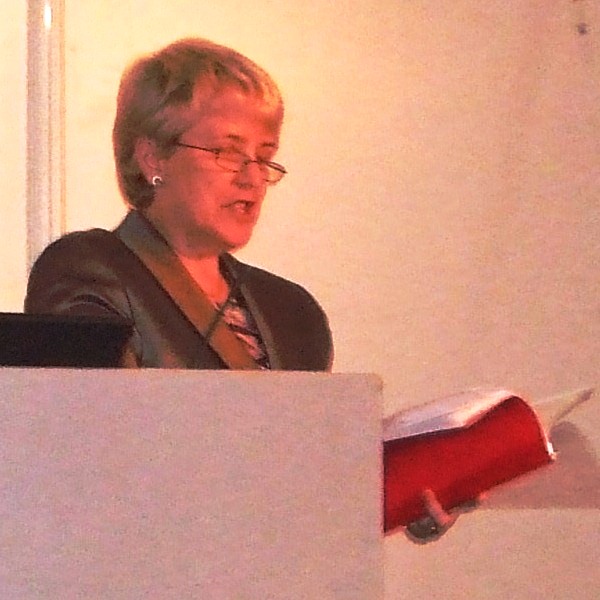 Summary: This is a version of the Keynote Lecture I gave at the NUREC 2008 conference, in Liverpool on 28 July 08.
In it we explore the connections between Knowledge Economies and Ecologies, and Big Science and Regeneration, especially in regional and sub-regional settings, and in respect of issues around Sustainability.
My basic thesis is that Knowledge is not yet recognised for the fundamental resource it surely is.
A complete version of this paper can be found on Hilary’s professional website, here.
The Haldane Principle, 21st Century Science Research And Regional Policy
 There are compelling reasons for a regional science policy for the UK; but they are often dismissed as incompatible with the Haldane Principle of 1904 and 1917/18, that government must not ‘interfere’ with scientific research. Science then was vastly less expensive and impacted far less on the economy and ordinary people’s lives. In the 21st century, the potential for regional development through science is huge – and it can only be done through intentional government direction.
The ‘arm’s length’ principle, that government should not intervene in how to determine what scientific research is done, was developed about a century ago, by Richard Burdon Haldane (1856-1928), who chaired UK Government commissions and committees on this subject in 1904 and 1917/18.
The 1918 Haldane Report recommended that only specifically required research should be commissioned and supervised by particular governmental departments. All other research, said Haldane, should be under autonomous Research Councils (of which the Medical Research Council was to become the first), free from political and administrative pressures and able to develop as was deemed fit by the Research Councils themselves.
Noble and fictional?
Noble as the pursuit of knowledge simply for its own sake may be, it’s impossible in our age of huge expenditure on Big Science that this recommendation, now almost a century old, can remain unexamined as the way forward.
The possibly apocryphal story is told (sadly, I can’t remember by whom) of one of the extraordinarily talented Huxley family having, many years ago, a laboratory at home in which he explored scientific questions; and of his son asking innocently of their young neighbour, what his father did in his (home) laboratory…. It’s not like that any more.
And in most cases it probably wasn’t like that then either. Not many people in any age have been able to pursue science just as a self-financed hobby.
Vast investments
As recent House of Commons debates have illustrated, there is growing concern that the UK Government’s huge investment in science should have the best possible return, on what is in the end tax payers’ money.
But no investment returns in our complex world can be measured in only one way. There are impacts of many kinds – on jobs and the economy, on infrastructure, on the environment, on people’s future life expectations, as well as on the state of knowledge itself.
Who does what evaluation?
Few of these impacts are easily measured, and even fewer carefully monitored from when a line of research is first proposed. This is at least in part because of the Haldane Principle and its continuing influence on government.
Politicians continue be nervous of any accusation that Haldane has been breached, an accusation easily made by scientists keen to pursue their work unhindered. So, little is made of the positive or negative impacts that scientific research of itself (as opposed to later ‘applied’ through technology and industrial developments) may have on, for instance, the locations in which they may be placed.
Single criterion decisions
‘The science’, it is proclaimed, must speak for itself, unhindered by base considerations of how it might benefit (or otherwise) non-scientific developments such as urban regeneration.
One result of this position is that decisions about large-scale and fundamental scientific research are made only by scientists, with scant if any regard to the measurable impacts which the process – as opposed simply to the possible eventual outcomes – of undertaking the research might have on the people (tax payers) who provided the wherewithal.
Surely even a hundred years ago this was not Haldane’s intention? He was in fact advising the government of the day on how best to benefit from science at a time of war.
Imaginations and applications
There is a strong case for supporting fundamental or ‘pure’ science, in the sense that it allows the very best scientists to take their disciplines forward in exciting and truly astonishing ways. The pursuit of knowledge for its own sake is a core activity in science, and, properly handled, can be an enormous catalyst for progress.
Haldane can be very properly invoked to ensure that there is no interference in the way fundamental science is actually done. We can understand that fundamental research requires scrupulous peer review, but never political meddling.
This is however very different from the idea that politicians have a positive duty to ensure all the ‘added-value’ they can squeeze for the wider community which they represent, when the government funds big research investments.
Regionalism and regeneration
In Haldane’s time the very concept of regeneration as we now know it didn’t exist.
It was only later that observers such as J.D. Bernal (in 1939) argued that the overarching consideration be social good rather than freedom of research; this being followed in 1971 by Sir Solly Zuckerman‘s critique of the artificial separation of applied and basic science – a critique in part accommodated by the Rothschild Report of the same year, which saw some funding and decision-making being handed back to government. (This thinking was also followed elsewhere, e.g. in 1972, when an article in the respected journal Nature called for an ‘End to the Haldane Principle in Canada‘.)
That was respectively 80 or 35 years ago; and despite continuing debate (in Canada, the United Kingdom and elsewhere) it seems we still fail to see where Haldane helps in the modern world, and where he doesn’t. I doubt this was a legacy the man himself intended.
Good science can also offer added value
There is little doubt that only good science is worth doing – the other sort isn’t really science at all – and good science requires genuine independence for its practitioners. Haldane continues to offer assurance that scientists can and must conduct the work they do unhindered.
We should not however confuse this guarantee of research independence ‘on the ground’ with the duty upon government to ensure its (and our) money is invested well.
Sometimes the best investment is indeed in fundamental research, expensive though this is. But the ‘non-science’ dividends of placing that research, whether fundamental or applied, in one location rather than another, may be compelling.
Regional science policy
Now that science involves such enormous funding, the case for investing that money also as part of regeneration strategies in the UK ‘regions’ is persuasive.
Some scientists on Research Councils, divorced from the realities of wider public policy, may want to cite Haldane as they resist the idea of looking at regional investment impacts ensuing from the development of research proposals. They are wrong to do so.
The time has come for regional science policies to become part of the equation, acknowledging the impact that Big Science research based away from the Golden Triangle would have on areas of the UK which require regeneration. This is hardly an ask too far.
And it is certainly not a threat to the integrity or operational independence of science, Haldane Principle or not.
Read also:
Science & Politics
Natural Vs. Physical Science Research Points Up Regeneration Added-Value
and
Big Science, Technology And The New Localism


 Dreaming Realist