Category Archives: Who Is Hilary?
The Metropolitan County Councils, Abolished In 1986
 Incredibly, it was twenty two years ago that the Conservative government closed down the Metropolitan County Councils , thereby ensuring control from the national centre of power. The impact on local decision-making was huge, as was the effort subsequently required to rebuild the regional administrative decision-making process.
The Metropolitan County Councils, like the Greater London Council and the Inner London Educational Authority, were powerful bodies representing local and regional interests, and were seen as irritants on the national body politic. So Prime Minister Margaret Thatcher decided they ‘had to go’.
But as Dr Richard Beeching also demonstrated, when years earlier he closed many local and regional railway lines, it takes little time to destroy something which holds together the physical or political regional infrastructure – and an enormous amount of money and effort to reinstate it.

This is the invitation I received to the Merseyside County Council closure reception for ‘Workers in the Merseyside Arts Community’, on 20 March 1986, at Metropolitan House, Old Hall Street, Liverpool. The evening was hosted by Cllr Keva Coombes, a local lawyer and Leader of the Merseyside County Council.
See more photographs at Locations & Events and read more about Regions, Sub-Regions & City Regions.
BURA’s Regeneration Equality And Diversity Network Has Lift-Off
 Today (20 February 2008) saw the formal launch of the British Urban Regeneration Association (BURA)’s Equality and Diversity Framework and Network. The event, at the Abbey Community Centre in Westminster, was attended by people from across the regeneration world, and produced much discussion about how BURA and its partners could move forward.
In my role as BURA Champion for Equality and Diversity I was lucky enough to join our President, Sir Jeremy Beecham, and other colleagues, in presenting and discussing initial ideas about this challenging issue.
Your views too are welcome. To begin the debate, this is what I said:
BURA Regeneration Equality and Diversity Framework Launch
Wednesday 20 February 2008, Westminster, London
This event was set up, as Sir Jeremy explained, because of serious concerns which the BURA Board has about inclusivity in regeneration.
The evidence is before our eyes; the top of the profession is overwhelmingly populated by white men.
Regeneration fits the white male stereotype for leadership in Britain only too well; and the stereotype extends even to the BURA Board itself, where Directors are elected from amongst our hundreds of members.
Something has to be done. No-one disputes that, as regeneration practitioners, we must address inclusion; but few of us have articulated how this intention fits in with regeneration. And fewer still I suspect, are sure how to do it.
The BURA Board has therefore decided to invite your help and support as we move forward on this challenging issue.
What is inclusivity and why does it matter?
A look at the work of the Equality and Human Rights Commission gives us a good feel for what an inclusive society might look like.
It would be a society in which people had safe and secure opportunities to enjoy a happy and healthy life.
In this society people of every sort would find themselves in positions of influence and leadership, and able to work towards a situation which in turn releases the potential of others.
This would be a society in which we, as regeneration practitioners, understood the impact of our work on all our fellow citizens, and then applied that knowledge across all our activities.
It would be a society in which, say, Asian women in Bury had as much opportunity to develop their interests and employment potential as white men in Cheltenham. It would be a society in which families in both these communities were equally likely to see their children born healthy and strong, with an equal expectation of a long and happy life.
In a nutshell, it would be a society which is stable and sustainable.
And if regeneration isn’t about achieving socio-economic stability and environmental sustainability, I don’t know what is.
Regeneration is more than the sum of its parts
I believe firmly that the task of today’s regeneration practitioners is to work themselves out of a job. We need to believe at a very deep level that ‘regeneration’ is not the same as ‘construction’, or ‘remediation’, or even as ‘planning’.
Critical though these callings are, real regeneration is much more than that.
After 30 years of regeneration in Britain, we should now be seeking very actively to reinvent ourselves as ‘sustainability practitioners’, as professionals who work to maintain an equitable, healthy and safe environment for everyone.
This reinvention of ourselves would require massive changes in the way we work, in our collaborations across disciplinary boundaries, and in our perceptions of how fellow citizens who are not exactly like ourselves experience their lives.
We can’t do that if we don’t understand how to achieve inclusivity, and why it matters.
But there is a very long way to go.
What is BURA doing about itself?
* Firstly, we have undertaken a thorough audit of our own organisation.
* We have looked at the gender and ethnicity of all members of staff and the Board, going back for three years, and for staff we have correlated this with salary bands. We shall report these findings to the Board when it next meets, and post a summary of this information thereafter on our website.
* We will also decide as a Board, in consultation with, we hope, our new Chief Executive, how much more data it might or might not be appropriate to record about the Board and staff.
* And we shall consult too on whether and, if so, how we need to look at the ‘inclusion’ characteristics of all BURA members.
* We would hope at the same time to start research on these characteristics as they apply to the regeneration sector as a whole, and to see how this compares with the data for the British population overall.
What is BURA doing to support progress in regeneration overall?
* Importantly, we are not seeking to compete with anyone; we are offering a supportive network which encompasses the whole spectrum of interests – inclusive, not competitive, with the sole aim of moving this positive agenda forward.
* Also, we recognise that no-one as yet has all the answers; we are simply trying, with everyone else, to identify both the challenges and the opportunities.
* We are launching today a Regeneration Equality and Diversity Framework, an ‘umbrella’ group welcoming people and organisations from every part of regeneration, ‘professional’ to ‘community’, to address a wide range of issues around equality and diversity.
This group will not seek to undertake work already done by others, but will help to link together the inclusion themes which regeneration good practice must address.
Some examples of what the BURA E&D Framework seeks to achieve
* We will support the exchange of information and views about what are the most immediate challenges for Equality and Diversity in regeneration in the UK.
* We will seek to collaborate with government at local and national level, and with research bodies already examining aspects of Equality and Diversity.
* We will develop the BURA website as a free open-access resource, available to all, hosting weblinks to legal and professional aspects of regeneration practice – including equality and legal audits – and enabling wider discussion between BURA members and partners.
* We will offer practical help and support to people from different communities who wish to become involved in regeneration – perhaps for instance by offering bursaries and work placements – in a collaboration between BURA and our members and corporate partners.
* But most of all, we will seek to work with all of you to make the BURA Regeneration Equality and Diversity Framework not just a talking shop, but a vibrant and positive reality.
In for the duration
* This is however slow-burn. We’re asking the questions but we don’t as yet have many of the answers; everyone here today can help.
* The BURA Board are unanimous that we must work hard to make our Equality and Diversity Framework a reality, not just an ambition.
We very much hope that you will want to be part of this reality.
Contact Hilary at BURA
Launching The BURA Regeneration Equality And Diversity Framework
 Next week sees the launch in Westminster, London of the British Urban Regeneration Association (BURA) Regeneration Equality and Diversity Framework.
The BURA Board has unanimously resolved to try honestly to do what regeneration is supposed to do – reduce inequality and discrimination through the creation of environments where people can lead sustainable, happy and fulfilling lives.
From the regeneration perspective, equality and diversity are difficult things to get one’s head around. There are so many variables.
I tend therefore to approach these issues from the ‘other end’, and to ask myself the Big Question: what might a community look like when we’ve finished ‘regenerating’ it?
Put that way, things begin to fall into place.
Two futures
Two outlooks are possible for a place or community which has received the full attention of the regeneration professionals.
Either it will thrive, moving forward to a happier future, where people feel fulfilled and their needs are met in a much more embedded way than before; or it will in time lose its expensive new patina and sink into a deeper, sadder, less secure state even than before.
These different outcomes depend largely on the extent to which that community has been enabled to achieve sustainability.
Three aspects to sustainability
Sustainability has three major aspectss: physical (‘environmental’), economic and social. None of these can be achieved longer term without the others.
Sustainability is impossible without equality and diversity; so regeneration too is underpinned by them.
A stark truth
The Commission for Racial Equality’s final blast at the regeneration business, when in late 2007 that organisation became a part of the new Equality and Human Rights Commission, was well placed. It demonstrated, starkly, that ‘race’ issues remain desperately under-addressed in regeneration.
And it certainly made the Board of the British Urban Regeneration Association (BURA) sit up. Already painfully aware of a lack of diversity at the top table, now we had undeniable evidence about one critically core aspect of disadvantage.
Many realities, many ways forward
The more we looked at disadvantage – whether resulting from age, religion and belief, disability, gender, race or sexual orientation – the more it seemed to stem from the same issues; issues most often around opportunities and resources which people feel they have been denied.
The multiple realities of ‘ordinary’ people’s lives are what define our communities and how they interface with the wider society. This then, surely, is what regeneration is all about?
Where to begin?
So here is BURA’s starting point.
As leading players in regeneration, BURA’s Board has resolved to try honestly to do what regeneration is supposed to do – which is to reduce inequality and discrimination through the creation of environments where people can lead happy and fulfilling lives.
To do this we will look carefully and immediately at how we can put our own house in order; we will listen to and liaise with as many other interested parties as we can; we will seek out, and where necessary and possible commission, research which informs our ambition; and we will take the message wherever it needs to go.
We introduced the BURA Regeneration Equality and Diversity Framework concept at our 2008 annual conference, in January. We shall launch it formally at our London event on 20 February; and we will monitor our progress thoroughly as we move forward.
We hope you too will want to be part of this journey.
Hilary Burrage is a member of the BURA Board, and BURA Equality and Diversity Champion. (hilary@bura.org.uk)
The BURA Equality and Diversity campaign is supported by New Start and Ecotec.
This article is a version of the piece published in New Start, 15 February 2008.
See also: New Start survey reveals doubts over cohesion and New Start Editorial of 13 February 2008.
90 Years Of Women’s Emancipation – And Feminism
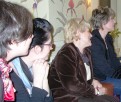 Just 90 years ago on this date was the first time any woman in the UK was ‘allowed’ to vote. Some people still alive now were born when women’s emancipation did not exist; and even in 1918 the Representation of the People Act permitted only specified women over 30 this privilege. It was to be another ten years before women gained equal voting rights with men.
From the time of the Representation of the People Act of 6 February 1918 until the Equal Franchise Act of 2 July 1928, despite this and other first and desperately hard-fought victories, democratic voting rights were still not equal between men and women.
But that was by no means the end of the fight for formal equality. It was, extraordinarily, not until 30 April 1958 – a date still easily within the memory of many people – that the Life Peerages Act enabled just four women gained entry to the House of Lords.
Not there yet
So progress has indeed been made towards women’s equality in the past century. No longer are women paid less in, or indeed debarred if they marry from, professions like teaching; no longer does the law formally and overtly permit differences in the way women and men stand before it.
But still much remains to be done. As Katherine Rake, Director of the Fawcett Society, says in her Guardian interview this week:
We have done as much as we can levering women into a system designed by men for men. Now we have to work for a society where the rules are fitted for everybody…. There has been a huge change in women’s lives, but very little in men’s. [To make further progress] we have got to look at what happens in men’s lives…..
Even now, these battles continue, worldwide….
Unapologetically feminist
So I make no apology for being a long-time committed feminist. Half a century after women’s first step towards full emancipation, the feminist agenda of 1968 was a turning point as I entered adulthood. But the year 2008 still sees a long road ahead.
In my lifetime much has changed; but not enough.
Whilst, for example, the 1975 Sex Discrimination Act brought about a fairer situation for women requiring maternity leave (and , thereby, their partners and families) – though it was too late for some of my friends and me.
Still unequal in work and in power
But gender equality in the workplace is even now nowhere near achieved. British women in full time work are still paid on average 17% less than men similarly employed; and when part-time the difference between men and women is 36%.
And in national politics, where the big decisions are made, women remain even now a minority. The 2005 General Election saw 128 women elected in an assembly of 644, most of them – as Theresa May, a leading Conservative, herself acknowledged, from the Labour Party. (As at the end of 2006, of 712 Lords, 139 were women.)
Gender fatigue there may well be; but this is no time for inaction.
A way to shape the future
There remain enormous gaps, for both men and women, in parts of our lives which, whatever the legal frameworks, still have to be addressed. Men and women remain unequal, for each of them in different ways. (And so as we know do people of different sexualities, of different colour or age, of different beliefs and with different abilities.)
You don’t, actually, need to be a woman to want to seek equality, to hold that feminism is a sensible and decent way to see the world. You just have to be a fair-minded person.
Read more about Gender & Women.
Woman Home Secretary Speaks Out On Street Fears At Night
 Home Secretary Jacqui Smith has told it as it is: many of us, men and especially women, are fearful of being out alone at night. Only really unimaginative or insensitive people – or perhaps some opportunist political opponents – would disagree with Ms Smith. This is not a new state of affairs. We have but to recall past feminist campaigns to ‘reclaim the night’ to know that.
So Jacqui Smith, the UK’s first woman Home Secretary, doesn’t enjoy being out alone at night.
This is surely not a new or startling revelation. The Home Secretary’s ‘admission’ – to me, a simple statement of a truth recognised by many – feels far more like reality than much of what we read in the papers.
Reclaim (‘retake’) the night
The idea that there is something to fear, out alone at night, is instilled in many girls (and some boys) from a very early age. In 1976 a movement began to recognise and act on this fear, by ‘reclaiming the night‘ from the men who were deemed to make it dangerous.
Women across Europe and the USA marched thirty years ago to demonstrate their belief that streets should be safe 24/7; but only more recently has this action begun again.
Telling it as it is
It feels very disingenuous that male politicians should denounce a woman in their midst who speaks candidly on a matter as fundamental as personal safety.
I hope these same men would not encourage their own female friends and family to walk the streets unaccompanied at night.
Making the streets safer
Sometimes people have to travel alone in the dark. To make their journeys safer, it is first necessary to speak the truth, to acknowledge realities, even when unpleasant.
Only after we know and understand problems can we ameliorate them.
Let’s start by thanking Jacqui Smith for being candid; and then let’s see how we can all, together, conscious femininists or not, reclaim those scary streets.
King’s Cross: Community And Colossal Opportunity Combined
 The renewal of King’s Cross – St Pancras and all that surrounds it is long overdue, but it looks to be a spectaclar project worth the wait. The final moves to achieve success in terms of the local community will however require those who should, to put their heads above the parapet so that everything comes together to make the best possible result. This project will ‘work’ for everyone as long as people really try to collaborate to get it right.
Having travelled on the bus past King’s Cross – St. Pancras on very many occasions, I can only say my heart lifted when, at last, evidence of its renaissance began to materialise.
Community links and challenges
It’s surely a unique and exciting challenge to put together a project as enormous and impactful as this. The project hits many buttons – strategic place, infrastructure, heritage, economic benefit; we could go on… King’s Cross is in anyone’s books a very spectacular and special piece of real estate.
Of course there’s still a possibility that King’s Cross will somehow miss on that vital community connection; but only if people on all sides of the equation let it. This is where civic and corporate leadership have such a critical part to play, right from day one.
Different from, say, Canary Wharf?
Given the common emphasis on transport hubs, there have been comparisons, but Canary Wharf is different. Just for a start, Canary Wharf is not at the heart of what’s to become the most important international ‘green’ hub connecting the UK and mainland Europe, and for another thing the Wharf is a glass and concrete creation with not too much reference to a long and glorious heritage.
King’s Cross is a genuine opportunity to build on a very high profile USP with enormous promise for all stakeholders.
Doubters and objectors
There are always people who oppose what’s happening. The financial and other costs of the debate with them may well be high, but in the end everyone has to be heard for progress to be made in a well-founded way. The line must be drawn somewhere, but the views of those with reservations are valuable because they help to pinpoint potential hazards further down that line.
But it’s up to everyone to make sure that in the end King’s Cross really works. This is a programme with serious commonality of interest between developers, the wider economic infrastructure and real people on whom the project impacts day by day.
Delivering success
Having seen examples elsewhere of exiting programmes based with various degrees of success in challenging locations, I’d say everyone, but everyone, involved has to ask, what more might I need to be doing to make King’s Cross fulfil its whole potential?
Of all the ‘Rules of Regeneration’, the first rule here must be: listen, seek to understand and where possible accommodate all stakeholders. And the second rule is, always remember someone has to be brave and take the lead, accountably and visibly.
Realistically forward-facing
This is not a time for pursuing plans regardless or for heads-in-the-sand-style denial of problems; but nor, most certainly, is it a time for standing back. King’s Cross is an <opportunity which comes only very rarely…. Here we have a genuinely future-facing adventure which everyone in town can share and actually see taking shape.
I watch from my bus as things come together week by week and I wish all involved the very best.
A version of this article was published on the New Start blog of 8 November 2007.
Liverpool: Governance, Growth And Going (Somewhere)
 Abrupt curtailment of the 2007 Mathew Street Festival, silly ideas about removing fish so the docks become a concert arena, questions about preparations for the Big Year…. Liverpool 2008 is a drama unto itself. The leading arts venues have devised a good cultural programme for European Capital of Culture Year, but concerns about what else must be done remain.
This Website Is Two Years Old Today
 Well, happy birthday to us all!
Today is two years to the day from when I posted my first ‘real’ blog – a day my website designer Nick Prior and I had worked towards for several months. And a whole twenty four months later, we’re still going fine, with ever-growing numbers of visitors and well more than three hundred pieces, about ‘all sorts’, up and on-line.
It’s been a great trip so far. It’s a real challenge – to which you can say, better than I, whether I’ve risen – to write clearly and, hopefully, in an interesting way, about the things I see around me and become involved in. But whatever, I really enjoy trying….
The stats
When we started I was delighted if just a tiny handful of kind friends visited the site in any one day. Now hundreds (still I’m sure kind friends, but often at a heck of a distance – my website statistics tell me there have been visitors from 130 countries) pop in and out over the twenty four hours.
And now too the website’s Google rating is (fingers crossed) a steady five, a measure I could only dream about a year ago. Nick Prior told me it would take about this long, if I worked hard to keep things going; and, as usual, he was right.
The content
But much more importantly than Google ratings, I think I’m beginning to learn ‘what works’. I have always wanted this website to be a pleasant place to visit, somewhere of course where you can read a particular take, as well expressed as I can make it, on issues which engage me; but also somewhere which offers enjoyable and interesting photographs and ideas.
In short, I wanted to create a sort-of on-line ‘magazine’ for people who share some of my interests… as I really appreciate when they (you) share ideas back with me via the Comments box or in emails.
Thank you!
So, thank you Nick for deciding to take time (then and still now) to get me up and running, and for suspending belief enough to think maybe, just maybe, I’d do something with this website for more than just a few weeks.
And thank you, Dear Reader, for bearing with me too. I really hope you’re enjoying what you see.
Read more articles on Hilary’s Weblog.
What Makes A Good Regeneration Worker?
 All regeneration and strategic planning professionals need to have excellent formal qualifications and wide experience; the job is far too important for anything less. But what other characteristics are also required to make a good regeneration official into an outstanding agent of delivery on the ground? Here is a list of such characteristics, from a rather specific observational position.
Here are some suggested stereotypical characteristics of the ideal regeneration or urban / rural planning worker:
- Willing to listen and learn; everyone has something to offer
- Open to the idea that communities change over time
- Realistic about the balance in plans and designs of art and application
- Knowledgeable about the area’s infrastructure and transport arrangements
- Involved in the community and active in establishing good local facilities
- Not afraid to challenge the status quo, but also keen to keep the peace
- Gets quickly to the bottom of the issues; there’s lots to do!
- Manifestly focused on what works and what’s sustainable
- Ultra-aware that time is precious; opportunities need to be seized
- Motivated by making things better for all stakeholders
- Sensitive to the requirements of those less able to articulate their needs
Have you spotted the tongue-in-cheek subtext of this list?
The ‘hidden message’ is of course offered only fun; but the actual listed characteristics are in my view a fundamental requirement of any competent regeneration worker, however formally qualified they may be.
What do you think?
This list was devised as part of a discussion about developments inhigh-rise living, for an Urban Design Week Coffee Shop Debate in Liverpool, September 2007. It was also published as a New Start external blog.
Sky-High Homes For The UK’s Regional Cities?
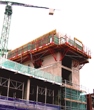 How many people reading this article actually live in a city centre? How many readers in live a high-rise apartment? And how many of these readers are aged 30-50?
My guess is that fewer readers live in high-rise than have views on them; the evidence certainly shows that most people past a certain age choose to live in suburbia or out-of-town. So is the commercial emphasis on city centre ‘executive’ apartments sustainable?
One young woman I know, a lawyer, lives with her husband in an a sixth floor apartment in Manhattan, New York.
Another, a business consultant, until recently lived in a fourth floor apartment near the commercial centre of London, but has just moved to a town house there.
My husband and I live in suburban Liverpool, and have done for many years.
Economics and demography
Economics and demography are everything in housing. People choose where, ideally, they would like to live, by reference to their family requirements.
Many people, as we all know, are happy to live in high-rise city centre accommodation before they have children, but in the UK, and especially outside London, most would prefer to make their family home in suburbia – as indeed I did.
Other countries, other ways
In other countries the suburban option may be both less available and less often preferred.
Some young couples in the UK, like the ones I know in London, can resolve their requirements by choosing a town house near the city. Others elsewhere, like the couple in New York, don’t feel the necessity to abandon high-rise living as quickly.
Why the difference?
There is less of a tradition in the UK of high-rise living except perhaps, and tellingly, in tenements and council housing.
Other cities such as New York have pressures on land which mean that over time they have adjusted to high-rise.
Sim city for real
Have you ever played Sim-City? In New York space issues have resulted in the creation almost of Sim-City tower living.
Everything is there – the shops, the amenities – including clinics, nurseries and gyms, the work places, and then, above them, with different access, living accommodation, roof gardens etc.
And in the same block as the building will be the link to efficient public transport….
Sustainable living?
These sorts of arrangements make it possible for everyone to live In Town, and many people except those with growing children to prefer to.
It’s time and, importantly, energy efficient to live in, e.g., Manhattan, and the experience is generally holistic. The experience addresses what’s needed in a reasonably sustainable way.
London
Looked at like this, we can see that London is a half-way house between Manhatton and Liverpool.
The UK overall is a very densely populated island, but still only about 5-10% of it is city-space.
Nonetheless, land is very scarce in London, and London has some of the attributes required to make it a preferred city living option. And that city is working hard to improve its offer.
Liverpool
Liverpool, however, is still losing population, albeit at a reducing rate. And we have enough houses but not always ones people like.
Unless the ‘core offer’ on Liverpool city-centre living improves rapidly, I can see little prospect of sustainability in tower-block living here.
Live-ability
We haven’t, yet, factored in the amenities to make Liverpool city-centre ‘people friendly’, as is only too obvious on any Friday night.
For me therefore high-rise in Liverpool, in the brave new world of ‘executive’ apartments, is not where I would currently put my money as a developer.
Quality of experience
Fashion quickly becomes fad and then old hat when the quality of the experience is lacking.
I’d advise investors to think about how NY or London do things – maybe even live there for a while – before they go any further with high-rise in Liverpool.
High rise and high income?
Even a decade or two ago in the UK high-rise still often (except in, say, parts of Edinburgh and London) went with low-income.
Now, conversely, high-rise and high-income seem to go together; which is fine in London; but not elsewhere.
Real executives for ‘executive’ apartments?
Liverpool should put a hold on more high-rise executive apartments until it has a more high-income, young, executives in genuinely sustainable jobs to live in them.
I’d say, let put some functional flesh, some real amenity, on the skeleton of Liverpool’s developing infrastructure
before we go for fashion in housing.
Moving forward sustainably
* Let’s first make Liverpool city centre safe and people-friendly.
* Let’s use professionals to develop the city who have experience of family life and of city centre living, to help us see what more needs to be done.
* Let’s explore what we can do to integrate services, amenities and enterprise with ‘livable’ space.
* Let’s make Liverpool’s city centre sustainable and let’s reverse our population decline before we go big-time in Liverpool for high-rise…. especially if it has more style than substance.
This is an edited version of a talk given by Hilary Burrage as part of a debate in Liverpool during Urban Design Week, hosted by Taylor Young, on 18 September 2007. The event was entitled ‘High rise living getting you down!?’ Almost all speakers in the debate agreed with the position taken here.


 Dreaming Realist