Category Archives: Travel
London’s Theatre Museum Is Closing – So Why Not Bring It To Liverpool?
 The national collection of performing arts memorabilia, at the Theatre Museum in London, is to be dispersed when the Museum is closed in January 2007. So why not send it instead to Liverpool, as a ‘V&A Liverpool’, and let us up here have it as a very special part of our 2008 European Capital of Culture celebrations?
The sad news this week is that London’s Theatre Museum is to close. Its home in Covent Garden near the Royal Opera House is to be no more, and its exhibits will be dispersed by its parent body, the Victoria and Albert (V&A) Museum.
A loss for the arts world, and everyone else
 I’m sure there will be knowledgable people who will conclude that the merits or otherwise of the Theatre’s exhibits justify this decision, but to me it seems shocking. I visited it quite recently for the ‘Unleashing Britain – Ten years that shaped the nation: 1955-1964’ exhibition and, as I reported on this weblog, I found the whole place fascinating.
Perhaps the Theatre could be said to have been its own worst enemy, insofar as it always look closed even when it’s actually open – the doors seem blank and much of the exhibiiton is ‘below stairs’, in a wonderful but not-visible-from-the street warren of tunnels and small rooms; but the external visibility problems could easily have been resolved.
A bright idea?
 However, if people in London don’t want the Theatre Museum collection as an identity, I have an idea…. Why not bring it to Liverpool for us to enjoy, and to develop as a very special national element of our celebrations in 2007 and 2008? We have a great tradition of theatre (and opera) in this city, and the V&A could open the revived exhibition as a ‘V&A in the North’, as the Tate has done with Tate Liverpool.
And to the national exhibition we could of course add the archives of our own theatres, the Royal Liverpool Philharmonic’s archive and the history of Hope Street, Liverpool’s performing arts quarter.
There’s just about time to get the ball rolling, if we all started to work on this now. It would be a superb asset for Liverpool, and would keep the national exhibition in the public eye, when all our vitiors arrive for Liverpool’s 2008 European Capital of Culture Year. We have plenty of large buildings which could be put to good use in this way, and surely the maintenance costs could be found from somewhere, just as they will have to be if the artifacts stay in London anyway?
Benefits all round
If London really doesn’t want to keep the Theatre Museum as an identity, here’s an opportunity for them to do something really good as partners to help us ‘up North’ to gain even more value from our special years in 2007 and 2008, and beyond.
Read more articles on the National Theatre Museum.
Penny Lane, Not Any Lane (Liverpool)
 Penny Lane in Liverpool is one of Liverpool’s most famous streets. How sad then that the high hopes of this community have been dashed so many times, as they try to secure their dream of a Millennium Green and a Centre for visitors and locals alike. A decade waiting is quite long enough. Now there must be some action.
 Ten years is not a long time in the life of a city, but it can be in the life of a community. In that time people can arrive and depart, have families or see their youngsters leave. Many things determine the likelihood of any of these events, not least changes in the tone and appearance of that community’s actual location.
These thoughts came to mind as I recently made a visit to Penny Lane, that part of Liverpool’s inner suburbs, not far from my own home, which has been immortalised by our most famous sons, the Beatles.
Does it have to take a decade?
 Ten years ago local residents decided they would like a Millennium Green and a Centre for locals and the many visitors, on the Grove Mount site of fairly undeveloped land along Penny Lane. After much hard work they secured a promise of such an amenity as long as they were able to secure the land and produce a sensible business plan. As part of the celebratory activity following this promise, I took ‘before’ photographs of the area – which I had hoped would swiftly be superseded by the ‘after’ photos.
Three cameras and thousands of photographs later, I’m still waiting.
The City Council has made various vaguely encouraging noises over the years, but nothing of substance seems to be happening. The field still hosts very occasional children’s football matches, but is if anything is more derelict than before. It is strewn with litter and worse; and the building in the corner is in a serious state of collapse.
Community impact
 Unfortunately, much the same can be said of some people in the local community. Local youngsters (by no means a majority of them, but enough) use the field to hang out, disturbing and worrying other residents, whilst those who campaigned for the Millennium Green hand on grimly to their dream, never having imagined when they began that so much later still there would be no evidence of success.
Is this the way to treat people who give whatever they can of their time, imagination and enthusiasm in trying to improve their community?
People Power
 Someone once said that a theme to which I consistently return is People Power. Too right, if what is meant by that is respecting and helping decent folk to maintain the areas in which they live. This, in my books, is a requirement on us all.
For now, the only satisfied ‘resident’ of the proposed Penny Lane Millennium Green is the cat who suns himself on the entrance pillars to this sorry, derelict site. I really hope that before long the powers that be will get a grip, and that, before the humans decide to give up completely, this happy little felix will have to relocate.
Hope Street, Liverpool: History And Festivals (1996 – 2006)
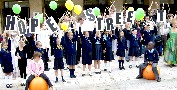 The Hope Street Festival in Liverpool, delayed from Midsummer, was on Sunday 17 September. This exciting milestone in Hope Street’s history, introducing of a start-of-season early Autumn ‘Feast’ to go in future alongside the Summer Festival, is however neither the beginning nor the end of the journey.
Liverpool’s Hope Street Festivals And Quarter (1977 – 1995)
 The first Hope Street Festival was in 1977, to mark the Silver Jubilee of HM The Queen. The next event, marking the Centenary of the Incorporation of the City of Liverpool, was in 1980. There followed a period of great concern for the cultural fortunes of Hope Street.
 During the 19803 and into the ’90s Hope Street’s cultural institutions were in great peril. From this time of peril however, in the early 1990s, emerged a community-led campaign -The Campaign to Promote the Arts on Merseyside (CAMPAM) – to ensure that Liverpool kept its flagship organisations; and from CAMPAM in turn emerged HOPES: The Hope Street Association, the registered charity which was to seek renewal of the Quarter and which was later to resurrect the Hope Street Festivals.
The original Hope Street Festivals were organised in 1977 and 1980 by a group of people who included Stephen Gray OBE and Andrew Burn, then managers at the Royal Liverpool Philharmonic Society, as well as the late Adrian Henri, one of the founding Liverpool Poets, and other local artists and restaurateurs such as Berni Start of Kirklands Wine Bar, and Paddy Byrne of the Everyman Bistro.
Talking to people in Liverpool today, many of them recall the 1977 event as tremendously exciting, taking part as school children in one of the most massive pageants imaginable – 17,000 participants enacting eight scenes depicting the four seasons along the length of Hope Street, from one cathedral to the other. (As those then involved will tell you, some children even had to run from one point to another, to enact different parts of the pageant!)
In both 1977 and 1980 there was much support from the business community. The list of sponsors contains names which sometimes take one down memory lane: Leighton Advertising of 62 Hope Street, Modern Kitchen Equipment of Myrtle Street, Ford Dealers J. Blake and Company of Hope Street, , WH Brady of Smithdown Road, Girobank, Littlewoods, Radio City, and Higsons Brewery amongst them, alongside further flung organisations like the Chester Summer Music Festival, Welsh National Opera, Theatr Clwyd and even Decca, who recorded much Royal Liverpool Philharmonic Orchestra (RLPO) music during that time… Strange to say, the first three businesses are now lost to Hope Street; but most of the others of course remain as current concerns in Liverpool. As we shall see, it was in part an enthusiasm once more to energise the business community in Hope Street Quarter which led to the resurrection of the Hope Street Festival in 1996.
1977 – The Queen’s Silver Jubilee
 The 1977 Festival was centred on celebration of the visit to Liverpool of Her Majesty the Queen, during her Silver Jubilee tour of the United Kingdom. Malcolm Williamson, Master of the Queen’s Music, wrote a pageant entitled The Valley and the Hill, to be performed in Hope Street on 21st June. (I know; I made thirty children’s ‘sheep’ costumes for the performance, whilst on a teaching practice!) This was recorded in 1983 with a choir of 2,000 local school children and the Royal Liverpool Philharmonic Orchestra (my violinist spouse was there…).
The 1980 Hope Street Summer Festival
 Then there was another Hope Street Festival in 1980, directed once more by Stephen Gray as General Manager of the RLPS, with his colleague Andrew Burn – again an impressive programme of concerts, talks and other events by leading performers and commentators, including the Allegri Quartet, Christian Blackshaw, John Cage, <a href%3
Visiting Valencia
 Valencia, Spain’s third largest city, offers much more than simply the industrial centre which many imagine. This mediaeval seat of learning and trade has a charm reaching far beyond the attractions of its wide sandy beaches and windswept sea.
Valencia is a wonderful place to visit; history and modernity go hand in hand with a fascinating range of things to do and enjoy. But it remains a city in transition where there’s still scope, as in many other cities ‘on the edge’, for better communication with those who come to enjoy and admire this evolving location. In some ways, however, that’s part of the adventure….
In 2007 Valencia plays host to a world-class event, the America’s Cup; but it also has an exotic living civic history and a rural hinterland, known so far to only a few, which encompasses the Albufera ornithological paradise and the ancient traditions of towns like Sagunt and Xativa.
Valencia, we now know, is The Place for everyone to be seen in 2007. It’s to host the America’s Cup on behalf of Switzerland, and everyone who’s anyone will be there.
Well, that’s next year. In the meantime, we turned up this August (2006) for our holiday, barely aware that the America’s Cup was on the agenda (though, come to think of it, we did have a brief encounter with the run-up to it on a trip to Marseilles last summer).
For us, arriving late on a hot August evening, the attraction was simply that Valencia is a city with history, sun and lots to see.
First impressions
Our rule-of-thumb is that the hotel we choose for our holiday should be near the historic centre of the selected sunny city destination; anywhere near a cathedral is usually a good way to ensure that, especially if the map shows the streets around the hotel as small and windy.
 And so we found ourselves, that first evening, sitting in a paved square with its own uplit fountain outside the Astoria Hotel, serenaded by some very business-like passing musicians and enjoying a late meal after our travels. (We subsequently realised that ‘late’ is a different idea in the mind of a Brit from that of Valencians, whose young families dine out at times which seemed exotic even to us as oldies.)
Then next morning we began our annual adventure, to discover as much as possible about our host city whilst taking in the ambiance and enjoying a few of life’s little luxuries. Not hard to do in Valencia!
A city of contrasts
You can read all the guidebooks about a city, but nothing except direct experience takes you to the real thing. One lasting impression we have of Valencia is that it’s amazingly flat and easy to get around. Don’t, whatever you do, take a car – the local parking attendants are very diligent. But do get a street map and some walking shoes; this is easy terrain. Take your time and your ease and savour the freedom to roam which visitors to 
 Valencia can enjoy. The mediaeval centre of the city is compact and rewarding for those who linger and explore it.
And do be prepared for surprises. Until you’ve seen it, you truly won’t be able to understand the impact of the Third Millennium City of Arts and Sciences, with the Palau de la Musica, its enormously impressive Science Museum, Congress Palace (still being built) and the wonderful Oceanografic, complete with shark tunnel, flamingos and leaping dolphins.
Nor can you really imagine the exquisite architectural balance of the Plaza de la Virgen which shares the centre of the old city with the Cathedral and other mediaeval buildings.
It’s a meeting point, a perfect setting for a relaxing break or meal and, almost unnoticed, adjacent to the site of roman remains, visible through cleverly placed glass partitions and in one place actually excavated and viewed via a glass-based water feature. Here is evidence before our very eyes of Valencia’s history from Roman times onwards, set with such sense of place that it feels almost unreal.
 Valencia is green
Altogether a different experience is the greenness of Valencia. We had heard of the great Turia, the now-dry river bed which surrounds the old city and provides some ten kilometres of leisure space for locals and visitors alike. Walkers, cyclists, footballers (of all ages and both genders), relaxed locals and tourists mix with ease in this enormous space, enriched with much public artwork and trees of every sort, and spanned at many points by bridges ranging in design from the formidably modern to the elegantly ancient.
This is an open space, magnificently appointed, which must surely meet the needs of all who use and visit it – yet it came about only because city leaders feared another mighty flood, such as that in 1957, and so they decided to divert the river proper. Sometimes it is indeed possible to bring about good from catastrophe.
 What was less familiar to us was Valencia’s stoutly walled (and thereby almost un-findable) Botanic Garden, which is administered by the University. It’s an oasis of clearly ordered information, calm and dappled light.
And further afield is the huge shallow lagoon of Albufera (we went on the Bus Turistica), just a metre deep for most of its five kilometre diameter, but home to many different birds and host to thousands of visitors who are transported in the traditional flat-bottomed boats of the local people.

 Strangely, to most of us from the more Northern parts of Europe, almost none of these amenities has developed commercially. Of course in some ways that’s great, but in other ways not so. You can’t even buy a bottle of water on your trip to Albufera, and locating the entrance to the Botanic Garden is a real challenge – though admirably it was open on a Bank Holiday when everywhere else was closed. (In fact, many things, including – despite the jellyfish sea bathing scare – the main public swimming baths, were closed for the whole of August…)
More architecture
 Back exploring the built environment, we were fascinated by the range of styles and shapes of the city. The fifteenth century UNESCO World Heritage site of La Lonja de los Mercaderes is one of the oldest secular institutional buildings (it’s a mediaeval silk trading hall), and just opposite it is the ornate early twentieth century Mercado Central, not to mention the extraordinary Estacion de Nord (sadly next door to the only real blot we saw on the valencian landscape, the Bullring, still put to its original use – though happily functioning as a market whilst we were in town) with its tiled salutation of Bon Voyage on the walls in many languages.
Wider afield


Conveniently, our hotel being just across the Plaza del Ayuntamiento (City Hall) from the Estacion de Nord, it was easy to get out of town on the train for the green hills which surround Valencia. Thus we found ourselves taking days out variously in Sagunt to the north and Xativa to the south – both famed for their fortress castles, but both also surprising us with other sights as well.
 In Xativa we suddenly encountered an enormous street market – at least a kilometre long, with everything from wonderful dried herbs, to candles, carved wooden animals and (thousands of!) walking sticks – which had encamped for a week, marking the traditional Southern European Feast of the Assumption on 15 August. Here, where we had anticipated just a quiet stroll, were merchants from all over the world, South America, Africa and closer to home, many of them in traditional costume, plying their wares, selling food, playing music and generally in celebratory mode.
 And in Sagunt, a place like Xativa which from the railway station seemed unappealing – and was certainly seriously unsignposted – we saw a magnificent open-air opera house, reconstructed in somewhat controversial style on the site of a Roman amphitheatre, overlooking Sagunt’s fabled old town but still far below the castle with its breath-taking vistas across the mountains and plains encompassing Valencia city, and onwards to the sea.
A place to revisit
Valencia is vibrant and varied, a place to return to when one can. Not every aspect of the transition to a modern city has been resolved, as the continuing use of the Bullring in its original role demonstrates, but it is evident that much progress has been made. There were of course things missing on our visit.
Nowhere in the city itself was any music, even small-scale performances (other than enterprising street musicians), to be found during August. Many places provided no clues for non-Spanish / Valenciano-Catalan speakers about how to conduct one’s business – always crucial if serious tourism is to be encouraged. Most tourist information points (even at the train station) were thinly stocked and closed in the afternoons and during festivals, even though thousands of visitors were in town. Signposting is almost non-existent, at least as far as we could see. Public transport remains largely a mystery to us even now, and after about ten at night seems effectively to disappear, which might be thought strange given the late hours kept by the locals.
But on the whole these are not aspects of great cities only now emerging into prominence which don’t also occur elsewhere. They are things which will need to be addressed as Valencia becomes more used to welcoming visitors from far and wide.
Valencia is a city with great promise for future, as well as a fascinating past. If you haven’t been there yet, it should be firmly on your list of places to look forward to.
A New Public Realm For Liverpool’s Hope Street
 Liverpool’s Hope Street Quarter has just been refurbished, with an exciting and imaginative scheme of new public realm work secured by genuinely ‘bottom-up’ community engagement and local stakeholder buy-in. But this is only a beginning, for what could be one of the most important arts and cultural quarters in Europe.
Dreamspace – A Wonderful Idea And A Tragic Event
 The Dreamspace concept has become a nightmare for those involved in the tragedy today, which is so far from the intended outcome of the people who created it and sought to bring us happiness and enlightenment.


The news earlier today that two people have died whilst visiting the Dreamspace installation is almost unbearable for anyone who experienced it as intended. For those who grieve it will be far beyond that sentiment – as, in a different way, it will be for those who created the idea and brought it to fruition.
Here was a wonderful idea, intended to bring happiness and a sense of well-being to those who came to experience it. I saw it whilst it was installed in Liverpool, right on the first day, before the deep unpleasantness of the incident with the young men who sought to damage it. Dreamspace is a huge concept, intended to mix beautiful light with music in an ever-changing interconnection with visitors who enter it, robed and shoe-less to increase the sense of unity with the idea itself. It is horrific to think that such a gentle sculpture could become so easily and mistakenly a place of disaster.
Art can never take priority over health and safety. It can never have priority over basic requirements for well-being. And nothing can be said to relieve the heartbreak and nightmare that for some Dreamspace has so unintentionally become. Perhaps however in the midst of this tragedy we will still know that there are artists, those who created Dreamspace amongst them, who seek sincerely to bring happiness and enlightment in their various ways to as many people as possible.


 Dreaming Realist