Category Archives: Sustainability As If People Mattered
Carbon-Neutral Villages, British And Czech Alike
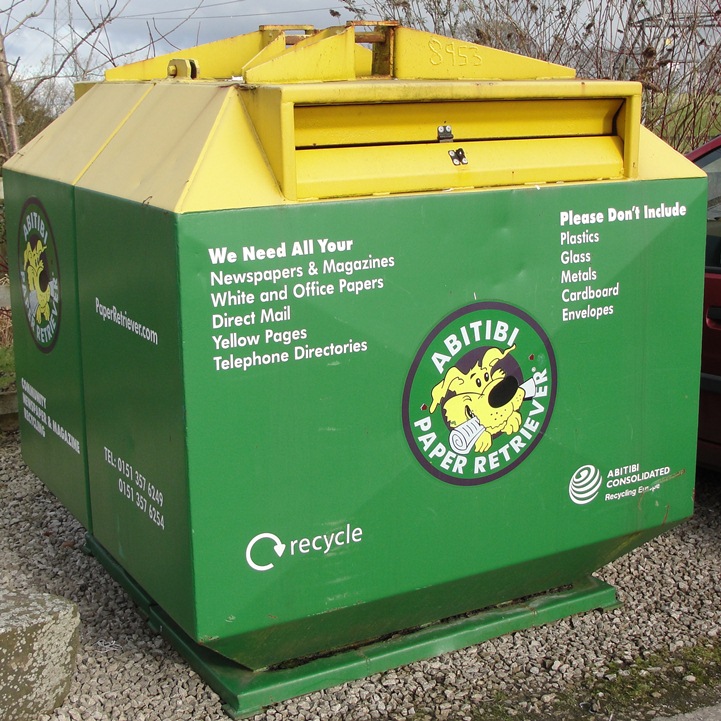 Self-sufficiency in energy is an ambition shared by many. Increasingly we are recognising that carbon-neutral living must be for real. Communities in Ashton Hayes, near Chester in the U.K., and Knezice, an hour east of Prague in the Czech Republic, provide different real-life examples of how this might be achieved.
Co-incidence or, perhaps, rather more than that? Perhaps the renewable energy agenda is at last becoming mainstream.
Water, Water….
 Will water be the next compelling commodity? It’s one of the most fundamentally important things in life, yet the connections between water and ‘sustainability’ (economic, political or even simply physical) are rarely at the front of our minds. Perhaps 2007 will be the year when we begin to think more aquatically. But first, the political will to deliver must be helped to be there.
My conscience has been jolted.
For several months I’ve had a WaterAid leaflet on my desk, reminding me, horrifically, that a child somewhere in the world dies every 15 seconds from ghastly illnesses connected with contaminated water. And alongside this leaflet has lain an article by John Vidal of the Guardian, written on 17 August ’06, reporting on assessments by forecasters from some of the world’s leading corporate users of fresh water – which will, they predict, be the source of widespread conflict by 2015.
Neither of these publications makes easy reading.
Two personal tales to tell
This week my sister, a doctor, told me about a recent visit to India, when she had seen for herself the incredibly pressing need for clean water – both to drink, and to improve overall hygiene in some very challenging locations, where people are trying as hard
as they possibly can to make decent lives for themselves and their families.
Then, yesterday, I heard the response from a colleague to the question: ‘What has been your greatest personal achievement?’
Without hesitation he replied it was installing a clean water supply in a distant part of Africa where, until the tap of his engineering water-supply project was ceremonially turned on, and his glass filled crystal-clear with this precious commodity, there had never before been drinkable running water….. Well, as personal achievements go, that has to be pretty good.
The Great Stench
And I have also just read Larry Elliott’s piece in the Guardian of 15 January ’07, in which he refers to London’s Great Stench of 1858 – the year Thames effluent so got up
the noses of Parliamentarians that public health measures finally came into their own. Elliott then reminds us, as does my WaterAid leaflet, that poor sanitation still kills millions every year.
Perhaps we begin to see an emerging pattern here. Politicians can make a real difference, but they need a seriously heavy public nudge to feel they are politically safe to do so.
Action as well as words
Firstly, to avoid huge conflicts in the fairly near future, we need to think right now about conserving water and about climate change and its affects on water. David Milliband is obviously our man there, as Secretary of State for Defra; and the evidence is that he and his colleagues are working very hard on this.
Secondly, as Larry Elliott this week makes clear, water is simply
not at the top of the aid agenda – but Chancellor Gordon Brown, a politician who really does try to make things better in the developing world , has said he would welcome more public pressure to do just that.
Making progress
So let’s see if we can move things on. We can all talk about climate change, and ‘save’ water where we can in our own lives; but the facts as they stand for many people in parts of the developing world are too horrible for most of us even to contemplate. The future, however, could be so much better.
WaterAid works in 17 countries (Bangladesh, Burkina, Faso, Ethiopia, Ghana, India, Madagascar, Malawi, Mali, Mozambique, Nepal, Nigeria, Pakistan, Papua New Guinea, Tanzania, Timor-Leste, Uganda and Zambia) providing water, sanitation and
hygiene education to some of the world’s poorest people. …..
Taking water to people who need it
If you can give a donation – however large or small (even £2 really helps) – to WaterAid, please click here.
And if you would like to expand on why the Chancellor and others should be supported 100% in telling us all how very important access for people everywhere to clean water is, the Comments box below is yours to write in.
All of us together can make it possible for our leaders to do what must be done to deliver clean water for everyone. Thank you!
See also: World Water Day (22 March 2007)
Seven Reasons For Optimism In 2007
 The cynics will always be with us ;and they have a point. Nonetheless, for many people things are as good as, if not better than, they have ever been. We can – and should – take a responsible view of events, but without denying that in many ways 2007 could be very positive for almost all of us. Here are some reasons to be optimistic as we enter the new year.
The media, as ever, is full of reasons to be gloomy as we enter 2007. But in reality we all know that looking on the bright side at least some of the time is good for us.
So here are some reasons to be optimistic in 2007:
1. The Environment
Global warming and climate change are at last receiving the attention they should – and most commentators still reckon we have a good chance of doing something about it if we all make the effort, right now. [And in the meantime, the weather in Britain is being very kind at a time of year when freezing fog – ‘pea-soupers‘, remember them? – used to be the norm.]
2. Health
Life expectancy (in the U.K.) is the highest it has ever been, and people are healthier than ever before. 60 is the new 40, so it is said; and you won’t have to retire at a set age any more if you don’t want to. [But if you do retire early, you’ll still have lots to do, now that expectations have risen so much.]
3. The Economy
Inflation and interest rates are still relatively low (remember 18% mortgages?) and employment is still high, after a long period before the Millennium of horrendous worklessness for millions. [And wages are going up, or have been levelled out more fairly, for many ‘ordinary’ worlers now.]
4. Life-long Learning
Opportunities for education and training for everyone have never been more wide-open and accessible. [You may need to take a student loan, but in many countries that’s how it’s always been – and the loan interest rate is amazingly low, plus you don’t have to pay at all if you don’t earn a reasonable wage; and for many vocational courses there are no fees – so everyone can benefit.]
5. Housing
Houses are warmer, more energy-efficient and better designed
than at any previous time. [And more people in the UK own their own homes than ever before.]
6. Open Society
If you need to find something out, the chances of doing so have improved greatly with Freedom of Information. [And the internet gives you a view of the world which can open doors on cultures, knowledge and ideas which previous generations couldn’t even dare to dream about.]
7. Laughter
At long last, it is being recognised that it’s OK to enjoy yourself – laughter and fun are now officially good for you!
The glass is half full
Yes, I know each of these points has downsides, and it’s always easier (and less effort) to see the glass as half empty rather than
half full. But I bet there are few people who recall life as it was many years ago who would actually choose to turn the clock back on a lot of things. And there remain, sadly, many people in other parts of the world than the West to whom our way of life seems to be unimaginably privileged.
Let’s make 2007 a year when we explore how much better still things can be if we perceive what’s good about our lives, as well as what’s in need of improvement. Why not ‘count our blessings’, if we’re lucky enough to be able to? Then we can concentrate on helping to make things good for other people too.
Maybe it’s time to be brave, to stop the criticism from the sidelines and to start having the courage to take active responsibility for at least some of what happens. Let’s try being positive, and see where it takes us.
Sefton Park, Liverpool: Winter Solstice 2006
 Today is the Winter Solistice – the shortest day of the year, if by ‘day’ we mean daylight hours. Yet, in this so-far extraordinarily warm Winter, even at this point in the annual cycle of birth and rebirth there is much to see when we venture out into the great urban spaces such as Liverpool’s Sefton Park.

 This is the Winter Solstice, a time when little is expected of an urban park, a time of anticipated bleakness and dank dark days. Yet in this month of nothingness Liverpool’s Sefton Park, just a mile or two from the city centre, has life in abundance. The small creatures of the secret places continue to roam their tracks, there are birds both of the water and of the air, and humans too, of every sort, take their ease with their companions, their children, their partners and their four legged friends.
A park for all
 Here are young and older couples, parents and children, kids looking for a bit of fun by the lake, people exercising seriously and people intent on doing nothing. The short day offers no excuse for staying indoors, whether there be sunshine or showers. The opportunity to take the air remains, for so far this Winter there have not been many really wild or soakingly wet days when the only place to be is home. Even in this, the solstice week, walking in the park is what the people of Liverpool have been doing.
Mists and mellowness, not biting winds


 This is still, in Winter 2006, the season of mists and shadowy silhouettes against the sky. It is not as yet the season of ice and snow, though doubtless this will prevail as the year turns on the coming Spring equinox, for a short while
covering everything in a shining blanket of white.
But for now the mildness of Autumn stays with us whilst the temperament of Winter fails to claim the expectations of the park. The days are short but the fierceness of wind and sleet which usually accompanies this brevity of light has not on the whole been forthcoming. We continue, urban ramblers at our leisure, unchallenged by the elements in the brief hours of light and even sunshine which this strange solstice is affording.
The sun, golden
Yes, we have seen rain – and on a few days much rain, though not bitingly cold and cutting – but we see also setting suns against the faded former glories of the bandstand, we watch that same sunset against the snowy-looking clouds behind the trees, and we gaze until it disappears at the liquid gold of the lake, reflecting the sky which illuminates all below it.


Waiting for Winter
This is a time of waiting. The solstice will very soon be forgotten as Christmas takes a hold on the park, the city and, it seems to us from where we stand, the entire world. Perhaps this year the many strollers who occupy Sefton Park on Christmas Day and Boxing Day will be sporting not their usual new, thick Winter  scarves and woolly hats, but the lighter attire of Autumn and Spring. This year we may, it seems, be spared the cruel inclemencies of deep Winter, thereby
Science And Regeneration
 Science may sometimes be difficult for people in regeneration to understand; and perhaps this doesn’t always matter. But we do all need to see what science in its operation and applications has to offer. For optimal outcomes at every level dialogue between scientists and regeneration practitioners is critical.
Why is science important in regeneration? And why, if so, is it invisible?
There are many answers both these questions, but three of the most straightforward are:
* Science is a huge part of the knowledge economy, which in turn is a critical part modern western life; we have moved on from standard production to an ideas based economy.
* Science in its applications is both a ‘cause’ of and a ‘cure’ for the environmental issues which are by the day becoming more pressing.
* Science is often invisible because many of us find it incomprehensible and, in any case, it tends to be tucked away in universities, industrial laboratories, business parks and at the more daunting end of the quality media. (We won’t even think here about science and the popular press…)
Plus of course science is as incomprehensible to significant numbers of journalists and politicians as it is to many members of the general public.
Science policy
But science is not the same as science policy. The former tends (though probably less so than in the past) towards more theoretical research, even if often externally funded; the latter is about the intentional influence and impact of scientific (and technological) knowledge on our lives.
The incomprehension of many about science is unsurprising. But impressive scientific knowledge in itself is less important for regeneration strategies than is an understanding of where the application of science can take us, and how to get there. I can drive a car, and I know where I would like it to take me, but I would be hard pressed to construct one.
And science can offer not one destination but several if it is ‘driven’ well…. How about large-scale construction and investment opportunities, enhancement of the skills base, graduate retention and synergy with existing enterprise, plus the kudos of internationally significant research, for a start?
Is there a downside?
It would be foolish to suggest that all science is ‘good’. Publicly contentious work is another reason why understanding what science can do is important – the GM food and MMR vaccination debates, however well-informed or not, come to mind and are frequently confused issues for the non-specialist. But even disallowing for these sort of concerns there are still costs to the advancement of science and technology, not least environmental.
What science and technology ‘cause’ they can also however often mitigate. If we know, say, how ‘expensive’ in carbon terms a particular innovation or development is, we also usually know what to do to mitigate or turn around that cost. Planning and design, for instance, are frequently critical. to best practice.
In a regeneration proposal, has economy of energy been a major consideration? Is the infrastructure connected in ways which reduce negative environmental impact? Are the plans sustainable in all the ways, environmental, economic and at the human level, that they should be? Science of many sorts can help us towards the answers.
Moving away from traditional perspectives
Science and technology are not respectful of the public-private boundaries which have traditionally shaped regeneration. Knowledge, once that genie has emerged, cannot be put back in the bottle. Like water, it will flow wherever it meets least resistance or most encouragement.
Given the gargantuan sums of money which some science and technology require in their developmental phases and application, it is surprising that so little public attention is generally given to where Big Science facilities are located. (The Daresbury Laboratory in the North West of England is a good example of enhanced regeneration when world-class science is secured by active regional lobbying.)
It’s time to move away from the idea that all regeneration requires is a science park tucked away in a corner of our strategic plan, and we need also to think big about what it all means. For the best regeneration outcomes scientists and regeneration policy makers must to be in communication with each other all the time – even if they need an active ‘translator’ to achieve this. Neither is likely to procure the very best opportunities from the other, if no-one is talking.
A version of this article was published, as ‘The appliance of science affects us all’, in New Start magazine on 24 November 2006.
Creationism, Intelligent Design And ‘Truth In Science’ In British Schools
 Truth in Science is the latest version of the so-called Intelligent Design ‘theory’ of Creationism. It now reaches into U.K. schools where one expects more measured understanding of the differences between Science and Comparative Religious Studies. What other equally unlikely notions could we, on the same ‘logic’, incorporate into the curriculum, and where? Your comments and ideas are welcome.
A year or so ago a senior and very well respected politician assured me that Intelligent Design would ‘never catch on’ in the U.K. because people here are ‘too sensible’.
Unfortunately he obviously hasn’t spoken to enough people in Liverpool. Following the news that the Bluecoat School in this city is offering the Truth in Science view to Science students, this morning’s Daily Post carries a two-page spread asking Should religion be part of science teaching? All but one or two of those questioned said Yes, they thought it would enhance students’ understandings to be exposed to ‘alternative ideas’ such as Intelligent Design … in science lessons… Apparently all ‘theories’ are of equal value, or so it is said by some.
I can only think these people are playing devil’s advocate. They must be.
Balance or baloney?
It’s one thing to suggest pupils learn about myths and stories in Religious Studies, There, they could perhaps, responsibly presented, ignite young imaginations in many ways – but it’s another entirely to deny the consensus of the very large majority of serious scientists and give these ideas status alongside the multitude of strands of evidence which support Darwinian theory and evolution.
If any children of mine attended a school where a version of Intelligent Design was introduced into the Science curriculum I would have to transfer them to somewhere which I judged a more responsible place of learning. I hope the governors of any schools where Truth in Science is ‘taught’ will ask some really searching questions.
The evidence
I have written before about Intelligent Design and its even more extraordinary cousin, Creationism. The links are:
Creationism Is An Attack On Rationality: The Scientists Rally At Last
Survival Of The Fittest In The Marketplace, But Not For Life On Earth?
Evolutionary Theory In The Lime Light
US Universities, Privatisation And ‘Intelligent Design’
To be quite clear: Children are entitled to learn about things which equip them for modern life. Notions like Intelligent Design and its Truth in Science corollary are unforgivable, as serious science, at a time when it has never been more important to understand how our planet ‘works’ and what we need to do to protect it (and all the living things which inhabit it) for the future. The rising generation deserves far better than this.
Let the debate begin
If you think Intelligent Design has a rightful place in the mainstream Science curriculum, here’s your chance to show why literally thousands upon thousands of highly trained scientists (not to mention a goodly number of senior clerics) have got it wrong.
There again, you more probably think my senior politician contact is reasonable to expect an educationally sensible debate.
But sometimes we have to lighten up a bit. So here, tongue in cheek, is your opportunity to suggest other mysterious or untestable ‘ideas’ which a few folk might like to introduce into the (already over-crowded) mainstream curriculum – the sort of ideas which most of us recognise as simply stories, maybe fine for a tale to tell, but absolutely not fine in any modern educational provision intended to equip young people for the complex futures they must face.
I give you a starter for ten: try flat earth notions and ancient myths in mainstream Geography and History respectively. Or fairies at the bottom of the garden in Environmental Science… What else can you come up with?
Liverpool Hope Street Farmers’ Market Gets Going
 The regular calendar of Farmers’ Markets in Hope Street has at last begun. From now on the third Sunday every month is scheduled as Market Day for Hope Street Quarter. Farmers’ Markets are something different to look forward to: a great day out for adults and children alike, with fun opportunities to learn where our food comes from and who grows it.
 After a false start in October, yesterday was the long-awaited commencement of the regular calendar [see schedule at the end of this article] of Hope Street Farmers’ Markets. At last, with luck, we have lift-off, and not a moment too soon.
And we were incredibly lucky with the weather, brilliant sunshine for the duration, not even really cold. The atmosphere of the event was cheerful and relaxed, just the right ambiance for a happy family Sunday outing – though I have to say I was surprised just how few children were actually around….
It’s really good to see the grown-ups enjoying themselves in such a time-honoured and positive way, but are we missing a bit of a trick here if we don’t bring the kids? Perhaps someone will begin now to think how this could be an occasion for them as well. It’s not often the opportunity arises naturally in the city centre for youngsters to meet people who have themselves grown the food and prepared the produce displayed before us.
Varied and fresh


 Having said that, here was produce for everyone. Vegetable and fruit – including a variety of cauliflower (romanesca, a brassica with stunning tiny, spiral green florets) that I’d never seen before – plus cheeses, food of all sorts to eat right now, and much else, including candles and preserves for the coming festive season. Judging from the public response, everyone loves this sort of browsing and shopping.
One of the many attractions of farmers’ markets is that much of this produce had been grown or made by the actual people who were selling it – not a connection which is often so direct these days, when much of what we buy comes shrink-wrapped and complete with a fair number of attached food miles.

 This was an opportunity for locally-based people to purvey their wares; hand-made goods and food which may well still have been in the field a few hours before.
Trading busily
 The people running the stalls were pleased to be there, trade was brisk. I suspect that over time the current size of the market will grow considerably, if the regulations allow – already it stretches all the way along the Hope Street wall of Blackburne House.
We know of course that, locals though some of the growers and sellers may be, Geraud Markets, the organisation behind the venture, is big business; but someone has to organise all the detailed arrangements which these events entail. It seems Geraud now have a contract with Liverpool Council to do just that on several sites around the city.
Knowing more and feeling good
That however is only part of the story. This is the sort of enjoyable meeting-friends event that offers, especially, young people in the city a chance to see that fruit and vegetables don’t of necessity arrive covered in plastic.
It gives us a feel, too, for seasonal food. It reminds us, walking out in the open air as we make our purchases, that there is a cycle to things; we can eat for a whole year without bringing produce from across the world, should we decide to do avoid doing so. We can be ‘eco-‘, and enjoy, at the same time.
The market reminds us about nutritional quality – seeing produce presented so directly perhaps also helps us to think more carefully about what we are actually eating. Of course, food sold in supermarkets can also be fresh and nutritious – canned can be as good as ‘fresh’ – but the connection with its production is less overt.
Encouraging a healthy life-style
 By a strange co-incidence, just today there have been articles in the local Daily Post about vegetables and health -the local Primary Care Trust has a Taste for Health campaign -and The Guardian, which offers thoughts by Zoe Williams on <a href="‘Vegetables and how to survive them’).
Liverpool people have the worst health in England and we owe it to our children to make sure their diet is as good as it can possibly be, encouraging them to understand the connection between what they eat and where it comes from. How better could we do it than by bringing them to a farmers’ market where they can see for themselves what it’s all about?
Liverpool City Council have contracted with Geraud to provide farmers’ markets. Perhaps they can now follow the example of the authorities in continental Europe (where Geraud began) such as Valencia and Aix-en-Provence, where, as I have seen for myself, the local markets make children really welcome?
It would do us all good, in every sense of the word.
~ ~ ~ ~ ~
Calendar of Geraud Farmers’ Markets in Liverpool [subject to change, please contact to check as below]:
Monument Place Farmers’ Market (Lord Street) ~ Every 1st & 3rd Saturday of the month
Lark Lane Farmers’ Market ~ Every 4th Saturday of the month
Hope Street Farmers’ Market (Blackburne House end) ~ Every 3rd Sunday of the month
Other Geraud Markets in Liverpool:
Broadway (Indoor) Monday ~ Saturday
Garston ~ Friday
Great Homer Street ~ Saturday
Monument Place ~ Thursday, Friday & Saturday
Speke ~ Thursday
St Johns’ (Indoor) Monday ~ Saturday
Tuebrook ~ Thursday & Saturday
Toxteth ~ Tuesday
For more information contact: 0151 233 2165 / info@geraudmarkets.co.uk
SaveOurDaylight: Victor Keegan’s Pledge-Petition
 An online pledge-petition has just been created in support of lobbying MPs for the experimental introduction of ‘daylight saving’. Twenty-first century climate change, with its requirement that we save energy wherever possible, makes the need for this proposed three-year experiment even more pressing.
I’ve timed this blog to come on-stream at a very particular point in the year – the exact date and time (in 2006, Sunday 29 October at 2 a.m.) when the clocks go back one hour for the duration of the Winter. It’s an hour when I hope I shall not be paying much attention, but also one that many of us anticipate at best with unease. The extra hour in bed tomorrow morning is great; the prospects daylight-wise from now until the end of March are not.
Rethinking daylight for the 21st Century
There are various moves afoot to keep this issue in the public eye. There’s a bill (probably about to expire) in the Lords, and just this morning (Saturday 28th October ’06) there was news that the Local Government Association has joined the Policy Studies Institute in predicting a reduction in accidents
and other unpleasant things if we moved the entire day forward by one hour throughout the year – which would mean one hour ahead of Greenwich Mean Time in the Winter, and two hours ahead (‘Double Summer Time’) for the rest of the year.
And now we have the blog-petition: SaveOurDaylight is an extension of the debate which surprises me not at all. It’s organised by Victor Keegan, who has also written a piece for The Guardian’s Comment is Free on the issue.
Mr Keegan has pledged to write to his MP about this if 50 other people sign up to do the same. My guess on the basis of the enormous interest in the ‘clocks go forward / back’ entries on this website is that he will need to be looking for his pen and paper before too long at all.
The benefits are real
Of course there are a few people in any situation for whom change brings problems, but the evidence favouring change so far is overwhelming. And that’s before we even seriously get to the environmental advantages -now critical, but not much factored in during previous examinations of the benefits of so-called ‘daylight saving’. In my books the challenges of climate change really have to be the clincher.
The petition is there to be signed. Go for it!
As I keep saying, it really is a win-win.
The full debate about BST is in the section of this website entitled BST: British Summer Time & ‘Daylight Saving’ (The Clocks Go Back & Forward)…..
Pollution, Politics And Practicality: Where Do The Scientists Fit In?
 It’s a big distance from the mythical Northlands of Noggin the Nog, to the brutal facts of global warming, but Noggin’s creator, Oliver Postgate, is doing his bit to help. The next step is to try to understand the realities of the complex connections between science, politics and people. Then we really shall begin to see how to establish sustainable living, and how to deliver on the ground what we know in theory is required.
Oliver Postgate is a name which takes me back many years….. it turns out because he’s the author of the wonderful Sagas of Noggin the Nog which were so enjoyed by us all at a point where little bedtime stories featured large in our lives.
But now Mr Postgate is appearing in another guise, in The Guardian advertisements (the latest on 16 October), bringing news of potential environmental doom for our planet.
Good for Oliver Postgate. He has seen how urgent is the task of acting to control (or hopefully reverse) environmental damage, and he is doing something about it. This position may be a very long way from the gentle Northlands of Noggin the Nog, but, in the real world we actually live in, where Oliver Postgate now finds himself is an extremely apposite and important place to be. If Al Gore can go there, why not, I ask quite sincerely, also Oliver Postgate?
Science and politics
I’m one hundred percent with Mr Postgate in his assertion that:
As nobody can pretend to know for certain what is going to happen to the climate, the only safe and sensible thing to do is to deal with it now.
But I’m not sure Oliver Postgate is also correct when he tells us that:
The present government has been making a show of tackling [environmental issues], but the task it has given to its scientists is not simply to find a way to end global warming – they could do that at once – but to do so “without cuttimg either our economic growth or our living standards”.
As these are the two main causes of global warming, this task does, as they say: ‘present some difficulties’ in that, from among the many different specultaive predictions on offer, the scientists are being expected to seek and select, as definitive, the most ‘politically practical’.
A confusion somewhere?
To unpick all the understandings in these two brief statements would take some while. Questions of scientific direction, funding, feasibility, cost, the connections between science and government and, ultimately, political deliverability would all need to be examined in a way which is beyond even a detailed weblog posting. Each of these is an enormous topic in its own right.
Perhaps we shall return to these themes in the future.
Political reality
But there a few matters which we can address immediately. These are:
1. Scientists advise government, on the basis of the best available evidence. Their reputations depend on giving guidance which will withstand the scrutiny of both their colleagues and wider stakeholders. It is important to accept and endorse scientists’ professional independence.
2. What is done by government with scientific advice is a political, not a scientific, matter. The grim reality is that politicians can only take forward policies which, even after they have factored in leadership, example, costs and so forth, still seem to have a chance of success, of being accepted by the voting public.
3. We can all, therefore, help the Government by letting them know we really and truly want to see global warming reversed (or at least arrested) and, critically, that we are also genuinely willing both to take the consequences, and to argue the toss with others who resist this challenge to their routine and expectations.
4. To do this we would have to stop just cynically criticising politicians who want to do more but believe it would be political suicide, and start having the courage to praise them for what they are already doing right. Not a cool thing to do, but nonetheless essential if we sincerely want to see real progress.
What to do now?
So who’s up for it? The spirit of Oliver Postgate’s Noggin the Nog, a good and cheerful childhood example for anyonel, will surely be with us if we choose positively to help bring about the difficult political changes required.
In the meantime we need to remember that scientists have shown change is incremental. We may not be doing absolutely everything right in our own eco-lives, but doing what we can to reverse damage keeps the issues very much alive, and is a lot better than doing nothing.
As one significant, successful but not always best loved trader keeps reminding us, Every Little does indeed Help.
Planners Block Roads And Waste Energy
 Over-enthusiastic urban traffic control is not just irritating; it blights communities and probably adds considerably to environmental damage. Unnecessary vehicle miles because of one-way systems and artificial no-through roads probably add considerably both to community disintegration and to local and global pollution.
 Redditch is a ‘new town’ created by planners. Of course it existed many years before town planning had ever been invented, but in its contemporary form it is testimony to the diligence of urban planners. Rarely can there have been a more elegant design on paper which causes more motor fuel to be consumed in the name of separating vehicles and people.
I am surprised that anyone approaching Redditch in a vehicle ever reaches the town centre. The main civic and shopping area (or what remains of it; Tesco and Alders recently pulled out, which is perhaps telling) lies within a cordon of formidable highway more complex to negotiate, it sometimes feels, than the M25. Of course there are multiple car parks, concrete towers in celebration of the modernity of forty years ago, but one is left somehow to guess which stopping point is best for what – always assuming there are available parking spaces, and that the appropriate exit lane from the cordon can be negotiated in order to reach them.
A maze of dead ends

 Much harder still is finding one’s way around the Redditch hinterland. This is negotiated by roads modelled on what could perhaps be described as a double figure of eight – think four leaf clover – with the main town area at its centre. The entirety of this vast expanse of roadway is blanketed by trees and bushes in abundance (no problem about this, they absorb carbon dioxide; except that every mile of the highway looks exactly the same as every other mile) interspersed by occasional glimpses of roofs and other signs of habitation.
The real challenge starts when one tries to reach any of these habitats, places where real people lead their real lives. We tried to do just that not long ago, and found ourselves tantalisingly close to the given address, but quite unable actually to get to it. We could look and see, but not touch…. Every likely-looking route (we even had the local street map) ended in a one-way system or an intentionally blocked route, negotiable only by cyclists or pedestrians.
Cul de sacs and cars
 Good, you may say, making areas near a town centre people friendly, not car friendly, is just the thing. But is it? We saw not one bicyclist, and precious few pedestrians, friendly or otherwise (and this barren landscape was in what elsewhere might be called the rush hour). What we did see was row upon row of street-parked cars. And it took us five attempts, even with perfect map reading, actually to reach our already visible destination.
So how do all the urban motorists of Redditch negotiate their way as they go about their business? My guess is, by travelling many miles every week more, perhaps at speed, than they would need to were the road system not so extravagantly complex. And thus is wasted an enormous amount of vehicle fuel, at significant cost, personally and environmentally.
Not just Redditch

 This is not just a problem in Redditch. Princes Avenue in Liverpool, the genteelly faded dual carriageway from the South into the city centre which was the location of the 1980s riots, has almost no side streets which can be negotiated from the main thoroughfare. All smaller roads were blocked with concrete barricades at that time of strife some twenty years ago, by the authorities, the more easily to ‘control’ the situation. So every day even now there are long queues of traffic trying to negotiate the few available points of access and egress for this major road in and out of Liverpool.
And, as I suspect is the case in Redditch, large parts of the urban environment are inhabited by people who find it very difficult to move out of their ‘enclaves’ because almost all routes to the wider world are blocked. Wide, fast, urban roads might as well be rivers without bridges if you live surrounded by them.
These examples can be multiplied many times over across the nation. There may well be a special case for intervention of this sort in central London and perhaps a few other specific places with excellent public transport, but does it make sense elsewhere?
Wasting fuel, worsening the environment
A re-think is required. By all means encourage traffic calming; and please do improve the visibility and viability of public transport. But don’t unnecessarily block roads and lengthen car journeys.
The local environment suffers (and so, for instance, do asthmatic children) when car journeys are longer than needs be; and the costs in terms of global warming are as yet to be determined.
Measure it and change it
We need an urgent audit of what damage these urban vehicle blockages inflict. If the costs are anything like as enormous as I suspect, planners and other will need to reconsider their strategies pretty quickly. Removing obstructions and calming traffic, if these measures prove to be required, are not costly changes in the greater scheme of things. Public transport and sensible home to work distances are probably the best full solution, but they take longer; sensible interim measures are required.
Town planners and civic authorities today are not responsible for the (usually) benign misjudgements of their predecessors. But we are all responsible for the sustainability of communities and indeed the planet. The time for action on this is now.


 Dreaming Realist