Category Archives: Sustainability As If People Mattered
Another Good Milestone For Sure Start Children’s Centres
 The Government wants to set up 3,500 Sure Start Children’s Centres by 2010; so it’s good news that most Merseyside local authorities have hit their targets a year early, with a large majority of parents of under-fives expressing high satisfaction with the service. Early on there were concerns about councils ‘taking over’ the development of Children’s Centres from the semi-autonomous Sure Start schemes. On reflection, integration of health, education and social services can in reality only be achieved with strong leadership from the top.
Early Years & Sure Start.
The next step is to embed this service so it’s an essential part of the support all children require. That’s a task which only concerted effort from the top can achieve.
Read more about Early Years & Sure Start.
Your views are welcome.
Less Regional Development, More Local Referenda And Debateable Democracy
 So David Cameron says he’d like to see UK referenda on local taxation and much else; whilst another Conservative says they want to do away with regional development agencies – though local councils may thereafter join up to reinstate these if they wish. But some of us recall the damage done to northern parts by the abolition in 1986 of the Metropolitan County Councils, and the energy invested later on in having to re-create the regional development agenda. Will local democracy really be enhanced by taking decision-making away from elected councillors?
Read more about Political Process & Democracy.
Your views are welcome.
‘Snow Excuse
 What does the recent ‘proper snow‘ in the UK tell us about the society and communities we live in? Should we be glad that families stayed together for the day, enjoying snowmen and tobogganing? Or must we lament the fact that schools and buses closed, in truth to save on insurance claims? Should we all now be home-based workers or work closer to home? And does the snow belie the claims of those who fear global warming, or does this weather simply demonstrate that most of us have a lot still to understand about climate fluctuations within general trends?
Read more about Sustainability As If People Mattered.
Your views are welcome.
The Daily Miracle
 It happens every day, and each time it is the greatest and most wonderful gift: the miracle of the birth of a baby. Nothing compares with the arrival of a new child, every one of them the most beautiful and precious blessing it’s possible to receive.
Here is the loveliness which the parents of this tiny, serene new miniature person will now awake to every morning.

The Reality Of Creating Low Carbon Communities – An HCA Academy Online Debate
 What’s the reality of low carbon communities? You can have your say about the future of zero carbon development for two weeks from today. The Homes and Communities Agency Academy is hosting an open, on-line debate about creating low carbon communities, addressing issues like the carbon implications of the credit crunch and lessons from the international experience. Contributors include podcasts from high profile speakers such as David Lock and Paul King So now have your say….
Sustainability As If People Mattered
The Homes and Communities Agency (HCA) Academy, for which I am a tutor, has existed only since 1 December 2008, when it arose from the previous Academy for Sustainable Communities; but already it is reaching out to engage people in debate about critically important issues.
The first of these open-access debates begins today, Friday 23 January 2009 (until 6 February), on the new HCAA Debate Place portal.
The question under discussion is how we can rise to the low carbon challenge?
The weblink to this national debate can be found here.
Creating low carbon communities
The HCA Academy will be asking:
What is the reality of creating low carbon communities and what can we learn from International experience?
The debate will be facilitated and you can post comments, ask questions and watch video clips on climate, connectivity and community issues.
The on-line discussion will probe issues such as:
– Will the Code for Sustainable Homes be affected by the credit crunch?
and
– How do we reduce the carbon footprint of new homes in the UK?
Low carbon case studies
The debate will be supported by a series of on-line films from high-profile speakers, including David Lock from David Lock Associates and Paul King, CEO of UK Green Building Council.
Research published by the HCA Academy which examines lessons learned from international case studies will provide further insight into the latest issues and skills implications of low carbon developments.
Continuing the debate
Following the debate, a short summary report will be published on-line.
‘Debate Place’ will also host links to resources such as the website Demystifying Climate Change, a resource designed to help practitioners navigate the low carbon debate and work out relevance for their own work.
We hope you can contribute to this high profile and important debate, and that you will encourage others to do the same. To join the debate please click here.
Read more about Sustainability As If People Mattered and about Carbon Neutral Villages.
Shining Lights On The Shortest Day
 We’re at the longest night and the shortest day – the Winter solstice. But that doesn’t stop the goodwill shining through, as citizens of Liverpool get together to raise money for worthy causes. Every year at this time the Santa Claus wagon trundles past, tannoy blaring out the carols and youngsters running from house to house as they collect for charity. And private festive collaborations are evident too, with neighbours sharing brilliant illuminated phantasies to cheer us all up.
See The Dawn, Enjoy The Sunset: The No.10 Petition For Daylight Saving
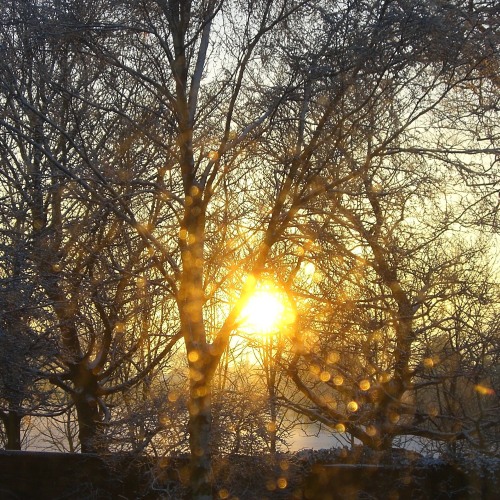
 This is the day and date when the clocks go ‘back’. We have an extra hour in bed on Sunday morning, and then… darkness an hour earlier until next Spring. And most of us will miss the dawning of the day as well, since the majority of people in the UK no longer keep agrarian hours. So let’s do something about using daylight in the best way, in the modern world: Sign the No 10 Petition for ‘better use of sun’.
The petition for ‘Daylight Saving’ – i.e. keeping British Summer Time (BST) all year long – is here [http://petitions.number10.gov.uk/betteruseofsun/].
We have already discussed in detail on this website the safety, energy, health, leisure and other benefits of not going into the grimness of Greenwich Mean Time (GMT) every Winter. Let’s make it clear that (as is in fact the case according to surveys *) most of us would welcome a continuation of ‘summertime’ hours.
Watching beautiful sunrises and sunsets offers aesthetic reasons for keeping summertime hours. But there are many hard-headed reasons too; and if you still doubt this, just check out for yourself with bodies such as RoSPA – or indeed read the views of Sir Stuart Hampson, who, as chairman of the John Lewis Partnership from 1993 to 2007, surely knows a thing or two about looking carefully at the facts.
Who can really argue, when the evidence is so clear? In Sir Stuart’s words,
Daylight is precious. Let’s stop wasting it. If we didn’t put the clocks back we could cut crime, keep fitter – and reduce carbon emissions.
And enjoy more sunrises….
* 4,215 people took part in an online vote on RoSPA’s website between 24 October and 2 November 2006. The vast majority (86%) supported this change. Of those who voted, 3,625 voted ‘Yes’, 548 voted ‘No’ and 42 voted ‘Don’t Know’.
Dates for 2008 – 2011 when at 2 a.m. the clocks go back (October) and forward (March) by one hour in the UK are:
In 2008: the Sundays of 30 March and 26 October
In 2009: the Sundays of 29 March and 25 October
In 2010: the Sundays of 28 March and 31 October
In 2011: the Sundays of 27 March and 30 October
Read more about BST: British Summer Time & ‘Daylight Saving’
Can Meat Be Eco (Or Even Zero Carbon)?
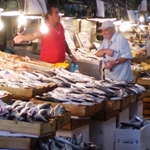 Recent advice is that, to ‘save’ the planet, we in the developed nations should eat meat at most four times a week; but we should also recognise the current fundamental economic centrality of meat in many parts of the developing world.
Discussion of these recommendations has produced some interesting ideas about what might constitute almost zero carbon food, even zero carbon meat. Hill grazing sheep, jellied eels and lobster aquaculture are amongst the food items and techniques proposed.
Liverpool’s ‘Sage’ Of Sefton Park
 Is it Merlin, or is it some other mystical creature, whose likeness arose silent and unannounced from the lone long-topped tree trunk in the heart of Sefton Park? One August morning, in the midst of the more expected park renovations of 2008, there ‘he’ was, the beautifully sculpted Sage of Sefton Park, the beginning, we can only hope, of a serendipitous array of creations in the park, for us to enjoy and create further in our imaginations as we wish.


It’s heartening that, even so long after it was first suggested, a tree sculpture has now appeared in our park, a place subject, for many months now, to less engaging and sometimes jarring disruption.
Who sculpted our ‘Sage’ and why or how, we don’t at present know [later: or at least we didn’t then]; but perhaps that mystery can be resolved [please see Comments below]? Is ‘he’ Merlin the wizard or some other mystical creature? Does he have a message, or is he simply there to lift our imaginations and to add some fun as we stroll by, or as we pop into the cafe with the kids for a little treat?
May this be the start of much more creativity and friendly magic for the imagination, in this special urban green space right by the centre of our city.

Read more about Sefton Park, and see more photographs at Camera & Calendar.
Hot Water Bills In The Land Of 2000 Hours’ Sunshine
 Energy is a commodity with variable value, it seems, depending on where you are. ‘We Greeks,’ said a fellow-traveller on the train as we departed Athens, ‘could have free hot water and free lighting all year; but we prefer to pay… Why put an annual 2000 hours of sunshine to good use, when we can produce energy more expensively in other ways?‘ He was, of course, being ironic.


 Dreaming Realist