Category Archives: Photographs And Images
Culture Secretary Andy Burnham MP Thanks Liverpool Volunteers For Capital Of Culture Efforts
 Liverpool’s great St George’s Hall offered a splendid setting for the event at which Andy Burnham MP, Secretary of State for Media and Culture, offered thanks and encouragement to the people who had made such an effort to deliver the 2008 European Capital of Culture programme. Volunteers and officers alike congregated to hear the Culture Secretary say well done, and to muse on the challenges of 2009. This he opined, as do many of us, is only the beginning…
JoelBird (Joel Phelan) Private View, Calderstones Park, Liverpool
 We were delighted this evening to attend the Private View of Joel Phelan‘s JoelBird paintings (acrylic on canvas) in the Coach House of Calderstones Park, Liverpool. Joel, a locally-born artist, is also a talented musician (JubJub / Eto The Band). He has created wonderfully life-like yet ‘designed’ impressions of birds which we see in our local parks. It would be great if these works inspired other younger people in the city to observe more closely the natural world around them.


Read more web reports on Liverpool, European Capital Of Culture and see more photographs of Locations & Events.
More information on Joel Phelan’s work: JoelBird
The Liverpool Biennial Spider Hovers Over Exchange Flags
 This spider, set against the austere statue of Lord Nelson and a backdrop of Liverpool’s historic Town Hall, has so much more to offer than La Princesse, the monster mechanical arachnid costing millions which scoured our streets a short while ago.
La Princesse was piece of engineering; Ai Weiwei’s bejewelled spider is a work of art. It trusts us to see in it what we will – it’s magical, creative and beautiful all at once, leaving the imagination to work its fancies.

More information: Liverpool Biennial 2008 plus The Observer Review of ‘Web of Light’ and the Liverpool Biennial.
See more of Hilary’s photographs here: Camera & Calendar; and read more articles about Cultural Liverpool.
See The Dawn, Enjoy The Sunset: The No.10 Petition For Daylight Saving
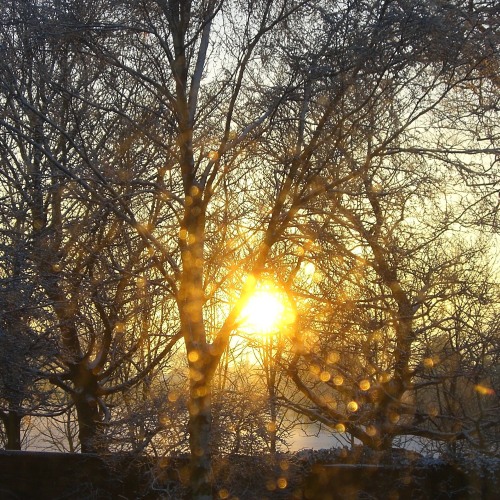
 This is the day and date when the clocks go ‘back’. We have an extra hour in bed on Sunday morning, and then… darkness an hour earlier until next Spring. And most of us will miss the dawning of the day as well, since the majority of people in the UK no longer keep agrarian hours. So let’s do something about using daylight in the best way, in the modern world: Sign the No 10 Petition for ‘better use of sun’.
The petition for ‘Daylight Saving’ – i.e. keeping British Summer Time (BST) all year long – is here [http://petitions.number10.gov.uk/betteruseofsun/].
We have already discussed in detail on this website the safety, energy, health, leisure and other benefits of not going into the grimness of Greenwich Mean Time (GMT) every Winter. Let’s make it clear that (as is in fact the case according to surveys *) most of us would welcome a continuation of ‘summertime’ hours.
Watching beautiful sunrises and sunsets offers aesthetic reasons for keeping summertime hours. But there are many hard-headed reasons too; and if you still doubt this, just check out for yourself with bodies such as RoSPA – or indeed read the views of Sir Stuart Hampson, who, as chairman of the John Lewis Partnership from 1993 to 2007, surely knows a thing or two about looking carefully at the facts.
Who can really argue, when the evidence is so clear? In Sir Stuart’s words,
Daylight is precious. Let’s stop wasting it. If we didn’t put the clocks back we could cut crime, keep fitter – and reduce carbon emissions.
And enjoy more sunrises….
* 4,215 people took part in an online vote on RoSPA’s website between 24 October and 2 November 2006. The vast majority (86%) supported this change. Of those who voted, 3,625 voted ‘Yes’, 548 voted ‘No’ and 42 voted ‘Don’t Know’.
Dates for 2008 – 2011 when at 2 a.m. the clocks go back (October) and forward (March) by one hour in the UK are:
In 2008: the Sundays of 30 March and 26 October
In 2009: the Sundays of 29 March and 25 October
In 2010: the Sundays of 28 March and 31 October
In 2011: the Sundays of 27 March and 30 October
Read more about BST: British Summer Time & ‘Daylight Saving’
Liverpool’s ‘Sage’ Of Sefton Park
 Is it Merlin, or is it some other mystical creature, whose likeness arose silent and unannounced from the lone long-topped tree trunk in the heart of Sefton Park? One August morning, in the midst of the more expected park renovations of 2008, there ‘he’ was, the beautifully sculpted Sage of Sefton Park, the beginning, we can only hope, of a serendipitous array of creations in the park, for us to enjoy and create further in our imaginations as we wish.


It’s heartening that, even so long after it was first suggested, a tree sculpture has now appeared in our park, a place subject, for many months now, to less engaging and sometimes jarring disruption.
Who sculpted our ‘Sage’ and why or how, we don’t at present know [later: or at least we didn’t then]; but perhaps that mystery can be resolved [please see Comments below]? Is ‘he’ Merlin the wizard or some other mystical creature? Does he have a message, or is he simply there to lift our imaginations and to add some fun as we stroll by, or as we pop into the cafe with the kids for a little treat?
May this be the start of much more creativity and friendly magic for the imagination, in this special urban green space right by the centre of our city.

Read more about Sefton Park, and see more photographs at Camera & Calendar.
Prague, Forty Years On (And The Velvet Revolution)
 The events of the 1960s are simply history for many of us today, but a visit to Prague (September 2008) provides a reminder that for some, the memory of those events is still very much alive. The Czech Republic is now a vital, thriving and democratic country as a part of main-stream Europe, thanks to the Velvet Revolution of 1989. Yet there are plenty of Czech citizens who recall the trauma of those times as integral to their personal ‘lived experience’.
These thoughts became very focused for me today, when we took a walk around Prague with a citizen of that city, our good friend Dada. Our exploration began with a look at the gardens of the Czech Senate, which lie above the commercial centre of the city, simply designed yet formal and splendidly impressive all at once:

But as we wandered it became apparent that these were not just gardens; they were host also to an exhibition with more than token impact. For here before us was a real military tank….

And here too were notices about the objects on show, telling us (Dada explained) about the tragic events of forty years ago, in 1968: the failure of the Prague Spring which would have relaxed the grip of Communism, and the invasion of Czechoslovakia – as it then was – by Russia.
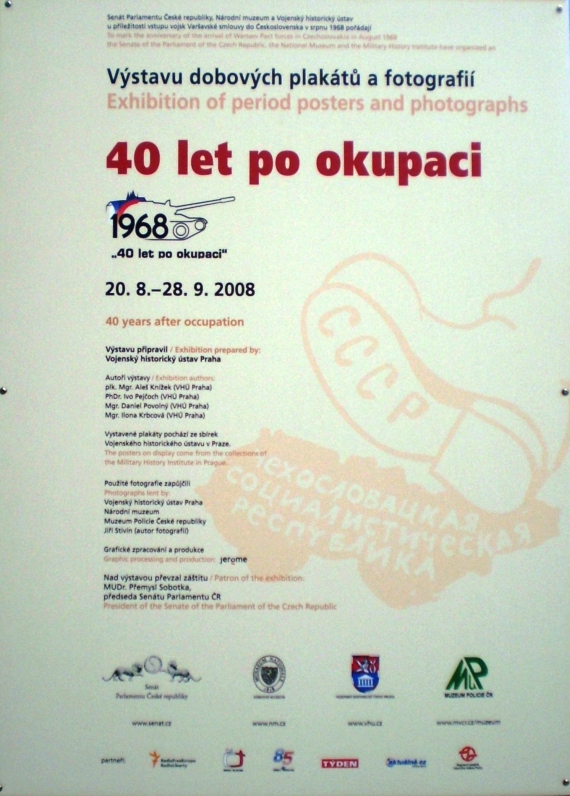

The reality of this invasion had hitherto been rather personally academic for most of us as individuals in (what was then) Western Europe; but here was a Czech citizen who had lived through it, explaining what it had meant to her, her family and her friends… and telling us how, later, these same people had been part of the extraordinary Velvet Revolution which was the basis of the transformation of the then-repressive Czechoslovakia into the present democratic state of the Czech Republic.
Mindful of these sobering thoughts, we left the graceful gardens and returned down towards the River Vltava, to the Dvorak Concert Hall (Rudolfinum) which had brought us to Prague, travelling with the Royal Liverpool Philharmonic Orchestra for their performances at the Prague Festival.

Outside the Hall was another exhibition of posters and photographs, relating the happenings of the invasion and its long aftermath.


In a way this felt surreal. Here we all were, discussing the events as history, but they had happened right where we stood, involving in critically personal ways people whom we knew as friends. For a while they had had no choice but to bear the crushing burdens of occupation stoically…

…. but eventually the protests grew to a great clamour, and after many long years, in 1989 the Velvet Revolution came about, mercifully without a huge toll of human life.
And amongst those leading this Revolution had been many writers and artists, including Vaclav Havel who was later to become the President of the Czech Republic, and his friend the musician Libor Pesek – a renown conductor who has had a long and close relationship with the RLPO, the Orchestra with which we were now visiting Prague.

Thus did the tale round upon itself. We stood there, in the heart of the Prague, testimony by our presence to the history and vibrancy of that great city, talking between ourselves as citizens of Europe and the world, and free to read, say and do as we wished.
No longer were the Prague Spring and the Velvet Revolution merely events on a timeline. They were instead vital elements of the spirit and understandings of real people, standing right next to us.
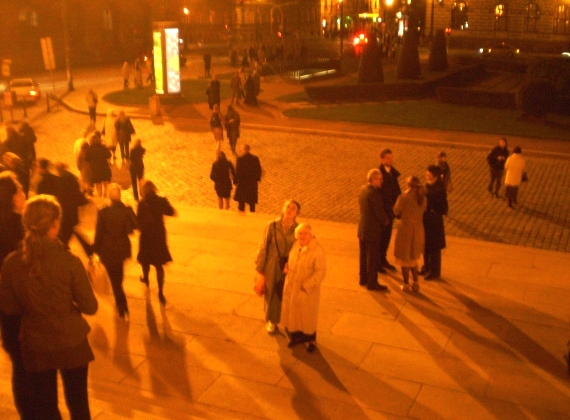
And that was something we pondered as we spent the evening in the Rudolfinum, hearing the RLPO concert which was the reason for our visit.
The concert, as we’d hoped, was a triumph; but, enjoying the music, we mused too that so much more so was the human spirit which had made it possible – the determination of a fiercely brave and proud people who, as we carried on our mundane existence in the democracies of Western Europe, had had to summon every ounce of endurance and strength to let the light of self-determination shine in their culturally blessed, historic city and homeland.
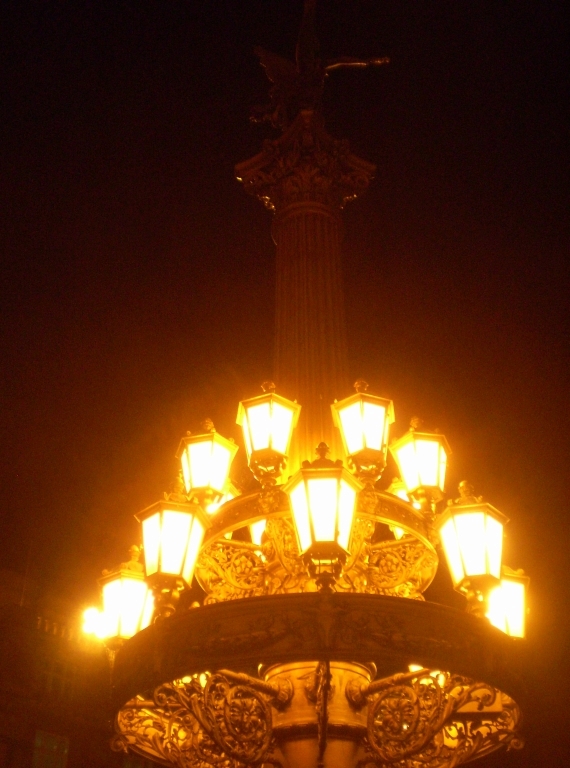
Liverpool’s Hope Street HOTFOOT Tee-Shirts, 1996 –
 Every year from 1996 HOPES has produced a limited edition T-shirt for everyone involved to wear for the Hope Street Festival; and only in that first year was there no special performance at the Philharmonic Hall. So 1997 marked the first of the subsequently annual HOPES HOTFOOT concerts which celebrate the exciting and diverse communities in Liverpool’s Hope Street Quarter. That’s a lot of people – orchestra musicians, singers, helpers and supporters
August Moon And Little Cat On Lykavitos (Lycabettus) Hill, Athens
 Tonight is full moon in Athens, Greece, when by tradition everyone attends free events till late on the ancient sites; and this year there’s also a partial lunar eclipse over the city. But for this feral kitten, silently padding the very highest point atop Lycabettus Hill in search of restaurant diners’ scraps, it’s just business as usual.
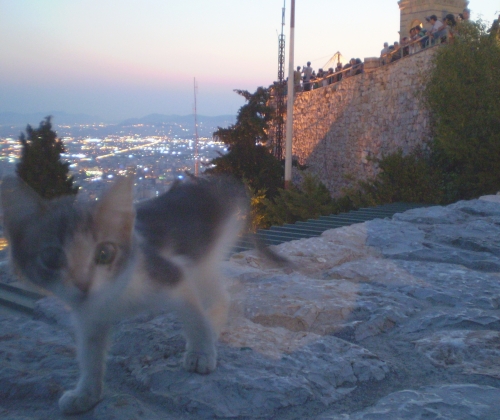
Every year since 1953, the August Moon Festival in Athens on the night of the full moon – believed to be the most beautiful such event of the year – has been a celebration open to everyone, with free performances of opera, traditional dance and classical music on the Acropolis and Roman Agora, as well as events located in other unique and incomparable historic sites of Athens such as the Odeion of Herodus Attikus .
This is truly an occasion, if you are in Athens at the right time, not to be missed! (And if you’re somewhere else in Greece, you may still be lucky anyway – consult the Greek Ministry of Culture for possible events in other locations.)
Athens Music
 Music in Athens, Greece, comes in all sizes and modes – from ancient instruments through traditional music, jazz and classical concerts and back to simple melody and rhythm.
This is a city comfortable with accomplishment of all kinds and in many genres, with events listed and unlisted. In the Summer, when formal venues are closed, the streets become a natural location for the more adventurous performer.
This informal piece looks at some Summer musical offerings in Athens. It includes (below) a list of links to and phone numbers for events which I discovered, though not necessarily attended or checked out. If you know more about these or other events which readers might find of interest, please tell us via the Comments box at the end of this article. Thank you!

The range of ‘street music’ in the capital city of Greece, Athens, is an eye-opener to those of us from colder climes. Athens is a city where the traditions of ancient and non-Western people meet those of us accustomed to the folk music and formal classical music modes of Northern and Central Europe. Here is a place where the cembalon of Eastern Europe is heard alongside African percussion, the guitars and bouzoukis of the Mediterranean (and later Ireland) and the brass instruments of every part of the world.
So there’s plenty of music, much of it very relaxed and informal, for visitors in Athens – and if you know of other events not mentioned below, please do tell us about them via the Comments box at the end of this page.

Whatever your preference, there will be something to enjoy – and to engage your interest and imagination. One of the great things about ‘street music’ is that it’s for everyone, young and old alike. Just as we have found when occasionally we can perform in public spaces in Liverpool, it’s the children who stop and listen and watch, often keen that they should not be moved on by parents or carers until they have heard their fill.


For some musicians however this is serious stuff. They have instruments and recordings of their work to sell, music to make to earn a crust. For others perhaps it’s a bit of fun, a way of passing time during the Summer months. It’s not difficult as a listener to tell who has which intention; but only rarely is there simply no evidence of skill when the performance, however fleeting perhaps as players stroll between cafe venues, begins.


But not all music is performed on the street. Athens has the attributes of all great capital cities – concert halls, an opera house (even if it does perhaps require relocation and an upgrade) and museums such as that for Maria Callas dedicated with whatever degree of enthusiasm to Greek classical music performers and composers of Greece – some of whom are listed (along with the main cultural venues around Athens) below, drawing for composers’ names on the cataloguing work done during the Athens Cultural Olympiad of 2004.


Nonetheless, there are forms of music which occur throughout the year in any city. Jazz bands and stringed instrument performers can play wherever they can find a space, and in almost any combination of instruments and performers; just as traditional dancers can congregate and entertain wherever numbers can be mustered – though certainly this is not how things happen at the treasure which is the Dora Stratou Theatre, a national institution to encourage traditional dance forms, offering performances throughout the Summer.


The choice is the listener’s. Formal or informal entertainment? Go for something new, or stick with the tried and tested? In Athens it’s best to have one’s listening mode in gear, ready for the next experience. It could even be during an unsheduled coffee stop. And who knows, you could even end up buying an instrument all of your own…

See more of Hilary’s photographs: Camera & Calendar
and read more about Music, Musicians & Orchestras, Travel & Tourism and Cities in Transition.
If you have recommendations for, or if you promote, musical events and venues in and around the Athens area, please post details (with contact information, indicating whether the occasion is regular, or one-off) in the Comments box below.
Some Greek music composers:
Yannis Andreou Papaioannou (1901-1989), Dimitris Dragatakis (1914-2001), Nikolaos Halikiopoulos-Mantzaros (1795-1872), Manolis Kalomiris (1883-1962), Alekos Kontis (1899-1965), Georgios Lambelet (1875-1945), Loris Margaritis (1895-1953), Dimitri Milropoulos (1896-1962), Andreas Nezeritis (1897-1980), Georgios Poniridis (1887-1982), Mikis Theodorakis (1925-), Marios Varvoglis (1885-1967), Alekos Xenos (1912-1995)
More information on events:
Athens Concert Hall (Megaro Mousikis), Vas. Sofias & Petrou Kikkali Street, tel: (from UK) (0030) 210 728 2333
Athinais Cultural Centre, Kastorias 34-36, Votanikos, tel: (00 30) 210 348 0000
August Moon Festival (free, on the night of the full moon, at a variety of ancient historic sites in Athens))
Dora Stratou Dance Theatre, 8 Stouliou Street, Plaka (offices) and Philopappou Hill (theatre), tel: (00 30) 210 324 4395 / (0030) 210 324 6188
Hellenic Festival, various venues, tel: (0030) 210 327 2000
“Melina” – Municipality of Athens Cultural Centre, Herakliedon 66, Thissio, tel: (00 30) 210 345 2150
Municipality of Athens Cultural Centre, Akadimias 50, tel: (00 30) 210 362 1601
National Opera, Akadimias 59, tel: (00 30) 210 364 3725
Technopolis (and the Maria Callas Museum), Pireos 100, Gazi, tel: (00 30) 210 346 1589
Vyronas Music Festival, tel: (00 30) 210 766 2066 or (0030) 210 765 5748
Aegina International (Summer) Music Festival [Tickets available at the “Eleni” shop next to the Aegina Port Authority building, tel: (0030) 22970 25593, & on the door.]
And more Festivals and events…
The Royal Liverpool Philharmonic Orchestra At the BBC Proms
 The RLPO finished their season in style this evening, with a sell-out BBC Proms concert in London’s Royal Albert Hall. There was a real excitement as the audience departed after the performance, matched by the sense of achievement RLPO players derive from working with Principal Conductor Vasily Petrenko. This is surely how professional orchestral musicians like to feel at the end of a year’s hard work.

A date at the Royal Albert Hall for the BBC Proms is a highlight of the season for any orchestra, and this was no exception for the RLPO, an orchestra with a distinguished history. Vasily Petrenko and the RLPO‘s programme for the evening was the World Premiere of Graven Image for Orchestra by the RLPO’s Composer in the House, Kenneth Hesketh, Beethoven‘s Piano Concerto No. 4 in G Minor, Opus 45 (soloist Paul Lewis) and the Rachmaninov Symphonic Dances, Opus 45, with Mussorgsky‘s Gopak as an encore.
And happily even those who couldn’t join the Proms audience in person were able at absolutely no cost to do so, as for every Prom, live via BBC Radio 3.
Reviews for the concert reflected the enthusiasm on the night.
But now the players are off for a well-earned break, applause still ringing in their ears….
See more of Hilary’s photographs: Camera & Calendar
and read more about Music, Musicians & Orchestras


 Dreaming Realist