Category Archives: People And Places
Liverpool One: The Grosvenor Development Growing
 The deadlines for Liverpool city centre renewal now loom. Whilst the Big Dig continues to present us all with challenges, Liverpool One, the enormous Grosvenor development, is becoming a discernable entity.

Lewis’s, Lime Street And Liverpool Losing Out
 Liverpool city centre is in a state of flux, as the Big Dig re-routes and bewilders in equal measure. The aim is that the city centre will become a pleasant, business-friendly place to be. The disgraceful state of Renshaw Street, linking Lime Street Station to the city south end, sadly belies that intent. It’s scruffy and delapidated; does it have to be like this?


The steel-grey vistas above are what first greet visitors to Liverpool’s city centre. The once-mighty Lewis’s department store and the street from there to the main train station look much as some of us recall them thirty years ago, except perhaps they are less well scrubbed. And to add to this we now have the challenge of the City Centre Movement Strategy (CCMS) ‘in action’ every time we come into town.
The Big Dig as a way of life
To those familiar with Liverpool’s city centre the Big Dig has become a way of life. Intended to make the heart of Liverpool ‘fit for purpose’ for the celebratory years of 2007 and 2008, this now seemingly perennial feature of the city centre experience feels to have become a liability for Liverpool’s citizens, rather then an opportunity to enhance our future.
Many are asking whether a city which has suffered so much digging of holes and diversion of traffic in all directions can actually survive as an economic entity until the works are finally completed. The word is that some local businesses are going to the wall, especially in the train station area around Liverpool Lime Street, RenshawStreet and the Adelphi Hotel (not, it seems, itself under duress).
Enterprise endangered
Certainly, there have already been casualties. Heart & Soul, Chumki Banerjee’s signature bistro restaurant just around the corner on Mount Pleasant, has closed and Lewis’s Ltd (quite a different retail company from John Lewis) is rumoured after many years – it was founded in 1856 – to be folding imminently (mid-May 2007). There are also suggestions that
some other long-established local stores are at risk.
A relaxed approach to regeneration?
No-one denies that improvements to the city centre are required; but many question the apparently relaxed approach the City Council and others have taken to achieving this.
Work on the Big Dig seems at best to be nine-to-five, and nobody, as far as one can tell, has a responsibility actually to clean up the grimly grey and crumbling retail and commercial buildings along Renshaw Street from Lime Street.
Take a fresh look – and freshen up!
Is it surprising that businesses in this well-established part of town are feeling the pinch? Who would choose to walk from Lime Street up to Lewis’s along a street resembling the set of a 1960s kitchen sink melodrama, when they can instead take the
crossing outside the station into the pedestrian zone?
Perhaps some city leaders need to walk this walk, as well as talking the theoretical talk about the local infrastructural wonders we can soon expect.
Support the positive
There will always be brave souls who find a way forward. Fleur Hair and Beauty, previously located in the now-collapsing Lewis’s department store, has taken a walk across the road to the Adelphi Hotel Health Club, where the business can re-consolidate. No doubt there are others too who have faced the future and re-grouped.
Things are never static, especially in the world of enterprise, and to some extent this is good. That, however, does not excuse the failure of city local leaders to address problems which are beyond
the control of all but the very largest businesses.
Challenging market conditions
This is a city with more than the usual proportion of small and medium sized enterprises (compared to large ones – but still low in proportion to the public sector). These SMEs, often owned and run by individuals who actually live in Liverpool, have little slack in their business plans to accommodate civic laxity.
Not all businesses are equally effectively run, but Liverpool can’t afford the luxury of just letting private sector interests go to the wall without any support.
Nurture the positives
As I have said before, Regeneration Rule No. 1 has to be:
First nurture the positive assets you already have.
It’s not just the interests of visitors to our 2007 and 2008 celebrations that we must protect. The concerns of local workers and entrepreneurs are also core.
They, after all, are the people who hope still to be here in 2009.
 Fleur Health & Beauty
Spindles Health Club
The Britannia Adelphi Hotel
Ranelagh Place (Renshaw Street)
Liverpool L3 5UL
0151-709 7200 x 044
And a happy PS: Fleur has now re-opened her salon in the ‘rescued’ Lewis’s, to run alongside the Adelphi salon – Lewis’s, Ranelagh Street, 0151-709 7000.
Cherry Blossom For May Day In Sefton Park, Liverpool
 The cherry blossom in Liverpool’s Sefton Park has been very early this year; it has already offered much delight to those who stroll along the middle lakesides, the blossoms pink, cream, white and even cerise. But one tree is still in glorious full bloom as we reach May Day eve.

See also: Sefton Park’s Grebes And Swans
Liverpool’s Sefton Park, Swans, Herons And Grebes
Sefton Park, Liverpool: Winter Solstice 2006
Friends Of Sefton Park
Prague Old Town, Celetna Street
 Controversy has arisen about how much of a contemporary style Prague’s Old Town (Stare Mesto) should have. Modern commercial pressures inevitably vie with the demands of centuries of architectural tradition. Brilliant sunshine here blends these features into a whole.

See also:
Camera And Calendar
Snowstorm And Magic In Prague At Night
Impressions Of Prague
Carbon-Neutral Villages, British And Czech Alike
Pianos For Peace
 Rarely are artistic installations truly inspirational, but the use by George Michael and Kenny Goss of John Lennon’s piano, on which Lennon composed the song Imagine, is one such example. This travelling piano scenario is art, goodwill and common humanity all rolled into one.
George Michael is taking John Lennon’s piano on a roller coaster ride of emotions. Or that, at least to my eyes, seems to be what’s happening.
Singer-songwriter Michael acquired Lennon’s piano, on which the song Imagine was written, at the turn of the Millennium, and he and his partner Dallas art gallery owner Kenny Goss have now resolved the question of what special use to put it to: It has been given the central role in the world-tour Imagine Piano Peace Project.
Genuinely inspired art
It is a stroke of genius to take that humble piano to troubled places – sites of gruesome events such as assassinations, state-sanctioned executions, bombings, multiple murders and the like. The piano and its associations bring to these grimly horrible and
almost unthinkable acts a sort of dignity and calm.
The piano itself cannot and need not speak. It shows and incites no fear. All it has to do is occupy these sites as physical spaces. We can, each of us, work out the rest for ourselves.
John Lennon started life an unremarked child, attending our local school in Liverpool. He ended it a tragic victim of sudden very public violence in New York. As he himself might also have said of his travelling piano, just “Let it be.”
SuperLambBanana
 SuperLambBanana may be kinda cute, but, made of steel and concrete and 17 feet tall, he’s no lightweight. Created in 1998 by Taro Chienzo for the Art Transpennine Exhibition, he abides in Liverpool city centre, be/amusing all. He’s been Friesian (black and white), pink and sometime graffitied, but ‘really’ he’s yellow.

See more photographs of The City of Liverpool here: Photographs of Liverpool & Merseyside;
and photographs of elsewhere, here: Camera & Calendar
Click here for more information on Super Lamb Banana, alias ‘Superlambanana’.
Carbon-Neutral Villages, British And Czech Alike
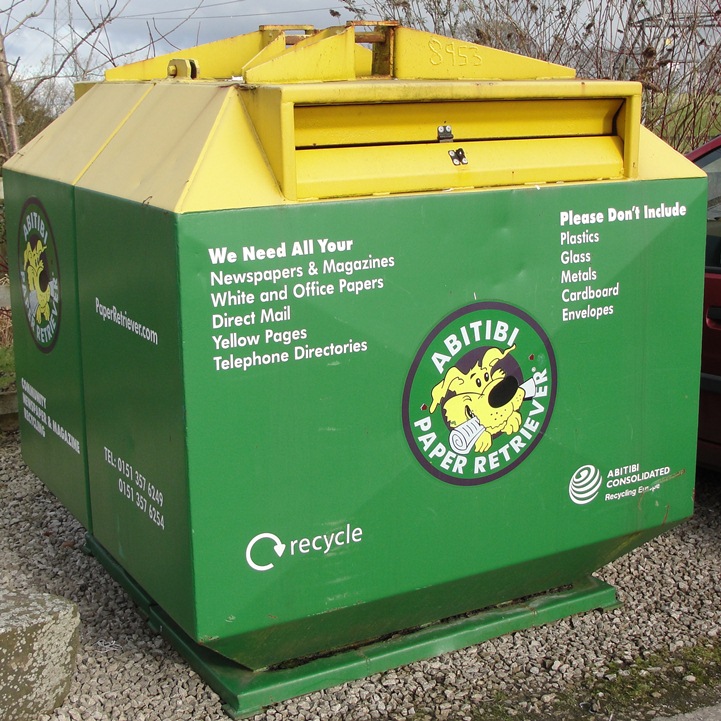 Self-sufficiency in energy is an ambition shared by many. Increasingly we are recognising that carbon-neutral living must be for real. Communities in Ashton Hayes, near Chester in the U.K., and Knezice, an hour east of Prague in the Czech Republic, provide different real-life examples of how this might be achieved.
Co-incidence or, perhaps, rather more than that? Perhaps the renewable energy agenda is at last becoming mainstream.
Where’s The Classical Music In The Summer? An Idea…
 It’s surprising that so little music happens in most European cities in August. Obviously some musicians take their holidays then, but others might be pleased to work during the holiday period. The scope for entertaining and engaging tourists and visitors during the high summer season is probably quite significant.
Whether one is in the U.K. or most other European cities, there are very few concerts – classical or indeed of other genres – in August. Yet the holiday high season is when most people have the time and inclination to relax and enjoy music.
How about forming groups of (willing) musicians from the major orchestras and ensembles – no need to audition, they’re already in top bands! – and touring with them to bring good music of many sorts to people, young and older, in different and exciting contexts during the summer season?
Would it work? Would the idea get the sort of support from financiers and audiences alike that it would need? Would it reach people who might not otherwise attend such performances?
Tell us what you think, in the Comments box below…
See also: Orchestral Salaries In The U.K.
Life In A Professional Orchestra: A Sustainable Career?
The Healthy Orchestra Challenge
Musicians in Many Guises
British Orchestras On The Brink
Liverpool’s Ancient Chapel Of Toxteth, Dingle Gaumont Cinema, The Turner Nursing Home & Dingle Overhead Railway Station
 One of Liverpool’s most significant and fascinating historic areas is barely known even by the city’s own residents; so Monday Women arranged a visit. The area lies in the heart of Toxteth – Dingle, comprising four adjacent sites: the early seventeenth century Ancient Chapel of Toxteth (the original place of worship of astronomer Jeremiah Horrox or Horrocks), the Turner Nursing Home built by Alfred Waterhouse in 1882-5, Dingle Overhead Railway Station, constructed deep underground and opened in 1896, and the Dingle Gaumont Cinema, erected on the site of the old Picturedrome in 1937.

The general perception is that Liverpool has few really serious historic sites. Interesting architecture, Yes, in abundance; ‘old’ buildings, No. On Saturday 16 November 2006 several dozen members, families and friends of Monday Women and CAMPAM set out on a beautifully sunny afternoon to discover why this perception is not always accurate.
The Ancient Chapel of Toxteth

We congregated first in the Ancient Chapel of Toxteth, opened especially for us by its warden, Annette Butler. She and local historian Christina Clarke (to both of whom we owe enormous thanks) had a remarkable tale to tell about the history of this simple and appealing building, constructed variously at times between 1604 and 1618. The Chapel is now owned, and used, by the Unitarians, but was built and developed by Puritan dissenters from the Church of England.
The site of the Chapel is that of the thirteenth century royal hunting Park in Toxteth, sold late in the sixteenth century to the Earl of Derby. He in turn sold it to Puritan families from around the Lancashire towns of Bolton and Ormskirk who were seeking more freedom of conscience in their religious practices, using a place which had been Crown property and was thus not subject to parish law or to enforcement of regular attendance at the parish church. [See: The History of the Royal and Ancient Park of Toxteth


 Even with sunshine outside, the inside of the Chapel feels dark and close (perhaps in part because the winters of the seventeenth century were bitter), the pews being closely placed, but with an appealing and open gallery area above them, and an impressively large pulpit at the centre of the south wall. Over the centuries the building itself has been considerably extended, not least to adapt the previous schoolhouse (built in 1611) into the access point for the organ loft.
In contrast to the closeness of Toxteth Chapel itself, our visit to the graveyard found it calm and airy, with dappled light through the mature trees, as we examined the columned arcade and headstones of such local luminaries as Richard Vaughan Yates , who devised Princes Park, and the cartographer Richard Horwood [A to Z of Regency London
Jeremiah Horrox or Horrocks (1618 or 1619 – 1641)
 Amongst other fascinating plaques inside the Chapel is one commemorating the brief life and momentous work of Jeremiah Horrox (as spelt on this plaque; or Horrocks as often spelt in the reference books). Horrocks was the youthful astronomer who first observed the transit of the planet Venus, on Sunday 4 December – 24 November by reference to the Julian Calendar then in use – 1639. (There is an anecdote, possibly apocryphal, that he calculated this rare occurrence and had to pre-empt much of the Curate’s duties he may have performed in Hoole, Lancashire, that day, in order to observe the transit via a telescope he constructed himself, reflecting the sun’s image onto a piece of card.) [Jeremiah Horrocks,Astonomer (1618? – 1641) and His Times: No.6 (Chorley Civic Society Occasional Papers)
Dingle’s Gaumont Cinema
 Toxteth Chapel is on the north-western corner of Park Road (running parallel to the River Mersey) and Dingle Lane (which goes from Princes Park directly towards the river). On the south-western side of this junction is a cinema now unused for its original purpose, the Gaumont, designed by W. E. Trent FRIBA, FSI (Chief Architect of Gaumont-British) specifically to accommodate the large fan-shaped curve of the roads at this corner, and opened on 29 March 1937.
The Gaumont Cinema, an art deco building erected on the site of the old Dingle Picturedrome (photo in Edwardian A-Z and Directory of Liverpool and Bootle: South Liverpool Part 3
It is said that the projection room was the first in Britain to have the Gaumont ‘projectomatic’ system which automatically changed the reels during projection of films, as well as controlling the houselights and stage curtains. There was also a Western Electric Mirrorphonic sound system.
Sadly, the Gaumont lost its originally intended function in September 1966, to become a Top Rank Bingo Club which opened in January 1967. We were not therefore able to go into the building to see more as we passed on to the south-eastern corner of this ‘site visit’ and the next venue of our Monday Women trip in November.
The Turner Nursing (or Memorial) Home
 The story behind the Turner Nursing Home is very sad, but the outcome is a testament to the positive thinking of Mrs Charles Turner, wife of the Liverpool Member of Parliament who was also first Chairman of the Liverpool Docks and Harbour Board – the tale of which Board we shall continue at the next and final stop of our Dingle-Toxteth ‘tour’. The entire Turner Memorial Home project commemorates Anne Turner’s husband Charles Turner MP (13 June 1803 – 15 October 1875) and their son Charles William (16 October 1845 – 13 September 1880), who died tragically.
 In memory of her husband and son Mrs Turner commissioned the architect Alfred Whitehouse to build a strikingly asymmetric and strangely attractive ‘home’ for retired and ‘distressed’ gentlemen – a function which it still has. In the entrance lobby there is a lovely marble statue of the two male Turners, father and son, created for the opening of the Home in 1885 by the London-based sculptor Sir William Hamo Thorneycroft R.A. (1850 – 1925). This sculpture seemed to fascinate our younger companions on this visit, perhaps because it is actually so sympathetic and life-like.

 The red ashlar, turreted Home has a chapel, almost church-sized, with an arcade of octagonal columns and stained glass windows (by Heaton, Butler and Bayne); and beyond the spacious communal living areas we saw wide lawns sweeping down towards the River Mersey. This is a gracious reminder of times gone by, still of great value to the community, which shows us just how elegant Dingle and Toxteth must have been a century or more ago.
Dingle Overhead Railway Station
 Finally on this special afternoon, as the light drew in, we retraced our steps to Kedlestone Street, the road opposite the Ancient Chapel of Toxteth, and to what appeared to be a short side-alley leading to a mechanics’ garage. Few of us had any idea what would come next…. As we approached, the owner, Nigel, opened the doors and we were led down an alarmingly steep slope to another world – the world of the legendary Liverpool Overhead Railway designed by leading engineers of the time, Sir Douglas Fox and James Henry Greathead…. a return to the time of the ‘Dockers’ Umbrella’ and Liverpool’s great era of engineering and transport.
 This was the site of Dingle Station, the final stop of the Overhead Railway route from Southport, Seaforth, Litherland and Aintree, via the city centre and the frantically busy docks, to the south end of the city. Interestingly, especially in the light of current-day debates elsewhere in Liverpool, the Mersey Docks and Harbour Board had on a number of occasions from 1852 onwards had travel route proposals rejected or returned for modification in the light of the increasing demands for public transport to and from the city centre.
 Eventually however, in 1888, a group of prominent businessmen formed the Liverpool Overheard Railway Company and obtained the powers of the Dock Board by an Act of Transfer. Work on the elevated railway therefore began in October 1889. [See: Seventeen Stations to Dingle: Liverpool Overhead Railway Remembered

Dingle Station opened for passengers on 21 December 1896 and closed to the public fifty years ago, on 30 December 1956. The station platform (a full 170 feet by 28 feet) has now been demolished, but the tunnel and entrance subway remain in use as a car repair business, Roscoe Engineering. There is also an astonishing extension to the station – a kilometer long passage from this point to an opening on the Herculaneum Dock ‘down by the river’, and thence to the docks via the factory site of the Herculaneum Pottery which, though the company closed in1840, must have triggered a lot of local industry.
Some of us, hugely curious, then made our wary unlit way down to the Herculaneum tunnel entrance and  back, and others, less nimble, used the time to learn more from our host Nigel about the remaining features of the station (the red buffer
  hidden behind mechanics’ equipment; the sturdy hooks and notices…). And finally we returned to Park Road as the day ended, much enlighted by our visit and debating energetically how future generations would see the places we had visited – places which (as evidenced by the enormously ambitious commissions in Toxteth – Dingle a century or so ago, engaging the most prestigious architects, designers and engineers the nation had to offer) had in times past witnessed great wealth and opportunity and then, nearer to the present day, distressing poverty and huge challenges.
‘Which way now?’ was the question on everyone’s lips as we hit the road for home.
See also: History of Liverpool
Sudley House: Victorian Home Of A Mayor Of Liverpool
Read the discussion of this article which follows the book ‘E-store’…..
The National Theatre Museum Has Closed
 The National Museum of the Performing Arts closed ‘for good’ yesterday. This is a disaster for London (where it has had its home, in Covent Garden) and for the whole of the U.K. If the Trustees of the Victoria and Albert Museum – in whose ‘care’ the Theatre Museum resides – cannot maintain the collection as an entity, perhaps the Theatre Museum should pass to those who can do better? The Chair of the V & A has close Merseyside connections; why not re-open the Theatre Museum in Liverpool?
No-one believed it could happen, but the announcement has been made – the National Museum of the Performing Arts in Covent Garden, London, closed yesterday (Sunday 7 January 2007) because the Trustees decided they couldn’t commit further resources to the venue. This is despite the description of the Museum by its own Trustees, the Victoria and Albert Museum Board, as a ‘world-class collection’.
The protests of people as diverse as Alan Ackbourne, Judi Dench (Guardians of the Theatre Museum) and Ken Livingstone have, it seems, had no effect. Somehow,
the performing arts are not compelling to the Museum Trustees. Apparently there is to be a website and some collections are to be shown at the V & A in Kensington in 2009, but basically that’s it. Just at the time when London is preparing to host the 2012 Olympics, and when Covent Garden can never have been a more popular visitor attraction, the doors have closed. Firmly.
Nonetheless, after the experience we as CAMPAM had in the late 1980s / 1990s of ‘resurrecting’ the Liverpool Everyman – which actually went dark – and the Royal Liverpool Philharmonic Orchestra (which just about clung on) I don’t think anyone should give up all hope yet.
So come to Liverpool
I have already suggested that, if Londoners really don’t want their Theatre Museum, it should come to Liverpool. Here, up
North, we’re preparing for an event even more imminent than the Olympics. 2007 is Liverpool’s 800th Anniversary, and 2008, as everyone knows, will be our year as European Capital of Culture. The arguments for Liverpool taking this venture on have already been rehearsed; and I have been assured (though I await the evidence) that the City Council is considering things, as, one gathers from recent Minutes of the V & A Board, are the NWDA and Blackpool Council.
In the meantime, though, there is one other interesting aspect of this strange situation: The Chair of the V & A is Paula Ridley, a person with strong connections on Merseyside. It would be fascinating to know her view of the proposition that the Theatre Museum come to Liverpool.
Read more articles on the National Theatre Museum.


 Dreaming Realist