Category Archives: People And Places
How Many Science And Technology Graduates In Liverpool And Merseyside?
 Summary: The Liverpool city region (Merseyside) looks on available evidence to have only about half the number of scientists which might be expected on the basis of the overall national statistics.
So by what indicators might Merseyside measure progress in the retention and development of graduate scientists and technologists?
Why do Liverpool and Merseyside stay so near the bottom of the national economic stakes?
A complete version of this article can be found on Hilary’s professional website, here.
Queen Victoria Celebrates Liverpool’s European Year
 This is the Victoria Monument in the heart of Liverpool’s commercial quarter. However special the occasion, one can only imagine what Queen Victoria might have thought about being festooned by Christmas lights in preparation for the Liverpool European Capital of Culture in 2008; but for passers by on a very chilly evening this festive sight is one to raise a cheery little smile. Perhaps Queen Victoria would not have been amused, but in a different age we can surely innocently enjoy.
Liverpool At Christmas
 The few weeks as 2007 ended and became 2008 saw much festive activity in Liverpool. Here, the set for the BBC’s special production of the ‘Liverpool Nativity’ was surrounded by excited onlookers well before the performance started, but alongside all the high technology Saint George’s Hall stood serene, just as it has for the past 150 years.
Carols Round The Christmas Tree At Sudley House, 2007
 Sunday 23 December 2007 was the date for an occasion to remember: Carols Round the Christmas Tree at Sudley House, the historic home of a Victorian Mayor of Liverpool. The free singalong afternoon concert saw almost three hundred people came to enjoy the company and the carolling with Live-A-Music and the Children’s Choir.
This event was supported by the National Museums Liverpool and offered a warm welcome to everyone. The musicians (Martin Anthony (Tony) Burrage, John Peace, Richard Gordon-Smith and Hilary Burrage) were all members of Live-A-Music, a group also known as Elegant Music. The children’s choir of Mossley Hill Parish Church also performed.
Sudley House has an excellent tearoom for refreshments throughout the afternoon, and provides full disabled access. It is set in peaceful parkland and offers spectacular views across the River Mersey to the Wirral and beyond, to Moel Famau in Wales.
Visitor information and location and travel advice for Sudley House is available here.
See also:
Sudley House: Victorian Home Of A Mayor Of Liverpool
Liverpool’s Ancient Chapel Of Toxteth, Dingle Gaumont Cinema, The Turner Nursing Home & Dingle Overhead Railway Station
Autumn Glory In Sefton Park
Sefton Park, Liverpool: Winter Solstice 2006
For more articles please visit History of Liverpool and The Music.
Sudley House: Victorian Home Of A Mayor Of Liverpool
 Aigburth is a long-established residential area within sight of Liverpool Cathedral. Amongst the many surprises in this enduring part of the city is the National Museum Liverpool’s newly refurbished Sudley House, tucked away behind Rose Lane, Carnatic Halls and Mossley Hill Church. Bequeathed to the City by Emma Holt, daughter of a Victorian merchant, it offers a major art collection.


Sudley House contains works by artists such as Gainsborough, Reynolds, Landseer and Turner. This is the only surviving Victorian merchant art collection in Britain still hanging in its original location.
The earliest resident of the house was Nicholas Robinson, a rich corn merchant, who bought the land and built the original house somewhere between 1811 and 1823. The architect may have been Thomas Harrison. Robinson was Mayor of Liverpool in 1828-9. He lived in the house until his death in 1854, and his two daughters continued to live there until their own deaths in 1883.
Sudley was then sold to George Holt, a ship owner and merchant, who made many alterations to the property. He acquired the art collection which remains in the house, which, with its contents, was in 1944 bequeathed to the City of Liverpool by his daughter Emma.
See also: History of Liverpool
Carols Round The Christmas Tree At Sudley House
Liverpool’s Ancient Chapel Of Toxteth, Dingle Gaumont Cinema, The Turner Nursing Home & Dingle Overhead Railway Station
Autumn Glory In Sefton Park
Sefton Park, Liverpool: Winter Solstice 2006
Please see additional photographs at Camera & Calendar
More information on Sudley House and visitor arrangements is available here.
Santa Claus Is Coming To Town
 Amongst the more interesting modes of transport in Liverpool city centre last Christmas (2006) was this traditional vehicle, with its delighted passengers and good humoured driver. People waiting at the bus stop must have felt that somehow they were missing something rather special.

For more photographs please see also Camera & Calendar
For information on things to do in Liverpool click here.
King’s Cross: Community And Colossal Opportunity Combined
 The renewal of King’s Cross – St Pancras and all that surrounds it is long overdue, but it looks to be a spectaclar project worth the wait. The final moves to achieve success in terms of the local community will however require those who should, to put their heads above the parapet so that everything comes together to make the best possible result. This project will ‘work’ for everyone as long as people really try to collaborate to get it right.
Having travelled on the bus past King’s Cross – St. Pancras on very many occasions, I can only say my heart lifted when, at last, evidence of its renaissance began to materialise.
Community links and challenges
It’s surely a unique and exciting challenge to put together a project as enormous and impactful as this. The project hits many buttons – strategic place, infrastructure, heritage, economic benefit; we could go on… King’s Cross is in anyone’s books a very spectacular and special piece of real estate.
Of course there’s still a possibility that King’s Cross will somehow miss on that vital community connection; but only if people on all sides of the equation let it. This is where civic and corporate leadership have such a critical part to play, right from day one.
Different from, say, Canary Wharf?
Given the common emphasis on transport hubs, there have been comparisons, but Canary Wharf is different. Just for a start, Canary Wharf is not at the heart of what’s to become the most important international ‘green’ hub connecting the UK and mainland Europe, and for another thing the Wharf is a glass and concrete creation with not too much reference to a long and glorious heritage.
King’s Cross is a genuine opportunity to build on a very high profile USP with enormous promise for all stakeholders.
Doubters and objectors
There are always people who oppose what’s happening. The financial and other costs of the debate with them may well be high, but in the end everyone has to be heard for progress to be made in a well-founded way. The line must be drawn somewhere, but the views of those with reservations are valuable because they help to pinpoint potential hazards further down that line.
But it’s up to everyone to make sure that in the end King’s Cross really works. This is a programme with serious commonality of interest between developers, the wider economic infrastructure and real people on whom the project impacts day by day.
Delivering success
Having seen examples elsewhere of exiting programmes based with various degrees of success in challenging locations, I’d say everyone, but everyone, involved has to ask, what more might I need to be doing to make King’s Cross fulfil its whole potential?
Of all the ‘Rules of Regeneration’, the first rule here must be: listen, seek to understand and where possible accommodate all stakeholders. And the second rule is, always remember someone has to be brave and take the lead, accountably and visibly.
Realistically forward-facing
This is not a time for pursuing plans regardless or for heads-in-the-sand-style denial of problems; but nor, most certainly, is it a time for standing back. King’s Cross is an <opportunity which comes only very rarely…. Here we have a genuinely future-facing adventure which everyone in town can share and actually see taking shape.
I watch from my bus as things come together week by week and I wish all involved the very best.
A version of this article was published on the New Start blog of 8 November 2007.
A European Capital Of Culture Without Euros
 Here in Liverpool we are about to start our 2008 Year as European Capital of Culture. But apparently the connection between this year-long Capital of Culture event and hard European cash has yet to dawn on some local businesses. This is serious. Who’s failed to get the message over? And will things improve?
A walk this morning took us through Liverpool’s Sefton Park to Lark Lane, where the Boho action is, to find some brunch.
The brunch was fine; but the bill which followed it left us at best bewildered.
Sterling only
The card machine – as usual these days, the ‘continental’ ‘take it to the table’ type – came up with a sensible sum, requested in either Sterling or Euros. As it happened, we had some Euros on us, so when we’d paid (in Sterling) we asked lightheartedly if we could have paid cash Euros. (The literal conversion rate was 1.645 if anyone wants to know….)
The waitress was aghast. Oh no, she assured us, clearly thinking we’d sought such reassurance, they wouldn’t even think of taking Euros. The cafe never dealt with Euros, the cost would be sky-high, it was quite out of the question…
Bafflement and business
We were unsure how to respond, having originally intended to congratulate the establishment on its forward-planing and preparations for Euro-billing.
Did our waitress know, we asked, what 2008 had in store for Liverpool? She confirmed that she knew 2008 is the Capital of Culture year.
But it’s Liverpool’s ‘European’ Capital of Culture Year, we protested……
The management decides
‘I don’t know about that’, came the reply. ‘Anyway, none of Liverpool’s restaurants are doing Euros. You’ll have to take that up with the management.’
On the contrary, we suggested, perhaps the management needs to take the Euro opportunity up with itself….
The ‘Liverpool experience’ missing link – Europe
So there we have it. At least some of our local businesses, just three months before 2008 begins, still fail utterly to understand that next year is an international, a European, event.
These local ‘enterprises’ haven’t even begun to consider whether a billing system with the potential to offer payment in Euros as well as Sterling might in fact be a business advantage or selling point…. especially in the Boho part of town.
No leadership with the big picture
Could this failure to get the overarching picture be because the city’s leadership has permitted developments (perhaps even decided?) not to move out of the Liverpool comfort zone?
Are city leaders neglecting to emphasise that next year’s celebrations are not ‘only’ an excuse for some (what look to be very promising) major arts events, and for neighbourhood street parties and general local merriment, important though all these are?
2008 opportunities squandered?
If the whole rationale for Liverpool’s European Capital of Culture 2008 Year is put aside, if the business opportunities are not seized, all that enormous amount of (our) money already spent will have been squandered.
I really hope someone will be getting things into gear pretty pronto.
Sky-High Homes For The UK’s Regional Cities?
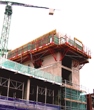 How many people reading this article actually live in a city centre? How many readers in live a high-rise apartment? And how many of these readers are aged 30-50?
My guess is that fewer readers live in high-rise than have views on them; the evidence certainly shows that most people past a certain age choose to live in suburbia or out-of-town. So is the commercial emphasis on city centre ‘executive’ apartments sustainable?
One young woman I know, a lawyer, lives with her husband in an a sixth floor apartment in Manhattan, New York.
Another, a business consultant, until recently lived in a fourth floor apartment near the commercial centre of London, but has just moved to a town house there.
My husband and I live in suburban Liverpool, and have done for many years.
Economics and demography
Economics and demography are everything in housing. People choose where, ideally, they would like to live, by reference to their family requirements.
Many people, as we all know, are happy to live in high-rise city centre accommodation before they have children, but in the UK, and especially outside London, most would prefer to make their family home in suburbia – as indeed I did.
Other countries, other ways
In other countries the suburban option may be both less available and less often preferred.
Some young couples in the UK, like the ones I know in London, can resolve their requirements by choosing a town house near the city. Others elsewhere, like the couple in New York, don’t feel the necessity to abandon high-rise living as quickly.
Why the difference?
There is less of a tradition in the UK of high-rise living except perhaps, and tellingly, in tenements and council housing.
Other cities such as New York have pressures on land which mean that over time they have adjusted to high-rise.
Sim city for real
Have you ever played Sim-City? In New York space issues have resulted in the creation almost of Sim-City tower living.
Everything is there – the shops, the amenities – including clinics, nurseries and gyms, the work places, and then, above them, with different access, living accommodation, roof gardens etc.
And in the same block as the building will be the link to efficient public transport….
Sustainable living?
These sorts of arrangements make it possible for everyone to live In Town, and many people except those with growing children to prefer to.
It’s time and, importantly, energy efficient to live in, e.g., Manhattan, and the experience is generally holistic. The experience addresses what’s needed in a reasonably sustainable way.
London
Looked at like this, we can see that London is a half-way house between Manhatton and Liverpool.
The UK overall is a very densely populated island, but still only about 5-10% of it is city-space.
Nonetheless, land is very scarce in London, and London has some of the attributes required to make it a preferred city living option. And that city is working hard to improve its offer.
Liverpool
Liverpool, however, is still losing population, albeit at a reducing rate. And we have enough houses but not always ones people like.
Unless the ‘core offer’ on Liverpool city-centre living improves rapidly, I can see little prospect of sustainability in tower-block living here.
Live-ability
We haven’t, yet, factored in the amenities to make Liverpool city-centre ‘people friendly’, as is only too obvious on any Friday night.
For me therefore high-rise in Liverpool, in the brave new world of ‘executive’ apartments, is not where I would currently put my money as a developer.
Quality of experience
Fashion quickly becomes fad and then old hat when the quality of the experience is lacking.
I’d advise investors to think about how NY or London do things – maybe even live there for a while – before they go any further with high-rise in Liverpool.
High rise and high income?
Even a decade or two ago in the UK high-rise still often (except in, say, parts of Edinburgh and London) went with low-income.
Now, conversely, high-rise and high-income seem to go together; which is fine in London; but not elsewhere.
Real executives for ‘executive’ apartments?
Liverpool should put a hold on more high-rise executive apartments until it has a more high-income, young, executives in genuinely sustainable jobs to live in them.
I’d say, let put some functional flesh, some real amenity, on the skeleton of Liverpool’s developing infrastructure
before we go for fashion in housing.
Moving forward sustainably
* Let’s first make Liverpool city centre safe and people-friendly.
* Let’s use professionals to develop the city who have experience of family life and of city centre living, to help us see what more needs to be done.
* Let’s explore what we can do to integrate services, amenities and enterprise with ‘livable’ space.
* Let’s make Liverpool’s city centre sustainable and let’s reverse our population decline before we go big-time in Liverpool for high-rise…. especially if it has more style than substance.
This is an edited version of a talk given by Hilary Burrage as part of a debate in Liverpool during Urban Design Week, hosted by Taylor Young, on 18 September 2007. The event was entitled ‘High rise living getting you down!?’ Almost all speakers in the debate agreed with the position taken here.


 Dreaming Realist