Author Archives: Hilary
What’s The 2008 Liverpool European Capital Of Culture Year For?
 Liverpool ‘s 2008 European Capital of Culture Year will be upon us in just a few months. But deep divides remain between artists, civic leaders and many local people about what the 2008 Year is ‘for’.
Alex Corina has taken the plunge into controversy on developments with the Liverpool’s plans for the 2008 European Capital of Culture Year. He’s reinvented Edvard Munch’s The Scream as The Liverpool Scream, just as in happier times he produced the Mona Lennon.
How do we measure success?
Despite the intentional playing to the gallery in all this, there is a very serious issue to be considered here. It concerns the rationale/s which lie behind the 2008 culture programme.
For many (not all) in the Culture Company I gather that one of most important ‘real’ ways that success will be measured in 2008 is number of tourist beds (i.e. overnight stays) which are achieved during the year.
The local artists’ perspective
I can see why this is a significant measure, but it’s not the message which most ‘community arts’ people in the city want to prioritise. They, like some Culture Company officers, seek to develop their communities by using ‘culture’ as a socially helpful way to bring people together.
This is however obviously much harder to measure and has less immediate impact on the seriously challenging sub-regional economy (though longer-term it would be good).
A view from cultural institutions
And then of course there are the ‘high arts’ bigger organisations which no doubt see the major outcome for themselves as being numbers of tickets sold for shows, concerts, whatever.
Again, a very valid perspective, and we need to recognise that if these organisations were not to benefit from 2008 ‘celebrations’
they would be in serious trouble in 2009 – which would mean the loss of many very accomplished artists and performers who currently work in the city(but often choose not to live here because the additional employment opportunities are so much better in, say, Manchester – see below).
Nurturing home-based professional artistic talent?
But the requirement to sustain the big arts organisations, though vital for Liverpool’s future status, still ignores the need – not at all as yet recognised as far as I can judge – to support locally-based fully trained and professional artists and performers with very high levels of skill who want to work in the city simply as artists and performers, not as community-based animateurs.
An edgy approach
This may be difficult when, for instance, the new Liverpool
Commissions stream requires that applicants offer something wacky and on the edge; which is good for some, but sounds absolutely daft if you are a historically-inclined fine arts person or a classically trained musician.
Playing to the local Liverpool gallery, which prides itself on being on the edge, is understandable, but it won’t impress many others from elsewhere; and why aren’t local professional artists being respected as artists in their own right – or so it might appear – in the same way as visiting ones?
I have already asked How Will We Know That Liverpool 2007 & 2008 Were Successful? And that debate continues.
At least three views?
In the meantime, I’m still not sure what the answers might be, but they seem to coalesce around the three views above:
1. tourist spend / beds
2. community cohesion and capacity building
3. (potentially) retention of high-level artistic skills in the city
Where’s the dialogue?
Unfortunately however there seems to be very little dialogue between those who promote each of these perspectives.
Indeed, I’m not sure it’s possible to do this under the present ‘consultation’ arrangements, with occasional meetings of large numbers of people – professional artists and others with very different experience together – in sports halls and the like.
Bringing the issues into focus
If Alex Corina’s current activities can help everyone to focus on
the ‘what’s 2008 for?’ message whilst there’s still at least a little bit of time left, that will be excellent.
As a city resident I’d like to see everything succeed so that proposed cultural ‘villages’, respected highly-skilled professional artists and performers, and our tourist trade all flourish ; but we’re still a way from achieving this.
A matter of urgency
The dialogue does need to be getting somewhere, and pretty quickly, please.
Regeneration And Community Engagement In Action: The ‘Rules’
 ‘Regeneration’ happens when someone with influence perceives a need for improvement. But this is a process in which professionals omit to involve those to whom regeneration is being done at their peril. What follows is therefore a set of observations or ‘rules’, derived from direct experience, about how regeneration and community engagement may play out on the ground.
The ‘Rules’ below are presented from the perspective of a professional approaching a regeneration scenario. The reader might like to turn them around and ‘translate’ them, to reflect the possible understandings of a person ‘in the community’ on whose (claimed) behalf regeneration is taking place.
1) It is very difficult to ensure that everyone ‘knows’ what they need / would like to know.
2) People at all levels get suspicious / unhelpful if they feel ‘left out of the loop’.
3) Identifying legitimate Stakeholders is always a challenge – not all of them are formal.
4) Professional practitioners are not the font of all knowledge.
5) Perspectives and language (discourse / terms) may vary
dramatically between parties.
6) Expectations may similarly vary, and can be challenging to manage.
7) It is essential to start any programme by identifying ‘what works’ and protecting that.
8) Who is ‘qualified’ to undertake such ‘what works’ identification can be problematic.
9) Participants’ understandings develop over time; what they’d initially asked for will change.
10) The same may also apply to the professionals involved – especially if they are sensitive to context.
11) Sustainability – social, economic, physical – is often
overlooked in practice, if not in theory.
12) There is rarely a clear end-point (when does ‘regeneration’ finish?)
13) Engagement is by definition voluntary; it can never be forced, but is very necessary.
14) Equipping people to engage often requires patience, skill and thoughtful leadership.
15) Many stakeholders only really become interested when the chequebook arrives; be ready and beware!
These observations formed part of a lecture delivered (by Hilary Burrage) on 23 April 2007 to Masters’ students of social policy and political science at Charles University, Prague, in the Czech
Republic.
What do you think?
Do these ‘rules’ reflect your experience? And are there other ‘rules’ to add to these?
Cherry Blossom For May Day In Sefton Park, Liverpool
 The cherry blossom in Liverpool’s Sefton Park has been very early this year; it has already offered much delight to those who stroll along the middle lakesides, the blossoms pink, cream, white and even cerise. But one tree is still in glorious full bloom as we reach May Day eve.

See also: Sefton Park’s Grebes And Swans
Liverpool’s Sefton Park, Swans, Herons And Grebes
Sefton Park, Liverpool: Winter Solstice 2006
Friends Of Sefton Park
Alternate Weekly (Waste) Collection: Has It Been Explained?
 AWC (Alternate Weekly Collection of recyclable and non-recyclable household waste) has a bad reception in the UK, although it increases the extent of recycling. But why is something designed to sustain our environment – an ambition held by most of us – producing such hostility?
Latest in the endless list of Things People Don’t Like is the idea of alternate weekly collection of recyclable and non-recyclable domestic waste. There is evidence that this is effective in getting people to think more carefully about what they can and cannot recycle (rather than just bunging the lot in the dustbin) but everyone seems to be in uproar about it.
Why?
‘Why?’ is always a complex question to answer in environmental matters. What seems self-evidently sensible to the scientists and policy-makers (not to mention the demanding officials of the European Union, who are rightly leading a very serious environmentally conscious charge) is far less evident to Mr & Mrs Suburbia or Mr & Mrs InnerCity. The dialogue has got lost on the way, or perhaps has simply never existed.
People suspect that the bi-weekly collection of their ‘normal’ waste, even though it is to be interspersed by alternate weekly collection of what’s recyclable, is actually the result of a financial ‘cut’, and that it must therefore be bad. No-one seems to have thought to explain that there’s good evidence that AWC increases recycling – albeit at contested levels of efficacy.
Cynicism is the only winner
So there is Big Fuss. Nobody seems to believe something could be being done for ‘good’ reasons; and in that local politicians have often not helped. This situation benefits no-one.
The sooner the powers-that-be learn they must share rationales with ‘ordinary’ people right from the start of their thinking, the better. This is an issue which goes beyond what used to be called the ‘public understanding of science’, to an even more pressing
issue – the sustainability of our planet.
Be straightforward
So let’s ask our media, policy-makers and politicans to be braver and more honest in how they present these things. It would be good for everyone.
Read the debate which follows then…
Prague Old Town, Celetna Street
 Controversy has arisen about how much of a contemporary style Prague’s Old Town (Stare Mesto) should have. Modern commercial pressures inevitably vie with the demands of centuries of architectural tradition. Brilliant sunshine here blends these features into a whole.

See also:
Camera And Calendar
Snowstorm And Magic In Prague At Night
Impressions Of Prague
Carbon-Neutral Villages, British And Czech Alike
Things To Do When You’re 16 – 18
 16, 17 and 18 are when it really starts to buzz. What you choose now will have impact for a long time to come. Horizons are expanding as comfort zones are challenged. Opportunities grasped now, at work and at play, will shape the adventure to follow. So go for it, looking forward and with a zest for life.
This is a time for action, but it’s also the time to set yourself some groundrules for the future – not ‘don’t do this’ restrictions, but an approach to life which will serve you well in years to come. If you haven’t already, check out the general Be Happy Rules for some ideas; happiness (or at least peace of mind) is often a matter of choice.
Then, future chemist, carer or caterer, you might like to give these suggestions a try…..
Get moving
You’re finally old enough to get a Driving Licence! So do it properly, and learn to drive with pride and care. Those driving lessons are about one of your first adult responsibilities; please take good advice and use your newly-won freedom skilfully.
And maybe you’d also like to sail, ski, horseride, hill-walk, who
knows…? Get out and about, using your strength and stamina to explore a whole new world.
Keep what you’ve got
Perhaps you’ve been having football, music, hockey, dance, chess or other lessons along with your school studies; and maybe the demands of exams are pushing these aside. Fair enough, but don’t lose it altogether. Keep your hand in where and when you can.
These interests are investments in your future – and excellent ways to spend a bit of ‘me time’ now, if you’re feeling stressed out.
Plan and enjoy
Is there something you would especially like to have or do? Give this one a bit of thought, and plan how you’ll do it. Maybe you’ll
do it alone, or maybe with others, but now’s the time to get the act together; manoeuvre, save, persuade – and then be sure to enjoy!
And, whatever it is, big or small, it will look good on your CV too.
Be vote-wise
Somewhen soon you’ll have a chance to vote. Make sure you are ready for this, that you know the actual practicalities of voting (where to go, which forms to complete etc) and that you understand the party-political options on offer.
‘They’re all the same’ is not an adult way to respond to politics and our hard-won right to vote; so if you don’t like what’s being said, be sure your voice is heard and do your best to make things better.
History B.Y. (Before You)
It’s never too early to start a habit which will serve you well for many decades…. get to know your neighbourhood, town or city and find out why it’s like it is. Who ‘made’ it? And who’s in charge now?
What’s behind the local names for streets and areas? Are there local stories passed down from generation to generation? There are some fascinating tales to be told, and it’s great to be in the know.
Become a people watcher
Late teens is a time when career choices loom large. It doesn’t matter whether your ambition is a steady job or a heady career, you need to know something about how it all happens – so remember to people-watch! How have people in occupations which interest you got there (or not)? What seems to make them
happy, and what worries them?
It may be easy to find out, or it may require some work, but with luck you’ll discover everyone’s happy to share their personal take on chosen occupations. These are big career decisions you’re about to make.
Go camping
It might be your backyard (to practise), it might be a bus-ride away, or it could be another continent, but try life under canvas. In years gone by camping was a well-established and often very soggy part of growing up. Thankfully, modern arrangements are both more civilised and less regimented.
This is a brilliant way to adventures and self-sufficiency (plan before you plunge!), perhaps just for a day or two, perhaps for a whole summer somewhere really exciting and new.
Get involved
No matter what your background and experience to date, there are now comfort zones to breach and challenges ahead. Always value your family and friends, but also see where else you can go. Is there a ‘cause’ or charity you might support, or something you’d really like to help with? Are there younger children in your school you’d like to encourage? Or older people in your community who’d enjoy your company?
You’ll probably gain as much as you give, and it’s never naff to care enough to share.
Learn First Aid
This is a strictly practical aspect of your developing skills. If your school, college or workplace doesn’t teach First Aid, ask why not. And if it does, make sure you’ve done the course.
Learning how to save a life is a valuable investment of anyone’s time.
Get green gym-ing
Is there a green gym in your part of the world? A place with open-access exercise points, perhaps in the local college grounds or park, where everyone can get fit and enjoy fresh air at the same time? If there isn’t, are you going to get one installed, and then use it? … maybe even help to construct it yourself?
‘Green’ themes are the future, and especially yours as a young person. If green gyms aren’t your thing, perhaps there’s another eco- / fitness project you would enjoy? Discuss and decide what’s best, and don’t take No for an answer! Good luck.
Have you read …?
Things To Do When You’re 11 – 15
Things To Do When You’re 19 – 21
What To Do At Any Age – Be Happy
* Life is not a rehearsal
* Smile when you can
* Do acts of random kindness
* Try no-TV days
* Be cautious sometimes, cynical never
* Use your pedometer
* Treat yourself daily to a ‘Went Right’ list
And why not share your alternative ideas here, too? You can add your own take on Things To Do When You’re 16 – 18 via the Comments box below…
Pianos For Peace
 Rarely are artistic installations truly inspirational, but the use by George Michael and Kenny Goss of John Lennon’s piano, on which Lennon composed the song Imagine, is one such example. This travelling piano scenario is art, goodwill and common humanity all rolled into one.
George Michael is taking John Lennon’s piano on a roller coaster ride of emotions. Or that, at least to my eyes, seems to be what’s happening.
Singer-songwriter Michael acquired Lennon’s piano, on which the song Imagine was written, at the turn of the Millennium, and he and his partner Dallas art gallery owner Kenny Goss have now resolved the question of what special use to put it to: It has been given the central role in the world-tour Imagine Piano Peace Project.
Genuinely inspired art
It is a stroke of genius to take that humble piano to troubled places – sites of gruesome events such as assassinations, state-sanctioned executions, bombings, multiple murders and the like. The piano and its associations bring to these grimly horrible and
almost unthinkable acts a sort of dignity and calm.
The piano itself cannot and need not speak. It shows and incites no fear. All it has to do is occupy these sites as physical spaces. We can, each of us, work out the rest for ourselves.
John Lennon started life an unremarked child, attending our local school in Liverpool. He ended it a tragic victim of sudden very public violence in New York. As he himself might also have said of his travelling piano, just “Let it be.”
John Peace
 John Peace, educated in Yorkshire, is a Music graduate of University College, Durham University, with diplomas in piano and organ performance from the Royal Academy of Music and Royal College of Organists. A Senior Lecturer in Music in the Music & Drama School of Performing Arts in Liverpool, John was Head of Keyboard Studies and a course leader. In the 1980s he greatly valued artistic consultations with distinguished pianist and Royal College of Music professor Gordon Fergus-Thompson.

Introducing Elegant Music ~ Classical Music & Easy Listening For Events
 Elegant Music is a long-established, independent free-lance ensemble of fully professional classically-trained musicians who provide high quality music and easy listening for private, family and corporate events, after-dinner and soiree concerts, and special occasions. As individual players and singers we appear in our own rights with the North West’s most prestigious symphony orchestras and other performing arts organisations; and we come together as Elegant Music to offer classical music and lighter musical entertainment in venues across the region and beyond.
From Salon to Celebration, from Intimate to Corporate, we have music to suit your requirements. Please contact us, or read on…
Amongst Elegant Music‘s many previous engagements are concerts, dinners and weddings in venues as varied as Liverpool Town Hall, St. George’s Hall, Blackburne House, Croxteth Hall, Sefton Park Palm House and many hotels in the region – including the opening event of the Liverpool Crowne Plaza – as well as at numerous private parties and exclusive corporate events.
In addition to the numerous events which have been organised by private individuals and families, our clients have included the the Liverpool Chamber of Commerce, the University of Liverpool, Sefton Flower Show, Liverpool’s Met Quarter and many professional and commercial organisations.
Every occasion is unique
Elegant Music treats every occasion as unique. We know that you, the client, will have particular requirements, preferences,
themes or whatever which will make the occasion special for you, and we are happy to collaborate with you to produce a tailor-made programme of music, formal or light entertainment, which will be exactly right for that specific event.
A small but flexible group
Generally, Elegant Music comprises three to five performers (perhaps a string quartet – two violinists, a violist and a ‘cello; or maybe a trio with keyboard, strings and / or a singer); but we can provide any number of performers from one (say, a pianist, singer, violinist or organist) or two up to, e.g., a whole Viennese or symphony orchestra, to suit your requirements.
Contact us early to discuss musical options
We suggest you contact us as early as possible in the preparation of your event planning, to discuss the sort of music you would
like; with notice we can usually meet a wide range of requirements. But if you prefer, we can of course offer a ready-made package, should time or other pressures make this the best option.
Jazz or classical, modern or romantic, Beethoven or Beatles, we have the music to meet your needs.
Styled to suit
And similarly with presentation – we know that how things look is also important. The style of the event is yours to choose. Jazzy waistcoats to full evening dress, day wear to black tie, your Elegant Music musicians will be pleased to perform in whatever dress code you select!
Advice to help you decide
We will happily provide information on our fees, answer any
questions and, if perhaps you are new to organising events (e.g. for a family wedding), guide you through the preparations which will ensure that the music for your special occasion is just as you want it.
We are also of course very pleased to discuss options and possibilities with the organisers of larger and / or corporate events.
No obligation discussion
For a no obligation discussion, please contact us with your phone number and information about your general requirements via this link.
We look forward to hearing from you!

The Live-A-Music Children’s Workshops, 5 April 2007: A Fun-Packed Family Day
 The Live-A-Music Children’s Workshops on 5 April in Mossley Hill Parish Church Hall, Liverpool 18 were action-packed, with much creative sparking between the children, musicians and ‘supporting cast’ of accompanying (grand) parents and younger brothers and sisters. Themes included ‘Music, Myth and Magic’, ‘Animal Samba’ and ‘Symphony’ – with the children also performing a work of their own.


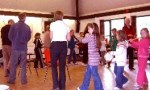


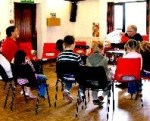
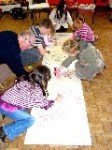


These Live-A-Music workshops ran during the day on Thursday 5 April 2007, in Mossley Hill Parish Church Hall, Rose Lane, Liverpool 18. Background information about the workshops is available on this website. Further workshops are planned for the Summer school holidays.
For more details of the Summer arrangements, or to discuss how Live-A-Music can work to support your own educational / social engagement proposals, please email us.


 Dreaming Realist