Author Archives: Hilary
See The Dawn, Enjoy The Sunset: The No.10 Petition For Daylight Saving
 This is the day and date when the clocks go ‘back’. We have an extra hour in bed on Sunday morning, and then… darkness an hour earlier until next Spring. And most of us will miss the dawning of the day as well, since the majority of people in the UK no longer keep agrarian hours. So let’s do something about using daylight in the best way, in the modern world: Sign the No 10 Petition for ‘better use of sun’.
The petition for ‘Daylight Saving’ – i.e. keeping British Summer Time (BST) all year long – is here [http://petitions.number10.gov.uk/betteruseofsun/].
We have already discussed in detail on this website the safety, energy, health, leisure and other benefits of not going into the grimness of Greenwich Mean Time (GMT) every Winter. Let’s make it clear that (as is in fact the case according to surveys *) most of us would welcome a continuation of ‘summertime’ hours.
Watching beautiful sunrises and sunsets offers aesthetic reasons for keeping summertime hours. But there are many hard-headed reasons too; and if you still doubt this, just check out for yourself with bodies such as RoSPA – or indeed read the views of Sir Stuart Hampson, who, as chairman of the John Lewis Partnership from 1993 to 2007, surely knows a thing or two about looking carefully at the facts.
Who can really argue, when the evidence is so clear? In Sir Stuart’s words,
Daylight is precious. Let’s stop wasting it. If we didn’t put the clocks back we could cut crime, keep fitter – and reduce carbon emissions.
And enjoy more sunrises….

* 4,215 people took part in an online vote on RoSPA’s website between 24 October and 2 November 2006. The vast majority (86%) supported this change. Of those who voted, 3,625 voted ‘Yes’, 548 voted ‘No’ and 42 voted ‘Don’t Know’.
Dates for 2008 – 2011 when at 2 a.m. the clocks go back (October) and forward (March) by one hour in the UK are:
In 2008: the Sundays of 30 March and 26 October
In 2009: the Sundays of 29 March and 25 October
In 2010: the Sundays of 28 March and 31 October
In 2011: the Sundays of 27 March and 30 October
Read more about BST: British Summer Time & ‘Daylight Saving’
Financial Regulation Is Strengthened By Diversity
 The current financial chaos is producing a lot of debate about regulation. On one hand we’re told that very tight scrutiny, emboldened by severe legislation, is a must; whilst others say more ‘good, moral people’ from the City are the answer. Both positions have merit. But urgent action to widen the pool from which Board Directors is drawn is one essential and immediate option, insisting that many more women become directors of the most influential companies.
Few would deny that, as Andrew Phillips said recently in The Guardian, a ‘welter of regulation’ cannot in and of itself avoid further catastrophe for the Threadneedle Street and City of London and Wall Street.
Of course ‘good, moral’ people are a pre-requisite of effective reformation of the financial system; and of course this must include people of ‘all talents’.
Diversity improves scrutiny
What Lord Phillips might also propose, however, is that none of this is likely to deliver unless the talents involved are those of a truly diverse lot, in background, ethnicity, gender and otherwise.
The best way to secure proper scrutiny is to ensure, however well meaning they might be, that decision-making groups are not also a collection of people with much, beyond the necessary skills and expertise, in common.
Diversity improves business performance too
We already know that diversity at the top makes for successful business. Group members of different sorts, from a variety of backgrounds, aren’t an optional extra when it comes to effective group working. They’re essential.
And the UK workplace equality legislation to deliver this – applicable as much in the boardroom as on the shopfloor – is already in place.
Read more about Business & Enterprise and about Gender & Women.
DIUS Science And Society Consultation
 Summary: The UK Department for Innovation, Universities and Skills has just conducted a consultation on Science and Society. What follows is a version of my submission to DIUS on this subject, covering issues such as the role of scientists in the service of government, the use of social science, the need to develop regional science strategies, engagement and stakeholding, the iterative way science evolves in its inevitably social context/s, and how different sorts of people feel about and become active (or not) in this process.
A full version of this paper is available on Hilary’s professional website, here.
Making Liverpool Prosper Beyond ’08 – The Debate
 Regeneration has been headline news in Liverpool these past few weeks, as the debate continues about Dr. Tim Leunig and his Policy Exchange report, Cities Unlimited, in which it is suggested that Liverpool’s time is over. This evening Prof. David Robertson of Liverpool John Moores University and Dr Leunig of the London School of Economics presented their opposing views on Liverpool’s future in Liverpool Cathedral.
True to the demands of academic candour, both speakers offered evidenced-based if very different understandings of the harsh reality of modern day Northern city economic prospects.
There was no contest in terms of the evidence presented in Cities Unlimted; the debate promoted by Dean Justin Welby this week, on Thursday 16 October 2008, was about what the established socio-economic data on Liverpool means, and whether it alone can tell us what is likely to happen to Liverpool as a city.
Interpreting the evidence
For Tim Leunig – an economist and authority on the history of the cotton trade – the essential message was, ‘Liverpool’s time is past’. He was, he said quite obviously sincerely, very sorry about this, and he didn’t wish anyone to be upset, but that’s how he believes things are.
For David Robertson – a policy adviser to the Government on life-long learning – the message was rather more upbeat, ‘Liverpool’s fate is in its own hands; everything’s now up for grabs.’
And of course for some people, though probably not so many of those in the audience, the real issue might well have been, ‘What’s your problem? Liverpool’s great anyway.’

An opportunity to make a point
A similar debate, also chaired by Roger Phillips, was held in the Cathedral just last year, as part of the farewell events organised by the then Dean, Rupert Hoare, when he and leading local expert John Flamson invited us to debate The Future of Liverpool’s Economy at a well-attended seminar on Saturday 27 January 2007, in the Lady Chapel…. and this event in turn followed in the footsteps of Dean Hoare’s illustrious predecessor, Dean Derrick Walters, a man for whom, alongside his calling, hard-headed and warm-hearted regeneration was a way of life.
As last time, the current debate offered an opportunity for those who have considered Liverpool’s prospects carefully to make their point. Even the most optimistic were agreed that a step change is required in how plans for progress should be viewed.
… and to face up to the facts
The message of hope, for those who wish to hear it, is – as indeed we have consistently argued on this weblog – that things can change. History tells us what’s already happened, not what will happen.
Currently, Liverpool isn’t that good at creativity and innovation (it doesn’t feature in the Intellectual Property or patent stakes) and there are many challenges for educational, health and other major features of the local population. But with a will to achieve, things can be done.
We need to make a frank assessment of where Liverpool’s going. History is in the past, not a predictor of what is yet to come about. To quote David Robertson:
What we’ve inherited can be unpacked for the future.
The moment of truth has arrived for Liverpool… We need to understand the limits of what we can do, to understand our strengths and focus on how we can succeed.
An enduring analysis
This was the message in the Cathedral last year, it’s the message now, and it will continue to be the message.
I just hope enough people in this city are beginning to listen.

Read more about The Future of Liverpool.
For further commentary on this debate see Larry Neild’s article, a report in the (Liverpool edition of) the Daily Post and the account by Adrian McEwen.
Monday Women Meet At Heart & Soul, Liverpool
 Monday Women (Liverpool) has been going for more than five years now, so it was really encouraging to see such a good turn out for the first meeting of Autumn ’08. There’s clearly a continuing enthusiasm for a (free, open access) ‘space’ for women in our city to meet friends old and new, and just to catch up on the news. It’s fun; so come! Please note: future meetings now at Everyman Bistro, 5 Hope Street, Liverpool L1 9BH.
Please note: Sadly, subsequent to this great meeting in October 2008, circumstances at Heart & Soul changed. We were however pleased to find a temporary place to meet, in Starbucks on Bold Street (thanks for making us so comfortable), before eventually being able to return to our original home, the Everyman Bistro Third Room, at the Liverpool Metropolitan Cathedral end of Hope Street; same times (5.30 – 7.30 pm), same dates (first Monday of the month), same lovely MW people….

These Monday Women are amongst those who arrived earlier on for this friendly, lively meeting at Heart & Soul bistro in Liverpool, after work this evening (6 October ’08). Monday Women meet between 5.30 and 7.30 p.m. on the first Monday of the month. All women, from Liverpool or just visiting, are welcome to join us. There’s no joining fee or any other membership process; if you turn up you’re a ‘member’.
There are also two completely free email goups * which women in Liverpool and further afield can join, for the exchange of news and views and to chat with everyone about events, business opportunities, courses, arts activities, good causes and anything else with which people may be involved.
Monday Women is free and it’s fun
The sole reason for the group, whether the actual meetings or the e-groups, is to give us all a no-cost avenue to keep in touch and to make friends and find other women with similar interests! If you like, it’s a sort-of zero cost social enterprise. The only ‘capital’ in this ‘enterprise’ is social capital – the friendliness and fascinating interests of Monday Women themselves.
Our very special and warm thanks to Monday Women member (and ‘social secretary’) Chumki Banerjee of Heart & Soul, who has been our kind host for meetings over the Summer of 2008.
* The egroups are on Facebook and at Yahoo. For either, just log in and search ‘Monday Women Liverpool’, then click to say you’d like to join. We only ask that people ‘apply’ to be on these e-groups in order to avoid spam, so as a real woman you’ll be warmly welcomed.
Can Meat Be Eco (Or Even Zero Carbon)?
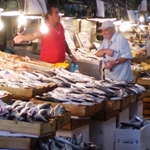 Recent advice is that, to ‘save’ the planet, we in the developed nations should eat meat at most four times a week; but we should also recognise the current fundamental economic centrality of meat in many parts of the developing world.
Discussion of these recommendations has produced some interesting ideas about what might constitute almost zero carbon food, even zero carbon meat. Hill grazing sheep, jellied eels and lobster aquaculture are amongst the food items and techniques proposed.
Liverpool’s ‘Sage’ Of Sefton Park
 Is it Merlin, or is it some other mystical creature, whose likeness arose silent and unannounced from the lone long-topped tree trunk in the heart of Sefton Park? One August morning, in the midst of the more expected park renovations of 2008, there ‘he’ was, the beautifully sculpted Sage of Sefton Park, the beginning, we can only hope, of a serendipitous array of creations in the park, for us to enjoy and create further in our imaginations as we wish.


It’s heartening that, even so long after it was first suggested, a tree sculpture has now appeared in our park, a place subject, for many months now, to less engaging and sometimes jarring disruption.
Who sculpted our ‘Sage’ and why or how, we don’t at present know [later: or at least we didn’t then]; but perhaps that mystery can be resolved [please see Comments below]? Is ‘he’ Merlin the wizard or some other mystical creature? Does he have a message, or is he simply there to lift our imaginations and to add some fun as we stroll by, or as we pop into the cafe with the kids for a little treat?
May this be the start of much more creativity and friendly magic for the imagination, in this special urban green space right by the centre of our city.

Read more about Sefton Park, and see more photographs at Camera & Calendar.
John Willman, Tim Leunig And North West England
 John Willman is UK Business Editor of the Financial Times, so his take on the UK economy was an important contribution to the NWDA 2008 Annual Conference in Liverpool. His message, whilst analytically cautious in the present market chaos, came over as generally upbeat. Would that Tim Leunig, the academic who advised the economic emphasis should Go South, had seen things in the same light. Better surely for the North and the South of England, if we face the UK’s regional (and centralist) challenges, than if we run away?
The headline message from John Willman‘s talk came over to me as: Tim Leunig is mistaken. And the UK economy is fundamentally strong.
Leunig’s recent staggering judgement (in the report Cities Unlimited, by the free market leaning independent think tank Policy Exchange) that in general developers should abandon the North of England for the delights of the Golden Triangle – he suggests more development around Oxbridge, which will supposedly realign the North-South markets – in my view takes some beating for silliness. John Willman appeared to be of a similar mind.
The great Victorian cities
Far from suggesting, as Leunig seems to, that Greater London should become even more overheated, Willman made the case that the ‘great Victorian cities’ are the best equipped for the new ‘global living’. There is, he said, a Kit: some combination of conference centres, art galleries, a four-star hotel, some culture and festivals, and maybe a port.
In these respects the major English cities of the North (of the Core Cities, only Bristol is South) have the edge on continental European cities such as Bordeaux and Porto. They’re also great and fascinating cities (as I too can attest), but they’re probably 15 years behind their parallels in Britain: Their docksides have yet to be developed for the new leisure economies, for instance.
North-South divide: London ‘vs’ the rest
The debate about the North-South divide, Willman told us, is sterile. It’s useless to ‘blame’ London. The UK capital is a truly global city; in this, the North can never expect or even hope to compete. It’s just not a realistic objective to close the gap.
And London, with the mayoral model which elected mayor Ken Livingstone provided, showed how a ‘get things done’ city can operate.
The national and global economy
Despite the panic, only 3% of UK mortgages are in default. Willman judged that Britain is still doing pretty well as the sixth largest manufacturer in the world, a supplier of very high quality products.
In these respects the UK economy is well placed for the globalised world; as is North West England, with its emphasis on the service economies, life sciences, media and creative products and the current / forthcoming energy industries (including nuclear energy) .
The Wimbledon effect
The UK is an open economy, which in some senses punches above its weight. Britain demonstrates the ‘Wimbledon effect‘: we don’t necessarily take the headlines, but we do host the event.
In fact, the consultants Saffron Brand recently reported that perhaps the UK sells its story ‘too well’ – some of our cities are actually more highly rated than cold analysis suggests they might be.
A strong basic economy
Willman’s overall judgement at the NWDA 2008 Annual Conference was that UK economy is ‘so much stronger than 30 years ago’.
Perhaps some of us continue to see the elephant in the room – climate change and environmental sustainability – as an critically important challenge, still to be adequately (and very urgently) addressed.
Whatever… Would that Tim Leunig and others like him were as willing as Willman, on the basis of the evidence over many decades, to recognise that people everywhere have to believe in themselves to make their economies work effectively at all.
Read more about Regions, Sub-Regions & City Regions
and about Economics Observed.
Sure Start’s Approach To Health Inequalities Does Work
High Infant Mortality Rates (IMR) are a distressing measure, but they tell us a lot about the nation’s health. In the UK today the risk of infant death is about one in two hundred live births. But still seven times as many babies die in some working class Northern towns as do in the wealthiest parts of the South East. The Sure Start programme, alongside the Government’s IMR health inequalities initiative, shows promise in addressing these massive inequalities; but the next step must be to strengthen Sure Start’s interdisciplinary framework.
Fundamental issues such as human health and well-being are rarely a challenge for only one part of public sector services.
The really big problems almost always straddle a wide range of service provision, which can add substantially to the difficulties of resolving them – no one service provider alone ‘owns’ the issue, and it is often unclear who should head up programmes to address the problem.
Differentials in life expectancy
A classic example of this is the challenge in the UK of reducing the gap between the life expectancy of richer and poorer people, to achieve the goal of everyone who possibly can enjoying a long and healthy life.
The better the start in life, the more likely a person is to have a good outcome also in the future. For this reason there has been much emphasis in recent years on Infant Mortality Rates, which are generally agreed to be amongst the most sensitive overall indicators of a nation’s health.
Infant Mortality Rates (IMR) are usually stated as numbers of deaths per 1000 live births. The figures are often broken down into rates for the first four weeks of life (neonatal rate) and then for the rest of the first year of a child’s life (post-neonatal rate), i.e. from the end of week four till first birthday.
Infant Mortality Rates in Britain
The national statistics show that even since the 1970s, in the UK IMRs have fallen by about 60%. In 1978 the neonatal (first four weeks) rate was 8.7 deaths per 1000 live births, and the post-neonatal rate, up to a child’s first birthday, was 4.5.
By 1988 the rates were 4.9 and 4.1 respectively, and in 1997 they were 3.9 and 2.0.
In 2007 the UK neonatal mortality rate was 3.3 per 1000 live births, and the post-neonatal rate was 1.5 – in other words, a child born in the UK in 2007 had a probability of dying before his or her first birthday of just about one half of one percent. (You can see international comparisons here.)
Regional differences
Sadly, these national statistics include both good and bad news. The good news is that decent housing, income and environments can support people in long and healthy lives.
The bad news is that the opposite conditions can be lethal. There are parts of the North of England, for instance, where IMR is about twice that national average, and up to seven times that of the very best outcomes.
Specifically, high IMR and low life expectancy often go hand-in hand in the Spearhead areas; the 70 local authority areas with the worst health and deprivation indicators, and for which a programme of public service interventions has been developed.
High risk factors in health inequality
The target does not however take into account all dimensions of health inequalities in infant mortality. The statistics show e.g. that in 2002–04, the infant mortality rate of babies of mothers:
* born in Pakistan (10.2 per 1,000 live births) was double the overall IMR;
* born in the Caribbean (8.3 per 1,000 live births) was 63% higher than the national average;
* aged under 20 years (7.9 per 1,000 live births) was 60% higher than for older mothers aged 20–39;
* where the birth was registered by the mother alone (6.7 per 1,000 live births), was 36% higher than among all births inside marriage or outside marriage or jointly registered by both parents.
Improving life chances
Obviously, these significant inequalities are just not acceptable. The Government therefore introduced a Public Service Agreement (PSA ) Target in 2007 with the express objective of reducing the IMR gap, so that more babies will live to have long and healthy lives. (Healthy babies also have better long-term prospects, sometimes dramatically so.)
The deal is that the UK Treasury provides the money, and the public sector delivers the agreed outcome, to a clear timescale and against clearly measured outcomes.
Particular emphasis has therefore been placed in terms of health inequalities on achieving a ten percent reduction (between 2003 and 2010) in the IMR deficit between people in routine and manual (R&M) jobs, and the general population.
Practical steps forward
The practical ways in which the Health Inequalities Infant Mortality PSA Target Review (February 2007) can be achieved are focused on two things: sensible day-to-day actions and provisions, and interdisciplinary co-operation. In the words of the NHS summary of the Implementation plan for reducing health inequalities in infant mortality:
‘The plan describes how commissioners and service providers can develop local services to help reduce health inequalities in infant mortality through:
* promoting joined-up delivery of the target with Maternity Matters and Teenage Parents Next Steps. This includes
* improving access to maternity care;
* improving services for black and minority ethnic (BME) groups;
* encouraging ownership of the target through effective performance management;
* raising awareness of health inequalities in infant mortality and child health;
* gathering and reporting routine data, including specific maternity and paediatric activity;
* undertaking joint strategic needs assessment to identify local priorities around health inequalities in maternity and infant mortality;
* giving priority to evidence-based interventions that will help ensure delivery of the target.
It emphasises the importance of partnership working; outlines the role of government departments, strategic health authorities (SHAs), primary care trusts (PCTs), local authorities and Sure Start Children’s Centres.’
Specific, realisable targets for practical action and delivery
Progress may be slow, but none of this is rocket science.
Large-scale studies have demonstrated that just a few health messages about avoiding early years risk can have a big impact. Indeed, the Review of Health Inequalities has been able to quantify four measures, and suggest another one, which would have appreciable impact on the ‘10% reduction in IMR gap’ target. These were:
* reduce prevalence of obesity in the R&M group by 23%, to current general population levels – 2.8% gap reduction
* reduce smoking in pregnancy from 23% to 15% in R&M group – 2% gap reduction
* reduce R&M group sudden unexpected deaths in infancy by persuading 1 in 10 women in this group to avoid sharing a bed with their baby, or letting it sleep prone (on its front) – 1.4% gap reduction
* achieve teenage pregnancy target – 1% gap reduction
* also, early booking and improved teenage pregnancy services – not possible as yet to quantify probable gap reduction, but positive impact on gap anticipated.
Getting it right
The scope for getting this right in very simple ways is therefore enormous. Whilst guidance at national level, such as the Department of Health’s Child Health Promotion Plan (June 2008) is essential to provide a framework, much of the responsibility for success has to lie with the authorities ‘on the ground’, who have to co-ordinate the action.
In reality, only at the local level is it possible to get practitioners to work together well, to ensure that all those – including so-called ‘hard to reach’ minority ethnic familes, travellers and e.g. very young parents or parents with mental health problems – who would benefit from services, advice or support, in fact receive them. Although programmes such as the Family Nurse Partnership (a joint Department of Health / Department for Children, Schools and Families project whereby specially trained midwives and health vsitors work closely with vulnerable, first time, young parents) are starting to reach those with most disadvantage, in some places still this doesn’t always happen.
It is disappointing therefore to read claims in this month’s Regeneration and Renewal that the PSA Inequality target will be missed, despite the many billions of pounds (£9bn in 2007-8) which have been invested in Sure Start services to deliver early years provision.
An expected move
This probably why the Government is launching a public consultation on proposals to give Sure Start Children’s Centres a specific statutory legal basis, as part of the forthcoming Education and Skills Bill.
Such a move was indicated as a possibility when The Children’s Plan (the ten year programme for Every Child Matters) was introduced in December 2007. It would establish Sure Start Children’s Centres as ‘a legally recognised part of the universal infrastructure for children’s services, so their provision becomes a long term statutory commitment and part of the established landscape of early years provision’.
The best way forward
This is a much better idea than the alternatives proffered in some quarters – more Health Visitors as a stand-alone, for instance. (What about the GPs / family doctors? How do they fit in?)
A review of progress has shown (as my own consultancy work also indicates) that the PSA infant mortality target was not known or understood by practitioners (NHS, local government and Sure Start staff etc) despite individual examples of leadership and good practice.
Reaching out
And nor, in my experience, do practitioners and policy makers automatically know that impact has to be measured across the whole relevant population of infants, not just those who attend particular service provision, be this Health Visitor clinics, Sure Start or whatever.
About 80% of early years formal care is actually undertaken by small private concerns, child minders and so forth, a ‘group’ which, whilst of course the subject of statutory regulation and monitoring, it is particularly difficult to bring together in any meaningful way. But what happens in small relatively isolated provision will have a big impact on children’s future lives.
The PSA IMR Review has therefore identified the criticality of making the 10% gap reduction target part of everyday business – integrating into commissioning plans and provider contracts; taking responsibility and engaging communities; matching resources to needs; and focusing on what can be done.
Multi-disciplinary and future-facing
The challenges of equipping professionals to work together across disciplines are complex; not every practitioner would say, if asked, that they actually want to be so equipped and so far out of their comfort zone. But these challenges must be met, as is beginning to happen, with skills audits by NIACE which indicate the centrality in Sure Start provision of effective multi-agency leadership and partnership development.
The National Audit Office reports that, whilst most Sure Start Children’s Centre managers understand they must approach the work in a multi-disciplinary way, this is not always so for local authorities, who ‘had not all developed effective partnerships with health and employment services’.
The onus is now particularly on local government and NHS providers. If it takes more legislation to ensure they all collaborate properly with Sure Start Children’s Centres (and vice versa), so be it. It’s children’s futures which are at stake.
Read also: Early Intervention In The Early Years
See also: ‘Changes for the better?‘ – The Every Child Matters policy, published in 2003, was a landmark proposal for child social service reform. Five years on, Ruth Winchester asks the professionals how things have developed, and what progress has been made (The Guardian, 22 October 2008)
Prague, Forty Years On (And The Velvet Revolution)
 The events of the 1960s are simply history for many of us today, but a visit to Prague (September 2008) provides a reminder that for some, the memory of those events is still very much alive. The Czech Republic is now a vital, thriving and democratic country as a part of main-stream Europe, thanks to the Velvet Revolution of 1989. Yet there are plenty of Czech citizens who recall the trauma of those times as integral to their personal ‘lived experience’.
These thoughts became very focused for me today, when we took a walk around Prague with a citizen of that city, our good friend Dada. Our exploration began with a look at the gardens of the Czech Senate, which lie above the commercial centre of the city, simply designed yet formal and splendidly impressive all at once:

But as we wandered it became apparent that these were not just gardens; they were host also to an exhibition with more than token impact. For here before us was a real military tank….

And here too were notices about the objects on show, telling us (Dada explained) about the tragic events of forty years ago, in 1968: the failure of the Prague Spring which would have relaxed the grip of Communism, and the invasion of Czechoslovakia – as it then was – by Russia.
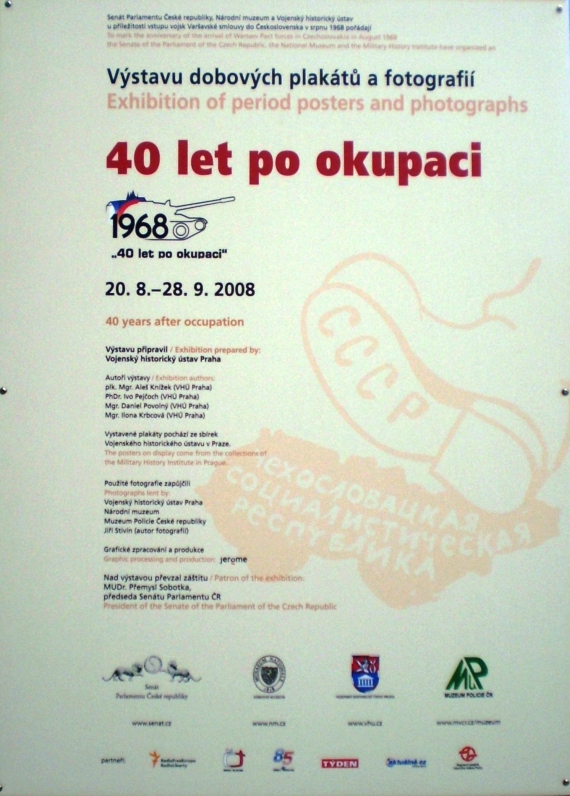

The reality of this invasion had hitherto been rather personally academic for most of us as individuals in (what was then) Western Europe; but here was a Czech citizen who had lived through it, explaining what it had meant to her, her family and her friends… and telling us how, later, these same people had been part of the extraordinary Velvet Revolution which was the basis of the transformation of the then-repressive Czechoslovakia into the present democratic state of the Czech Republic.
Mindful of these sobering thoughts, we left the graceful gardens and returned down towards the River Vltava, to the Dvorak Concert Hall (Rudolfinum) which had brought us to Prague, travelling with the Royal Liverpool Philharmonic Orchestra for their performances at the Prague Festival.

Outside the Hall was another exhibition of posters and photographs, relating the happenings of the invasion and its long aftermath.


In a way this felt surreal. Here we all were, discussing the events as history, but they had happened right where we stood, involving in critically personal ways people whom we knew as friends. For a while they had had no choice but to bear the crushing burdens of occupation stoically…

…. but eventually the protests grew to a great clamour, and after many long years, in 1989 the Velvet Revolution came about, mercifully without a huge toll of human life.
And amongst those leading this Revolution had been many writers and artists, including Vaclav Havel who was later to become the President of the Czech Republic, and his friend the musician Libor Pesek – a renown conductor who has had a long and close relationship with the RLPO, the Orchestra with which we were now visiting Prague.

Thus did the tale round upon itself. We stood there, in the heart of the Prague, testimony by our presence to the history and vibrancy of that great city, talking between ourselves as citizens of Europe and the world, and free to read, say and do as we wished.
No longer were the Prague Spring and the Velvet Revolution merely events on a timeline. They were instead vital elements of the spirit and understandings of real people, standing right next to us.
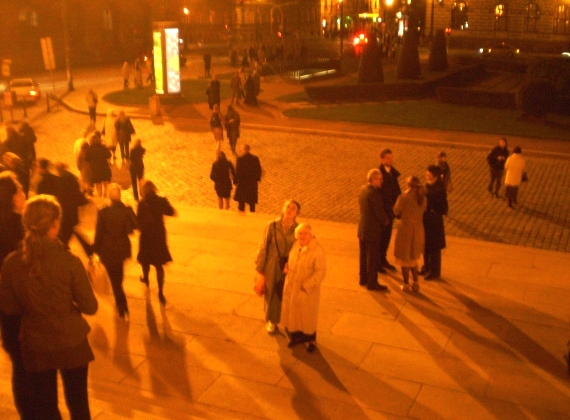
And that was something we pondered as we spent the evening in the Rudolfinum, hearing the RLPO concert which was the reason for our visit.
The concert, as we’d hoped, was a triumph; but, enjoying the music, we mused too that so much more so was the human spirit which had made it possible – the determination of a fiercely brave and proud people who, as we carried on our mundane existence in the democracies of Western Europe, had had to summon every ounce of endurance and strength to let the light of self-determination shine in their culturally blessed, historic city and homeland.



 Dreaming Realist