Blog Archives
King’s Cross: Community And Colossal Opportunity Combined
 The renewal of King’s Cross – St Pancras and all that surrounds it is long overdue, but it looks to be a spectaclar project worth the wait. The final moves to achieve success in terms of the local community will however require those who should, to put their heads above the parapet so that everything comes together to make the best possible result. This project will ‘work’ for everyone as long as people really try to collaborate to get it right.
Having travelled on the bus past King’s Cross – St. Pancras on very many occasions, I can only say my heart lifted when, at last, evidence of its renaissance began to materialise.
Community links and challenges
It’s surely a unique and exciting challenge to put together a project as enormous and impactful as this. The project hits many buttons – strategic place, infrastructure, heritage, economic benefit; we could go on… King’s Cross is in anyone’s books a very spectacular and special piece of real estate.
Of course there’s still a possibility that King’s Cross will somehow miss on that vital community connection; but only if people on all sides of the equation let it. This is where civic and corporate leadership have such a critical part to play, right from day one.
Different from, say, Canary Wharf?
Given the common emphasis on transport hubs, there have been comparisons, but Canary Wharf is different. Just for a start, Canary Wharf is not at the heart of what’s to become the most important international ‘green’ hub connecting the UK and mainland Europe, and for another thing the Wharf is a glass and concrete creation with not too much reference to a long and glorious heritage.
King’s Cross is a genuine opportunity to build on a very high profile USP with enormous promise for all stakeholders.
Doubters and objectors
There are always people who oppose what’s happening. The financial and other costs of the debate with them may well be high, but in the end everyone has to be heard for progress to be made in a well-founded way. The line must be drawn somewhere, but the views of those with reservations are valuable because they help to pinpoint potential hazards further down that line.
But it’s up to everyone to make sure that in the end King’s Cross really works. This is a programme with serious commonality of interest between developers, the wider economic infrastructure and real people on whom the project impacts day by day.
Delivering success
Having seen examples elsewhere of exiting programmes based with various degrees of success in challenging locations, I’d say everyone, but everyone, involved has to ask, what more might I need to be doing to make King’s Cross fulfil its whole potential?
Of all the ‘Rules of Regeneration’, the first rule here must be: listen, seek to understand and where possible accommodate all stakeholders. And the second rule is, always remember someone has to be brave and take the lead, accountably and visibly.
Realistically forward-facing
This is not a time for pursuing plans regardless or for heads-in-the-sand-style denial of problems; but nor, most certainly, is it a time for standing back. King’s Cross is an <opportunity which comes only very rarely…. Here we have a genuinely future-facing adventure which everyone in town can share and actually see taking shape.
I watch from my bus as things come together week by week and I wish all involved the very best.
A version of this article was published on the New Start blog of 8 November 2007.
A European Capital Of Culture Without Euros
 Here in Liverpool we are about to start our 2008 Year as European Capital of Culture. But apparently the connection between this year-long Capital of Culture event and hard European cash has yet to dawn on some local businesses. This is serious. Who’s failed to get the message over? And will things improve?
A walk this morning took us through Liverpool’s Sefton Park to Lark Lane, where the Boho action is, to find some brunch.
The brunch was fine; but the bill which followed it left us at best bewildered.
Sterling only
The card machine – as usual these days, the ‘continental’ ‘take it to the table’ type – came up with a sensible sum, requested in either Sterling or Euros. As it happened, we had some Euros on us, so when we’d paid (in Sterling) we asked lightheartedly if we could have paid cash Euros. (The literal conversion rate was 1.645 if anyone wants to know….)
The waitress was aghast. Oh no, she assured us, clearly thinking we’d sought such reassurance, they wouldn’t even think of taking Euros. The cafe never dealt with Euros, the cost would be sky-high, it was quite out of the question…
Bafflement and business
We were unsure how to respond, having originally intended to congratulate the establishment on its forward-planing and preparations for Euro-billing.
Did our waitress know, we asked, what 2008 had in store for Liverpool? She confirmed that she knew 2008 is the Capital of Culture year.
But it’s Liverpool’s ‘European’ Capital of Culture Year, we protested……
The management decides
‘I don’t know about that’, came the reply. ‘Anyway, none of Liverpool’s restaurants are doing Euros. You’ll have to take that up with the management.’
On the contrary, we suggested, perhaps the management needs to take the Euro opportunity up with itself….
The ‘Liverpool experience’ missing link – Europe
So there we have it. At least some of our local businesses, just three months before 2008 begins, still fail utterly to understand that next year is an international, a European, event.
These local ‘enterprises’ haven’t even begun to consider whether a billing system with the potential to offer payment in Euros as well as Sterling might in fact be a business advantage or selling point…. especially in the Boho part of town.
No leadership with the big picture
Could this failure to get the overarching picture be because the city’s leadership has permitted developments (perhaps even decided?) not to move out of the Liverpool comfort zone?
Are city leaders neglecting to emphasise that next year’s celebrations are not ‘only’ an excuse for some (what look to be very promising) major arts events, and for neighbourhood street parties and general local merriment, important though all these are?
2008 opportunities squandered?
If the whole rationale for Liverpool’s European Capital of Culture 2008 Year is put aside, if the business opportunities are not seized, all that enormous amount of (our) money already spent will have been squandered.
I really hope someone will be getting things into gear pretty pronto.
Sefton Park’s Grebes And Swans
 Yesterday we saw the grebes on Sefton Park lake in Liverpool. There were the two adults who caused such excitement when they arrived some three years ago, plus two quite large chicks, all bobbing up and down happily in the centre of the lake. Then, a little further on we saw swans, a pair with four cygnets this year.
Like the grebe chicks, the cygnets are now almost full-size, but just a bit more fluffy and woolly coloured than their parents.
The grebes
This is the first time we’ve actually ever seen the grebes’ family; perhaps the young ones lurk near the island at the top end of the lake until they’re large enough to survive in more open water – though even today we saw the parents feeding their young straight from a catch of minnows.
Cygnets and swans
The swans, however, are less shy and their young have been ‘on show’ for several months. Perhaps their size is adequate protection without further caution. This year four out of an original five cygnets have survived, which seems to be about par for their annual breeding activity.
So how many cygnets must this pair of swans have produced over the years? And where do they all go?
Read more articles on Liverpool’s Great Parks & Open Spaces: Sefton Park
Liverpool’s Sefton Park, Swans, Herons And Grebes
Sefton Park, Liverpool: Winter Solstice 2006
Cherry Blossom For May Day In Sefton Park, Liverpool
Friends Of Sefton Park
Croxteth And Norris Green, Liverpool
 Croxteth and Norris Green in Liverpool have recently become tragic headline news. But the no-hope issues behind the grim developments in these areas of North Liverpool have been simmering for many years. The Crocky Crew and Nogzy ‘Soldiers’ are not new. The challenge is how to support local people to achieve their higher expectations and horizons.
My first ‘real’ job post-college was as a junior social worker in Norris Green and Croxteth, Liverpool.
The task allotted me all that time ago was to visit every one of the 200+ people in the area, many of them living on the Boot Estate, who were on the Social Services list and had not been seen (‘assessed’) in the past year or two. And so, equipped only with the list, a degree certificate and a bus pass, I set about my first professional posting.
Forgotten land
Nothing, not my inner-city school, not my academic training, not my voluntary work, could have prepared me for what I was to see.
Here were elderly men who seemed to survive solely on Guinness, bread and marg; here were children with disability so severe that they had to live day-in, day-out in their parents’ lounge; here were old ladies who promised fervently to pray for me, simply because I was the first person they had spoken with for weeks.
Here, in fact, was a land, originally designed as the vision for the future, which, by those far-off days of the early 1970s, few knew, and almost everyone had forgotten.
For some, a zero-expectations environment
This was a Liverpool where there were people who, expecting nothing, eked an existence. It was the home of the dispossessed, the displaced and the despairing. Every day was like every other day in that concrete wilderness of dust, derelict front ‘gardens’, broken windows and enormous, fierce Alsation dogs.
No-one, or so it seemed, went to work. No-one ever seemed to leave the Norris Green ‘estate’, designed as a circular enclosure with concentric streets of council housing and no indication of via which road one might depart – urban planning surely to guarantee future disaster. There were few amenities (I had to take the bus to get even a sandwich or coffee at lunchtime) and even fewer shops.
Cut off from Croxteth
Until the 1980s Croxteth itself didn’t feature much in the Liverpool mind map as an area to live. Norris Green, the near-neighbour, was cut off from almost everywhere by dual carriageways on every side, and beyond them, on to the South-East was the huge, green Croxteth Estate – to this day the location of a fine country house and gardens open to visitors and in the ownership of the City of Liverpool.
Also near Norris Green was the North-East Liverpool Technical College (which co-incidentally turned out to be my next employer), a provider of day-release training for local Fords apprentices and other ‘tradesmen’ (the only women were student radiographers) and set on a large piece of land. Later, when then-Prime Minister Margaret Thatcher effectively abolished apprenticeships, the NELTC site was sold and became, with the farming land next to the Croxteth Estate, the location of a private development of pleasant housing for people who worked in the surrounding areas.
Broken hopes and promises
And later still the Norris Green council housing residents were promised their own improvements, as part of the Boot Estate programme – a programme which raised, and then dashed, the hopes of those from this place of quiet desperation who had dared to look to beyond their immediate horizons.
Little surprise – though unspeakably sad – that from this strange amalgam of development and despair have arisen the Nogzy ‘soldiers’ and the Crocky Crew of Liverpool’s current tragic troubles. Set alongside an area of new (relative) affluence, Norris Green is an enclosed place still, it must feel, without either hope or many stories of success.
Nothing excuses the illegal drugs economy and vicious violence – the fatal shooting by a local youth of Rhys Jones, who lived in Croxteth and was aged just eleven – of which we have all recently read; but one does begin to see through this disturbing grey blur how it might have come about.
Facing the future
There are many serious and good people who live and work in Norris Green and Croxteth. Life for them at present must feel extremely difficult, and the way forward by any account challenging. Support for what they do is obviously a critical first requirement.
But beyond that, I look back to a conversation between my supervising senior social worker and myself, when I left the employ of the Social Services.
I was leaving, I told my boss back then, because I believed that resolution of the issues required deep economic and political engagement, as well as the personal approach.
Strategies for hope
Many years later I still hold that conviction. Since that time Government and European funding of multiple millions has come to Liverpool; and now – in theory at least – we know so much more about positive strategic and sustainable intervention that we could ever have known then.
The traditional challenges of all-embracing absolute material poverty are in truth behind us. No longer can poverty alone be used to ‘explain’ the grim situation that we see.
New challenges
What we now face in Norris Green, Croxteth and some other city areas in Liverpool and elsewhere is the gang-led imposition by the few on the many of a sometimes suffocating, stultifying local culture; a culture, it is said, created intentionally by illegal drugs dealers who enforce it via the callous manipulation of alienated local children.
Nothing can change what has already happened. But I hope one outcome of recent awful events will be a compelling sense of urgency about getting things sorted, before more people’s lives are ruined and even more people believe that for them there is no hope.
Liverpool Vision’s Jim Gill Reflects On Hope Street Quarter
 The public realm refurbishment of Hope Street, the thoroughfare which defines Liverpool’s cultural quarter, was finally completed in May 2007. This has offered an opportunity to reflect on, and learn some lessons from, the decade of activity culminating in Hope Street’s new look. Jim Gill, Chief Executive of Liverpool Vision, agreed to share his perceptions of that decade and what it has achieved for Hope Street and the City of Liverpool.
Liverpool’s Sefton Park Trees Under Threat – Unnecessarily?
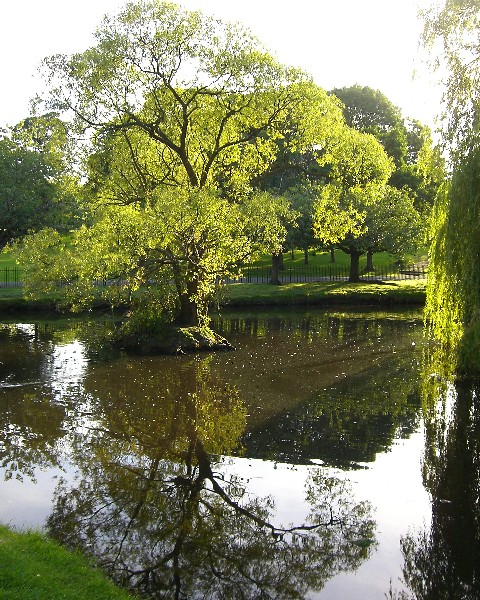
 The heritage people are (at last) about to make improvements to Sefton Park. Much of the intended work is welcomed by everyone. So why must they remove certain trees – such as a lovely willow – which those who use the park as a local place for peace and quiet have come to regard as part of that tranquility? I hope they change their minds soon.
See also: What Now For Liverpool’s Sefton Park?
Cherry Picking Liverpool’s Sefton Park Agenda
Sefton Park’s Grebes And Swans
Liverpool’s Sefton Park, Swans, Herons And Grebes
Sefton Park, Liverpool: Winter Solstice 2006
Cherry Blossom For May Day In Sefton Park, Liverpool
Solar Lighting Could Solve The Parks Problem
Friends Of Sefton Park
Brent’s Only Grade 1 Listed Building: St. Andrew’s Old Church, Kingsbury
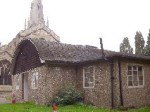
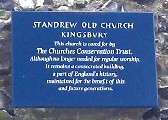 Almost within throwing distance of the new Wembley Stadium in Brent there lies another, vastly older but sadly forgotten building – the 11th Century St. Andrew’s Old Church, in the grounds of the present fine establishment. Father John Smith and his parishioners are working hard to renew the present grim Church Hall and to reclaim the old church and churchyard for the local community.

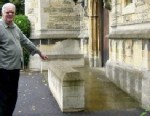
 For Father John Smith these small red bricks have a special significance; they suggest there was a church on the site of the photograph even back in Saxon times. The bricks are the original Roman evidence of the ancient (eleventh century) church which lies adjacent to the ‘new’ St Andrew’s Church, Kingsbury, within the grounds of his incumbency.
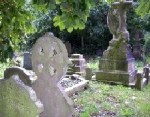
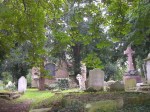
There is a great ambition in the parish congregation for the ‘old’ church and, especially the churchyard, with its many historic graves, to become a place of rest and respite in this busy part of London. Local people are giving their time and energy generously to clear the pathways and make more evident the generous clues to the area’s history which the overgrown graves can offer.
This plan, part of an intended programme to replace the past-its-best Church Hall with a lively and responsive building which will serve all who live in the area, is surely one which many will wish to support.
-

- Father John T. Smith







Fast Trains And The North-South Divide
 Is large-scale sustainable transport possible? Should we welcome Britain’s fastest-ever domestic train, which has arrived in Southampton this week? The UK’s North- South economic divide brings these questions into sharp focus. The further one is from London, the more important connectivity can become. So is carbon footprint a critical issue only after the economics have been taken care of?
Economics and environment don’t always mix. For some the pressing need is to reduce travel. For others, it is vital to improve physical connection. These complicated issues have come up the agenda again this week, with the news that the Go-Ahead Group has arranged imminent delivery of 29 high-speed Hitachi trains from Japan, which will operate from 2009 on the South Eastern network.
Low expectations?
Whilst commuters in the South are getting excited about travel times and accessibility to the Capital, those in more northerly parts of the UK are likely to be less enthused. For many the expectation of poor transport is a way of life, and there is a feeling – perhaps unjustly in respect of some local northern operators – that nothing is going to happen to change this. For others, the temptation is to believe that yet again the South is benefiting and the rest are not. Few Northerners are as yet willing to ditch their cars.
Will the new fast trains effect a change of heart? The optimists for train travel think that signs we are catching up with the Europeans will focus a national clamour for this form of transport. More dour observers suggest that because of potential damage to the environment we should not be encouraging travel anyway.
Sustainable transport, sustainable economies
I’m generally on the side of the optimists here. There’s little chance of sustainable living across Britain whilst inequalities (not just North-South, but certainly including that) are so great. I’d like to see more trains, and faster ones, right across the country. This is one area of environmental concern where we really can ask the technical people to work on the ‘clean and green’ agenda.
Science can’t solve all eco- problems, but in terms of transport and communications, we shouldn’t write technology off yet. The challenge now is for the politicians to come up with proposals which will match economic balance across the North and South with the possibilities opening up in transport.
Nothing in life stays still. Sustainability in communities of whatever size must start from the ‘can do’, the will to be positive and fair, because any other starting point is doomed in the long-run to failure.
Somerset House Summer Fountains
 Somerset House in London is rightly famous for its Winter skating rink, an imaginative and welcome attraction in the city. High Summer, however, permits another simple way to enjoy this historic venue’s versatile water feature, as the little person here discovered.

See also Camera & Calendar
More information on Somerset House here.


 Dreaming Realist