BURA’s Regeneration Equality And Diversity Network Has Lift-Off
 Today (20 February 2008) saw the formal launch of the British Urban Regeneration Association (BURA)’s Equality and Diversity Framework and Network. The event, at the Abbey Community Centre in Westminster, was attended by people from across the regeneration world, and produced much discussion about how BURA and its partners could move forward.
In my role as BURA Champion for Equality and Diversity I was lucky enough to join our President, Sir Jeremy Beecham, and other colleagues, in presenting and discussing initial ideas about this challenging issue.
Your views too are welcome. To begin the debate, this is what I said:
BURA Regeneration Equality and Diversity Framework Launch
Wednesday 20 February 2008, Westminster, London
This event was set up, as Sir Jeremy explained, because of serious concerns which the BURA Board has about inclusivity in regeneration.
The evidence is before our eyes; the top of the profession is overwhelmingly populated by white men.
Regeneration fits the white male stereotype for leadership in Britain only too well; and the stereotype extends even to the BURA Board itself, where Directors are elected from amongst our hundreds of members.
Something has to be done. No-one disputes that, as regeneration practitioners, we must address inclusion; but few of us have articulated how this intention fits in with regeneration. And fewer still I suspect, are sure how to do it.
The BURA Board has therefore decided to invite your help and support as we move forward on this challenging issue.
What is inclusivity and why does it matter?
A look at the work of the Equality and Human Rights Commission gives us a good feel for what an inclusive society might look like.
It would be a society in which people had safe and secure opportunities to enjoy a happy and healthy life.
In this society people of every sort would find themselves in positions of influence and leadership, and able to work towards a situation which in turn releases the potential of others.
This would be a society in which we, as regeneration practitioners, understood the impact of our work on all our fellow citizens, and then applied that knowledge across all our activities.
It would be a society in which, say, Asian women in Bury had as much opportunity to develop their interests and employment potential as white men in Cheltenham. It would be a society in which families in both these communities were equally likely to see their children born healthy and strong, with an equal expectation of a long and happy life.
In a nutshell, it would be a society which is stable and sustainable.
And if regeneration isn’t about achieving socio-economic stability and environmental sustainability, I don’t know what is.
Regeneration is more than the sum of its parts
I believe firmly that the task of today’s regeneration practitioners is to work themselves out of a job. We need to believe at a very deep level that ‘regeneration’ is not the same as ‘construction’, or ‘remediation’, or even as ‘planning’.
Critical though these callings are, real regeneration is much more than that.
After 30 years of regeneration in Britain, we should now be seeking very actively to reinvent ourselves as ‘sustainability practitioners’, as professionals who work to maintain an equitable, healthy and safe environment for everyone.
This reinvention of ourselves would require massive changes in the way we work, in our collaborations across disciplinary boundaries, and in our perceptions of how fellow citizens who are not exactly like ourselves experience their lives.
We can’t do that if we don’t understand how to achieve inclusivity, and why it matters.
But there is a very long way to go.
What is BURA doing about itself?
* Firstly, we have undertaken a thorough audit of our own organisation.
* We have looked at the gender and ethnicity of all members of staff and the Board, going back for three years, and for staff we have correlated this with salary bands. We shall report these findings to the Board when it next meets, and post a summary of this information thereafter on our website.
* We will also decide as a Board, in consultation with, we hope, our new Chief Executive, how much more data it might or might not be appropriate to record about the Board and staff.
* And we shall consult too on whether and, if so, how we need to look at the ‘inclusion’ characteristics of all BURA members.
* We would hope at the same time to start research on these characteristics as they apply to the regeneration sector as a whole, and to see how this compares with the data for the British population overall.
What is BURA doing to support progress in regeneration overall?
* Importantly, we are not seeking to compete with anyone; we are offering a supportive network which encompasses the whole spectrum of interests – inclusive, not competitive, with the sole aim of moving this positive agenda forward.
* Also, we recognise that no-one as yet has all the answers; we are simply trying, with everyone else, to identify both the challenges and the opportunities.
* We are launching today a Regeneration Equality and Diversity Framework, an ‘umbrella’ group welcoming people and organisations from every part of regeneration, ‘professional’ to ‘community’, to address a wide range of issues around equality and diversity.
This group will not seek to undertake work already done by others, but will help to link together the inclusion themes which regeneration good practice must address.
Some examples of what the BURA E&D Framework seeks to achieve
* We will support the exchange of information and views about what are the most immediate challenges for Equality and Diversity in regeneration in the UK.
* We will seek to collaborate with government at local and national level, and with research bodies already examining aspects of Equality and Diversity.
* We will develop the BURA website as a free open-access resource, available to all, hosting weblinks to legal and professional aspects of regeneration practice – including equality and legal audits – and enabling wider discussion between BURA members and partners.
* We will offer practical help and support to people from different communities who wish to become involved in regeneration – perhaps for instance by offering bursaries and work placements – in a collaboration between BURA and our members and corporate partners.
* But most of all, we will seek to work with all of you to make the BURA Regeneration Equality and Diversity Framework not just a talking shop, but a vibrant and positive reality.
In for the duration
* This is however slow-burn. We’re asking the questions but we don’t as yet have many of the answers; everyone here today can help.
* The BURA Board are unanimous that we must work hard to make our Equality and Diversity Framework a reality, not just an ambition.
We very much hope that you will want to be part of this reality.
Contact Hilary at BURA
Launching The BURA Regeneration Equality And Diversity Framework
 Next week sees the launch in Westminster, London of the British Urban Regeneration Association (BURA) Regeneration Equality and Diversity Framework.
The BURA Board has unanimously resolved to try honestly to do what regeneration is supposed to do – reduce inequality and discrimination through the creation of environments where people can lead sustainable, happy and fulfilling lives.
From the regeneration perspective, equality and diversity are difficult things to get one’s head around. There are so many variables.
I tend therefore to approach these issues from the ‘other end’, and to ask myself the Big Question: what might a community look like when we’ve finished ‘regenerating’ it?
Put that way, things begin to fall into place.
Two futures
Two outlooks are possible for a place or community which has received the full attention of the regeneration professionals.
Either it will thrive, moving forward to a happier future, where people feel fulfilled and their needs are met in a much more embedded way than before; or it will in time lose its expensive new patina and sink into a deeper, sadder, less secure state even than before.
These different outcomes depend largely on the extent to which that community has been enabled to achieve sustainability.
Three aspects to sustainability
Sustainability has three major aspectss: physical (‘environmental’), economic and social. None of these can be achieved longer term without the others.
Sustainability is impossible without equality and diversity; so regeneration too is underpinned by them.
A stark truth
The Commission for Racial Equality’s final blast at the regeneration business, when in late 2007 that organisation became a part of the new Equality and Human Rights Commission, was well placed. It demonstrated, starkly, that ‘race’ issues remain desperately under-addressed in regeneration.
And it certainly made the Board of the British Urban Regeneration Association (BURA) sit up. Already painfully aware of a lack of diversity at the top table, now we had undeniable evidence about one critically core aspect of disadvantage.
Many realities, many ways forward
The more we looked at disadvantage – whether resulting from age, religion and belief, disability, gender, race or sexual orientation – the more it seemed to stem from the same issues; issues most often around opportunities and resources which people feel they have been denied.
The multiple realities of ‘ordinary’ people’s lives are what define our communities and how they interface with the wider society. This then, surely, is what regeneration is all about?
Where to begin?
So here is BURA’s starting point.
As leading players in regeneration, BURA’s Board has resolved to try honestly to do what regeneration is supposed to do – which is to reduce inequality and discrimination through the creation of environments where people can lead happy and fulfilling lives.
To do this we will look carefully and immediately at how we can put our own house in order; we will listen to and liaise with as many other interested parties as we can; we will seek out, and where necessary and possible commission, research which informs our ambition; and we will take the message wherever it needs to go.
We introduced the BURA Regeneration Equality and Diversity Framework concept at our 2008 annual conference, in January. We shall launch it formally at our London event on 20 February; and we will monitor our progress thoroughly as we move forward.
We hope you too will want to be part of this journey.
Hilary Burrage is a member of the BURA Board, and BURA Equality and Diversity Champion. (hilary@bura.org.uk)
The BURA Equality and Diversity campaign is supported by New Start and Ecotec.
This article is a version of the piece published in New Start, 15 February 2008.
See also: New Start survey reveals doubts over cohesion and New Start Editorial of 13 February 2008.
90 Years Of Women’s Emancipation – And Feminism
 Just 90 years ago on this date was the first time any woman in the UK was ‘allowed’ to vote. Some people still alive now were born when women’s emancipation did not exist; and even in 1918 the Representation of the People Act permitted only specified women over 30 this privilege. It was to be another ten years before women gained equal voting rights with men.
From the time of the Representation of the People Act of 6 February 1918 until the Equal Franchise Act of 2 July 1928, despite this and other first and desperately hard-fought victories, democratic voting rights were still not equal between men and women.
But that was by no means the end of the fight for formal equality. It was, extraordinarily, not until 30 April 1958 – a date still easily within the memory of many people – that the Life Peerages Act enabled just four women gained entry to the House of Lords.
Not there yet
So progress has indeed been made towards women’s equality in the past century. No longer are women paid less in, or indeed debarred if they marry from, professions like teaching; no longer does the law formally and overtly permit differences in the way women and men stand before it.
But still much remains to be done. As Katherine Rake, Director of the Fawcett Society, says in her Guardian interview this week:
We have done as much as we can levering women into a system designed by men for men. Now we have to work for a society where the rules are fitted for everybody…. There has been a huge change in women’s lives, but very little in men’s. [To make further progress] we have got to look at what happens in men’s lives…..
Even now, these battles continue, worldwide….
Unapologetically feminist
So I make no apology for being a long-time committed feminist. Half a century after women’s first step towards full emancipation, the feminist agenda of 1968 was a turning point as I entered adulthood. But the year 2008 still sees a long road ahead.
In my lifetime much has changed; but not enough.
Whilst, for example, the 1975 Sex Discrimination Act brought about a fairer situation for women requiring maternity leave (and , thereby, their partners and families) – though it was too late for some of my friends and me.
Still unequal in work and in power
But gender equality in the workplace is even now nowhere near achieved. British women in full time work are still paid on average 17% less than men similarly employed; and when part-time the difference between men and women is 36%.
And in national politics, where the big decisions are made, women remain even now a minority. The 2005 General Election saw 128 women elected in an assembly of 644, most of them – as Theresa May, a leading Conservative, herself acknowledged, from the Labour Party. (As at the end of 2006, of 712 Lords, 139 were women.)
Gender fatigue there may well be; but this is no time for inaction.
A way to shape the future
There remain enormous gaps, for both men and women, in parts of our lives which, whatever the legal frameworks, still have to be addressed. Men and women remain unequal, for each of them in different ways. (And so as we know do people of different sexualities, of different colour or age, of different beliefs and with different abilities.)
You don’t, actually, need to be a woman to want to seek equality, to hold that feminism is a sensible and decent way to see the world. You just have to be a fair-minded person.
Read more about Gender & Women.
Monday Women ’08 Take The Next Step!
 2008 sees a new location for Monday Women in Liverpool. For a few months we’ll be meeting in El Rincon Latino, by Roscoe Street and Oldham Street in the new City Gate development at the top of Renshaw Street. It’s free to come; all women most welcome, first Monday of every month, from about 5.45 to 7.30-ish p.m.
El Rincon Latino is located on the corner of Roscoe Street and Oldham Street just one block up the hill from Renshaw Street. It’s immediately across from the multi-storey car park behind Leece Street Post Office, on the town side of Leece Street but still near St Luke’s, the ‘Bombed Church’. You can also get there via a very short walk up the hill opposite the main entrance to Rapid Hardware on Renshaw Street.
The address and postcode are Roscoe Street, L1 2SU (map); tel: 0151- 324 0454.

All you pay for is your supper and drinks, ordered as you wish from the bar, if / when you’d like some – but no obligation. (There’s a photograph of a sample menu below, right…) Our Chilean host, Francisco Carrasco, is also Director of All Things Latin (ATL) and tell us the cafe aims to serve food from across Southern and Central America, as the head chef is from Ecuador. The venue has many cultural links with Latin America.

If you have ideas about anything you’d really like to discuss or do when everyone meets, you can of course join the Monday Women e-group (absolutely free, quite voluntary) and suggest things beforehand. Other than that, the format of each Monday Women event is decided by those who are there – drinks and chat, debate, even this year perhaps post-meeting salsa classes… It’s your choice! Dates for 2008 are below.


Monday Women meeting dates for 2008 (all first Mondays of the month, 5.45-ish to approx. 7.30, please just come and go as you wish) are:
February 4th
March 3rd
April 7th
May 5th
June 2nd
July 7th
August 4th
September 1st
October 6th
November 3rd
December 1st (special event, the annual Christmas Do!!)
To check any particular date please call the venue on 0151-324 0454.
Do join us. No need to book, just turn up whatever time you can; and bring your women friends as well…
We’d love to see you there.
Find out more here or visit the Monday Women message board.
Sefton Park Renovations Have Begun
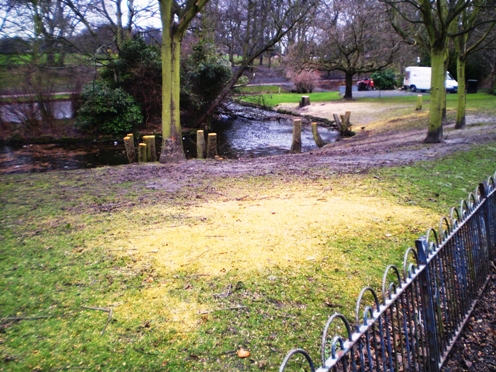
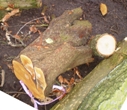 Mid-winter, and the rawest, sorest part of the oh-so necessary works on Liverpool’s Sefton Park has begun. Here lies the pink ribbon of protest an anonymous tree-lover tied on this felled tree. And here (below) lies scattered the still fresh sawdust of the vigorous cull of trees around the upper lake. Soon, we are assured, these voids will be host to new and vibrant growth. Soon, our park will be even more lovely than before.
More information on Sefton Park is available here.
Photographs of Sefton Park on this website include:
Liverpool’s Sefton Park Trees Under Threat – Unnecessarily? (Photo of the subsequently removed Willow tree in the Cherry Blossom / central lake)
and
Cherry Blossom For May Day In Sefton Park, Liverpool.
For more photographs please see here.
Snowstorm And Magic In Prague At Night
 The first months of the year offer a drama all of their own in great Central European cities such as Prague. But the people and the life of the city carry on, whatever. It took just one day for the snow in that enchanting city to transform Prague into the frozen wonderland seen here.

See also:
Camera And Calendar
Prague Old Town, Celetna Street
Impressions Of Prague
Carbon-Neutral Villages, British And Czech Alike
Woman Home Secretary Speaks Out On Street Fears At Night
 Home Secretary Jacqui Smith has told it as it is: many of us, men and especially women, are fearful of being out alone at night. Only really unimaginative or insensitive people – or perhaps some opportunist political opponents – would disagree with Ms Smith. This is not a new state of affairs. We have but to recall past feminist campaigns to ‘reclaim the night’ to know that.
So Jacqui Smith, the UK’s first woman Home Secretary, doesn’t enjoy being out alone at night.
This is surely not a new or startling revelation. The Home Secretary’s ‘admission’ – to me, a simple statement of a truth recognised by many – feels far more like reality than much of what we read in the papers.
Reclaim (‘retake’) the night
The idea that there is something to fear, out alone at night, is instilled in many girls (and some boys) from a very early age. In 1976 a movement began to recognise and act on this fear, by ‘reclaiming the night‘ from the men who were deemed to make it dangerous.
Women across Europe and the USA marched thirty years ago to demonstrate their belief that streets should be safe 24/7; but only more recently has this action begun again.
Telling it as it is
It feels very disingenuous that male politicians should denounce a woman in their midst who speaks candidly on a matter as fundamental as personal safety.
I hope these same men would not encourage their own female friends and family to walk the streets unaccompanied at night.
Making the streets safer
Sometimes people have to travel alone in the dark. To make their journeys safer, it is first necessary to speak the truth, to acknowledge realities, even when unpleasant.
Only after we know and understand problems can we ameliorate them.
Let’s start by thanking Jacqui Smith for being candid; and then let’s see how we can all, together, conscious femininists or not, reclaim those scary streets.
What’s Regeneration For?
 The British Urban Regeneration Association (BURA) annual conference is in Liverpool this year, on 30th and 31st January 2008. The conference, bringing together some 300 people, will see brisk debates between professionals and community leaders from across the U.K. One important focus may be the search for consensus on what regeneration is ‘about’.
BURA is an organisation moving forward with increasing momentum and confidence in both its own role and the direction and meaning of regeneration in Britain.
What is regeneration?
We, as members of the Board of BURA, are beginning to understand anew, or at least consciously to explore in a new way, what ‘regeneration’ means. The discussion will doubtless continue for a long time yet; but for me some clarity is emerging from many years in the business.
Regeneration is much more than ‘construction’, ‘development’ or even ‘capacity building’.
In the end, regeneration is about adding long-term shared value to all these activities.
A win-win
Regeneration’s a real win-win; it’s about creating a more equitable, more sustainable life-context for everyone.
The challenge is, how to do it.
The UK is often said to be at the forefront of regeneration. BURA’s annual conference discussions this week should prove interesting.
Liverpool 4, 11 & 12 January 2008: The Euro-Year Begins!


Liverpool’s European Capital of Culture Year is finally launched.
First, we went to the pre-launch of the Liverpool Echo Arena on Friday 4 January.


Then we went to St George’s Plateau for the ‘People’s Opening’ on Friday 11 January, where after much frenetic construction all day Ringo Starr sang from a box on the roof of the Hall and we saw some fireworks and lights.


And finally we found ourselves in the Echo Arena again on Saturday 12 January for the formal opening of that venue and Liverpool’s 2008 events. The Arena ceremony offered a colourful performance of Liverpool – The Musical by artists ranging from the Royal Liverpool Philharmonic Orchestra with Vasily Petrenko (who all played valiantly throughout the show) to performers such as Gary Christian, The Farm, Sense of Sound, Ringo Starr, The Welsh Choral Union and The Wombats.
And so began our city’s European Year of Culture….


Everyone worked very hard to make it all happen. The preparations were no doubt complicated and frantic, the general mood was convivial and fun, and the outcome was by and large convincing and festive.
This was certainly not the weekend to be negative; though it has to be said that there is a lot still to do. Watch this space….
(But after this posting we shall, I promise, begin once again to acknowledge the world outside Liverpool 2008.)
For more photographs please see also Camera And Calendar.
How Many Science And Technology Graduates In Liverpool And Merseyside?
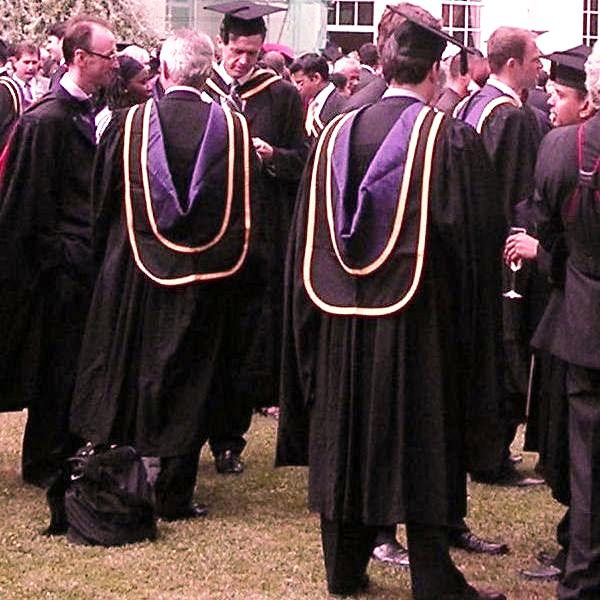 Summary: The Liverpool city region (Merseyside) looks on available evidence to have only about half the number of scientists which might be expected on the basis of the overall national statistics.
So by what indicators might Merseyside measure progress in the retention and development of graduate scientists and technologists?
Why do Liverpool and Merseyside stay so near the bottom of the national economic stakes?
A complete version of this article can be found on Hilary’s professional website, here.


 Dreaming Realist