Category Archives: HOPES: The Hope Street Association
London’s Theatre Museum Is Closing – So Why Not Bring It To Liverpool?
 The national collection of performing arts memorabilia, at the Theatre Museum in London, is to be dispersed when the Museum is closed in January 2007. So why not send it instead to Liverpool, as a ‘V&A Liverpool’, and let us up here have it as a very special part of our 2008 European Capital of Culture celebrations?
The sad news this week is that London’s Theatre Museum is to close. Its home in Covent Garden near the Royal Opera House is to be no more, and its exhibits will be dispersed by its parent body, the Victoria and Albert (V&A) Museum.
A loss for the arts world, and everyone else
 I’m sure there will be knowledgable people who will conclude that the merits or otherwise of the Theatre’s exhibits justify this decision, but to me it seems shocking. I visited it quite recently for the ‘Unleashing Britain – Ten years that shaped the nation: 1955-1964’ exhibition and, as I reported on this weblog, I found the whole place fascinating.
Perhaps the Theatre could be said to have been its own worst enemy, insofar as it always look closed even when it’s actually open – the doors seem blank and much of the exhibiiton is ‘below stairs’, in a wonderful but not-visible-from-the street warren of tunnels and small rooms; but the external visibility problems could easily have been resolved.
A bright idea?
 However, if people in London don’t want the Theatre Museum collection as an identity, I have an idea…. Why not bring it to Liverpool for us to enjoy, and to develop as a very special national element of our celebrations in 2007 and 2008? We have a great tradition of theatre (and opera) in this city, and the V&A could open the revived exhibition as a ‘V&A in the North’, as the Tate has done with Tate Liverpool.
And to the national exhibition we could of course add the archives of our own theatres, the Royal Liverpool Philharmonic’s archive and the history of Hope Street, Liverpool’s performing arts quarter.
There’s just about time to get the ball rolling, if we all started to work on this now. It would be a superb asset for Liverpool, and would keep the national exhibition in the public eye, when all our vitiors arrive for Liverpool’s 2008 European Capital of Culture Year. We have plenty of large buildings which could be put to good use in this way, and surely the maintenance costs could be found from somewhere, just as they will have to be if the artifacts stay in London anyway?
Benefits all round
If London really doesn’t want to keep the Theatre Museum as an identity, here’s an opportunity for them to do something really good as partners to help us ‘up North’ to gain even more value from our special years in 2007 and 2008, and beyond.
Read more articles on the National Theatre Museum.
Hope Street, Liverpool: History And Festivals (1996 – 2006)
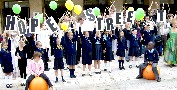 The Hope Street Festival in Liverpool, delayed from Midsummer, was on Sunday 17 September. This exciting milestone in Hope Street’s history, introducing of a start-of-season early Autumn ‘Feast’ to go in future alongside the Summer Festival, is however neither the beginning nor the end of the journey.
Liverpool’s Hope Street Festivals And Quarter (1977 – 1995)
 The first Hope Street Festival was in 1977, to mark the Silver Jubilee of HM The Queen. The next event, marking the Centenary of the Incorporation of the City of Liverpool, was in 1980. There followed a period of great concern for the cultural fortunes of Hope Street.
 During the 19803 and into the ’90s Hope Street’s cultural institutions were in great peril. From this time of peril however, in the early 1990s, emerged a community-led campaign -The Campaign to Promote the Arts on Merseyside (CAMPAM) – to ensure that Liverpool kept its flagship organisations; and from CAMPAM in turn emerged HOPES: The Hope Street Association, the registered charity which was to seek renewal of the Quarter and which was later to resurrect the Hope Street Festivals.
The original Hope Street Festivals were organised in 1977 and 1980 by a group of people who included Stephen Gray OBE and Andrew Burn, then managers at the Royal Liverpool Philharmonic Society, as well as the late Adrian Henri, one of the founding Liverpool Poets, and other local artists and restaurateurs such as Berni Start of Kirklands Wine Bar, and Paddy Byrne of the Everyman Bistro.
Talking to people in Liverpool today, many of them recall the 1977 event as tremendously exciting, taking part as school children in one of the most massive pageants imaginable – 17,000 participants enacting eight scenes depicting the four seasons along the length of Hope Street, from one cathedral to the other. (As those then involved will tell you, some children even had to run from one point to another, to enact different parts of the pageant!)
In both 1977 and 1980 there was much support from the business community. The list of sponsors contains names which sometimes take one down memory lane: Leighton Advertising of 62 Hope Street, Modern Kitchen Equipment of Myrtle Street, Ford Dealers J. Blake and Company of Hope Street, , WH Brady of Smithdown Road, Girobank, Littlewoods, Radio City, and Higsons Brewery amongst them, alongside further flung organisations like the Chester Summer Music Festival, Welsh National Opera, Theatr Clwyd and even Decca, who recorded much Royal Liverpool Philharmonic Orchestra (RLPO) music during that time… Strange to say, the first three businesses are now lost to Hope Street; but most of the others of course remain as current concerns in Liverpool. As we shall see, it was in part an enthusiasm once more to energise the business community in Hope Street Quarter which led to the resurrection of the Hope Street Festival in 1996.
1977 – The Queen’s Silver Jubilee
 The 1977 Festival was centred on celebration of the visit to Liverpool of Her Majesty the Queen, during her Silver Jubilee tour of the United Kingdom. Malcolm Williamson, Master of the Queen’s Music, wrote a pageant entitled The Valley and the Hill, to be performed in Hope Street on 21st June. (I know; I made thirty children’s ‘sheep’ costumes for the performance, whilst on a teaching practice!) This was recorded in 1983 with a choir of 2,000 local school children and the Royal Liverpool Philharmonic Orchestra (my violinist spouse was there…).
The 1980 Hope Street Summer Festival
 Then there was another Hope Street Festival in 1980, directed once more by Stephen Gray as General Manager of the RLPS, with his colleague Andrew Burn – again an impressive programme of concerts, talks and other events by leading performers and commentators, including the Allegri Quartet, Christian Blackshaw, John Cage, <a href%3
A Tribute To Samuel Coleridge-Taylor
 The black British composer Samuel Coleridge-Taylor (1875 – 1912) is known almost exclusively for his large-scale work, ‘Hiawatha’s Wedding Feast’. There is however much more to this fascinating man than just one work, including the story behind his very early chamber music works such as the Opus 1 Piano Quintet of 1893.
A New Public Realm For Liverpool’s Hope Street
 Liverpool’s Hope Street Quarter has just been refurbished, with an exciting and imaginative scheme of new public realm work secured by genuinely ‘bottom-up’ community engagement and local stakeholder buy-in. But this is only a beginning, for what could be one of the most important arts and cultural quarters in Europe.
Mark Simpson – A Young Musician Beyond The Stereotype
 Mark Simpson, BBC Young Musician of the Year, may be only seventeen but his musical achievements are breathtaking. Performer, composer and general enthusiast for all things musical, Mark demonstrates yet again that musical talent cannot be stereotyped. As ever, it will find its own way forward.
Good News On Hope Street
It has been over a decade since the campaign to renew Liverpool’s Hope Street was first mooted; but now at last we’re almost there. To mark the event, all the partners involved have agreed to host a day in June [later deferred to Sunday 17 Septmeber ’06] of arts-based celebration on the street. The arts, as ever, will give us common cause and help us to enjoy together the space which we have all been hoping to see refurbished for so long.
Today marks a new phase in the development of Liverpool’s Hope Street Quarter.
It may not have looked much to the casual observer – just a handful of people talking about an event in June. But to me it seems really significant: we, that is HOPES: The Hope Street Association and Liverpool Vision and the City Council have agreed to co-host a celebration of the completion of the Hope Street refurbishment, open to all who want to be there, and acknowledging the very complex partnerships which we have had to nurture over the past few years to get to where we are today.
The arts as common ground
Here, if ever there was one, is an example of how people coming from very different places can find common ground – a particularly apt metaphor in this instance – through the arts and community activity. If everything goes according to plan, mid June this year will see people from many communities sharing a friendly, family, fun event in Hope Street, enjoying the many ways in which we can all become involved in arts and community activities. [Later note: the event eventually came about on 17 September ’06, as part of a wider Hope Street Festival Day.]
The connectivity is why this event is so important for me. On the one hand we have very large organisations – the North West Development Agency in this instance – and on the other, we hope, the smallest arts groups and people from local communities, all sharing the successful completion of a long and testing project, over a decade in the making.
We’re not quite there yet – there are still many other things to attend to as we make progress on this exciting regeneration programme – but we’re well on the way. And the door is open to everyone who wants to be involved!
Carnival, Festival Or Fiesta?
Different meanings apply to the words ‘carnival’, ‘fiesta’ and ‘festival’, but these are not always apparent in their day-to-day usage. The cultural, religious and indeed sometimes class-related nuances of these words influence decisions about what is appropriate for whom. But this may not help us to see that ideas of ‘excellence’ are not necessarily at all the same as the notion of ‘elitism’. Nonetheless, this distinction is very important, and never more so than in cities such as Liverpool, as they strive to re-invent themselves.
When is a series of celebratory perfomances a ‘Carnival’, when is it a ‘Festival’ and when is it a ‘Fiesta’?
My curiosity about these words was first aroused in the early 1990s, when we began to talk about resurrecting the Hope Street Festival in Liverpool. There is a tradition stretching back many years of Festival events in Liverpool – not least the Hope Street events (in some of which I was involved as a student) in 1977 for the Queen’s Silver Jubilee, and in the city as a whole through several decades before then.
Changing expectations
What rapidly became apparent when we began to talk with people in the 1990s however was that there were several very different undersandings about what a contemporary ‘Festival’ might be – and that most of them did not at all equate to my previous expectation that a Festival in Liverpool would be something along the lines of those in Edinburgh, Harrogate or, say, any of the Three Choirs cities.
Liverpool does indeed still have an annual ‘Festival‘, but that is a competitive event, mostly for children and amateur groups, and originally driven by a number of determined local citizens, such as the late Dennis Rattle, father of Sir Simon, and members of the Rushworth family (who had a music shop in the city). This performing arts competition, though in a fine British tradition, is neither a festival in the sense of a programme of formal professional events, nor a ‘fringe‘ in the sense that, say, Edinburgh has one.
Rather, it seemed that what people across the city expected from a modern festival around Hope Street was something in my mind more akin to a fiesta or carnival, perhaps along the lines of the event which has subsequently developed in Liverpool’s Mathew Street.
The formal definitions
These different understandings, which took a while to draw out from discussions, sent me off to look for the dictionary. What I found is interesting. The respective Oxford Concise Dictionary definitions are:
Carnival ~ festivities usual during period before Lent in R.C. countries; riotous revelry; travelling circus or fair; festivities esp. occurring at regular date
Festival ~ feast day, celebration, merry-making; periodic musical etc. performance(s)
Fiesta ~ religious festival in Spanish-speaking countries; festivity, holiday
All the terms I investigated arise from religious events, and usually Roman Catholic ones specifically – an interesting piece of background information in a city such as Liverpool, with in some parts its strongly Catholic, working class traditions.
Festivals are what you make of them
This has set me thinking. There is perhaps a tension here between what people in different places, with different previous experience, expect from a Festival. For the people of Liverpool, the large majority of whom have probably only a passing acquaintance with Edinburgh, Harrogate, Worcester, Salisbury, Cheltenham or other cities which host formal Festivals, the expectation is that celebratory performance will be community-based and, indeed, probably actually conducted on the street. A good example of this is the events offered by Hope Street Ltd, an arts training organisation in Liverpool.
Likewise, when the Royal Liverpool Philharmonic Orchestra decided to start a summer concerts series some years ago, it chose to do so under canvas and on the waterfront, on a ‘Pops‘ basis. (Since then, the event has taken a course which means that the RLPO is scarcely involved at all.)
Expectations can be important
There are however potential dangers in this apparent democratisation of performance art. Firstly, if people in a city are not encouraged to expect Festival performances by visiting artists such as we might expect in Edinburgh, Cheltenham or wherever, they are unlikely to value them; and the message that ‘excellence’ (both indigenous to the city and offered by visitors) is not the same as ‘elitism’ may be lost.
And, secondly, Liverpool will in 2008 become the European Capital of Culture. We in Liverpool may well have much to show visitors from Europe and beyond about how to engage local (largely working class) communities in arts performance – and I am genuinely eager that we should. But it is unlikely that visitors from further afield will be impressed by this if it is not backed up by evidence that we can also provide what many of them, from their previous experience, may expect in addition – which is a fine array of first rate professional offerings very visibly supported by the local populace.
In other words, there is still a lot of audience capacity building to be done in Liverpool before 2008, if we are to impress our very welcome visitors as we would wish. And time is short. Carnivals and fiestas are great; but they need to be nurtured alongside festivals of the sort offered by other sophisticated and ambitious cities, if we in Liverpool are to take maximum advantage of the possibilities now on the horizon for our Year as European Capital of Culture.
Liverpool’s Princes Park Has Friends
The Friends of Princes Park is amongst an encouraging number of similar groups who are demanding that our green space be nurtured. Liverpool has a historical legacy of wonderful parks; and now its citizens are insisting more voluably that these are fit for the twenty first century city.
Today’s Liverpool Daily Post supplement has a long article by Peter Elson on the work of the Friends of Princes Park. The Friends have resurrected themselves after a fallow decade or three, and are making the same case for attention to their treasured space as are other groups in and around Liverpool. All power to Jean Grant, the Chair and leader of the developments! This is a park in Liverpol 8, adjacent to some of the least advantaged communities in the city. It needs nurturing.
Promising developments
There’s talk of involving local schools and of linking Hope Street to Sefton Park… a long discussed but so far not actioned development (but a route some of us take by way of a constitutional when time permits). There is an encouraging acknowledgement of the part the Park can play in sustaining social inclusion, health and an understanding of the history of our city.
Where’s the support?
One possible snag in all this however seems to be the continuing reluctance by the City Council to support, quietly and constructively, the citizens who care about this fabulous amenity. There are encouraging noises from that direction now – but the track record often isn’t good. Here’s an opportunity for the Council to play what (in my view) is its proper role…
Councils clearly have a formal duty to balance competing demands for support by citizens around the city; but they could also become facilitators, socially, financially and strategically of the people who want to see things improve. Now, that would be a new way to do things.
The Friends Of St James’ Cemetery And Gardens, Liverpool
 The Friends of St James’, who are restoring the historic cemetery and park next to Liverpool Cathedral, have achieved much in the few years of their formal existence. The inner city becomes, by the hard work of volunteer environmentalists and gardeners, joining with equally committed volunteer lobbyists, a place where green space can thrive to encourage the naturalist in us all.

The Friends of St James Cemetery And Gardens held its third AGM this evening. Reports from the Chair, local resident and sculptor Robin Riley, and the Vice-Chair, Prof. Tony Bradshaw, a noted emeritus researcher from the University of Liverpool, were incredibly encouraging – programmes of volunteer engagement, plans for children’s educational activities, accounts of excellent public engagement events during the past year … all warmed the heart and gave us hope for the future of this unique inner-city environmental resource.
St James’ is a space dug out by the masons of yesteryear (I suspect that blocks of its red stone comprise the wall at the back of my house), and situated right next to Liverpool’s Anglican Cathedral. It holds about eighty thousand graves, relating in their stony way the history of the city for many decades up to the 1930s.
The cemetery, now also a park or ‘gardens’, hosts the Huskisson Memorial and much other testimony to Liverpool’s history. Amongst the other very interesting things to be found in this hollow scooped from the innrer city are a natural well and many exciting nooks and crannies. But until recently it was a no-go area, somewhere that most of us were rather afraid to explore at any time of day.

Pulling together to reclaim the space
The opportunity to reclaim this large space arose at least in part from the Bishops’ Conference on Social Responsibility which was held at Liverpool Cathedral in 2001. The environmentally aware theme of this conference resonated with the ambitions of many of us at the Cathedral and in HOPES: The Hope Street Association to develop the St. James’ site (which runs along the southern part of Hope Street) as part of our long-awaited Hope Street Millennium Public Realm proposals. In this ambition we found sterling support from David Shreeve of the national organisation the Conservation Foundation, a keen environmentalist who was much involved with Liverpool Cathedral and in this conference.
David worked with HOPES and others to encourage the City Council to see the value of developing the historic site right on our doorstep, and so the Friends of St James was formed. Here is an example of how having someone beyond the local scene to act as a champion can work wonders. What is declared by influential people beyond the locality to be precious may well be similarly perceived also by local decision-makers before too long.
Building for the future
So now we have a very active organisation for St James’ which will soon be a registered charity, and we also have buy-in from the City Council and Liverpool Vision, as well as from many ‘ordinary’ citizens of the city.
We also have big plans, including the imaginative Bridge of Hope, a project for a glass bridge which is intended to take people on a walkway at street level, high above the cemetery, straight into the Cathedral – thereby at last realising a dream which has been part of the Hope Street ambition for many decades.
What prospects for green space in the city?
Liverpool has been very slow to treasure its parks and green space. Sefton Park, for instance, has been left quietly to ‘naturalise’ for many years until very recently; but the Friends of Sefton Park, like those of St James’, have campaigned long and hard to develop these parks a sensibly managed public space once more… And it’s happened, because citizens of the city living around and enjoying these green spaces, cared enough to make a fuss and involve other, generously helpful people.
Let’s hope the same success can now be achieved by people who are campaigning for improvements to Newsham Park and other superb parks and green spaces in Liverpool. Newsham Park, for instance, has hard-working Friends as well. They need support!
The critical thing is, unless people can enjoy green space for themselves, they probably won’t be able to value it as they could, indeed should. It’s become a generational thing. If you haven’t seen it, you probably won’t want it, whether its allotments, parks or simply somewhere nice to walk.

Inevitably we must accept that Liverpool’s parks and open spaces cannot all, and unreservedly, be ‘set in aspic’ (to use a naturalistic metaphor); but I applaud wholeheartedly those who fight to ensure that the children of today have the opportunity, by example of fellow local citizens, to become be the enthusiastic users, and indeed guardians, of inner-city green space in the future.
See also
Liverpool’s Two Cathedrals
Hope Street Quarter, Liverpool and
Camera & Calendar.


 Dreaming Realist