Author Archives: Hilary
Another Good Milestone For Sure Start Children’s Centres
 The Government wants to set up 3,500 Sure Start Children’s Centres by 2010; so it’s good news that most Merseyside local authorities have hit their targets a year early, with a large majority of parents of under-fives expressing high satisfaction with the service. Early on there were concerns about councils ‘taking over’ the development of Children’s Centres from the semi-autonomous Sure Start schemes. On reflection, integration of health, education and social services can in reality only be achieved with strong leadership from the top.
Early Years & Sure Start.
The next step is to embed this service so it’s an essential part of the support all children require. That’s a task which only concerted effort from the top can achieve.
Read more about Early Years & Sure Start.
Your views are welcome.
Less Regional Development, More Local Referenda And Debateable Democracy
 So David Cameron says he’d like to see UK referenda on local taxation and much else; whilst another Conservative says they want to do away with regional development agencies – though local councils may thereafter join up to reinstate these if they wish. But some of us recall the damage done to northern parts by the abolition in 1986 of the Metropolitan County Councils, and the energy invested later on in having to re-create the regional development agenda. Will local democracy really be enhanced by taking decision-making away from elected councillors?
Read more about Political Process & Democracy.
Your views are welcome.
‘Snow Excuse
 What does the recent ‘proper snow‘ in the UK tell us about the society and communities we live in? Should we be glad that families stayed together for the day, enjoying snowmen and tobogganing? Or must we lament the fact that schools and buses closed, in truth to save on insurance claims? Should we all now be home-based workers or work closer to home? And does the snow belie the claims of those who fear global warming, or does this weather simply demonstrate that most of us have a lot still to understand about climate fluctuations within general trends?
Read more about Sustainability As If People Mattered.
Your views are welcome.
The Daily Miracle
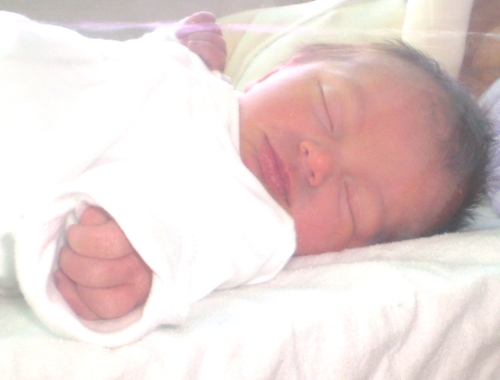
 It happens every day, and each time it is the greatest and most wonderful gift: the miracle of the birth of a baby. Nothing compares with the arrival of a new child, every one of them the most beautiful and precious blessing it’s possible to receive.
Here is the loveliness which the parents of this tiny, serene new miniature person will now awake to every morning.
The Reality Of Creating Low Carbon Communities – An HCA Academy Online Debate
 What’s the reality of low carbon communities? You can have your say about the future of zero carbon development for two weeks from today. The Homes and Communities Agency Academy is hosting an open, on-line debate about creating low carbon communities, addressing issues like the carbon implications of the credit crunch and lessons from the international experience. Contributors include podcasts from high profile speakers such as David Lock and Paul King So now have your say….
Sustainability As If People Mattered
The Homes and Communities Agency (HCA) Academy, for which I am a tutor, has existed only since 1 December 2008, when it arose from the previous Academy for Sustainable Communities; but already it is reaching out to engage people in debate about critically important issues.
The first of these open-access debates begins today, Friday 23 January 2009 (until 6 February), on the new HCAA Debate Place portal.
The question under discussion is how we can rise to the low carbon challenge?
The weblink to this national debate can be found here.
Creating low carbon communities
The HCA Academy will be asking:
What is the reality of creating low carbon communities and what can we learn from International experience?
The debate will be facilitated and you can post comments, ask questions and watch video clips on climate, connectivity and community issues.
The on-line discussion will probe issues such as:
– Will the Code for Sustainable Homes be affected by the credit crunch?
and
– How do we reduce the carbon footprint of new homes in the UK?
Low carbon case studies
The debate will be supported by a series of on-line films from high-profile speakers, including David Lock from David Lock Associates and Paul King, CEO of UK Green Building Council.
Research published by the HCA Academy which examines lessons learned from international case studies will provide further insight into the latest issues and skills implications of low carbon developments.
Continuing the debate
Following the debate, a short summary report will be published on-line.
‘Debate Place’ will also host links to resources such as the website Demystifying Climate Change, a resource designed to help practitioners navigate the low carbon debate and work out relevance for their own work.
We hope you can contribute to this high profile and important debate, and that you will encourage others to do the same. To join the debate please click here.
Read more about Sustainability As If People Mattered and about Carbon Neutral Villages.
Can Liverpool’s Arts And Culture Businesses Thrive Post-2008?
 The Liverpool Chamber of Commerce and Industry (LCCI) represents all sectors of business in the city – including those who work in arts and culture. A current Chamber concern is therefore to maintain and promote the gains made in 2008 by Liverpool’s creative, arts and culture sectors. The recent momentum remains fragile, and for continued success it is essential that arts and ‘non-arts’ businesses across the city develop the synergies to be gained by working together in 2009 and beyond.
Enterprising Liverpool and The Future Of Liverpool
The Liverpool Chamber of Commerce and Industry has a Members’ Council which has an Arts and Culture Committee, of which I am chair*. This Committee seeks to help maintain the profile and business health of Liverpool’s creative sector; hence the following article, a version of which has just been published in the “Liverpool Chamber” magazine:
We sometimes forget that arts and culture, as much as any other formal activity, is Business. Artistic enterprise brightens our lives and captures our imaginations, and it’s done by people, often highly trained, who earn their living in that way.
It’s therefore important that Liverpool’s Capital of Culture Year 2008 momentum is maintained into 2009. Liverpool needs the arts to flourish because they enhance both our communities and our economy.
Momentum unsecure?
Some of Liverpool’s arts practitioners fear however that the momentum of 2008 is not yet secured. The Liverpool Culture Company expects the ’09 funding round to be ‘highly competitive’; and everyone anticipates that sponsorship will be difficult to come by in the current financial situation.
So it’s unsurprising that Liverpool’s arts practitioners are currently nervous, some of them already publicly predicting ’09 will be a tough call.
New but vulnerable synergies
Of course this scenario applies to other businesses as well; but the arts have developed new synergies and added value during 2008 which, once lost, it would be extraordinarily difficult to reinvent. The ‘08 cultural gains remain vulnerable, and need more time to embed if they are to bring maximum benefit.
This isn’t simply an academic concern. Liverpool’s established businesses are beginning to wake up to how they can work to mutual advantage with arts providers.
Live music brings in more customers; visual arts encourage customers to linger; drama can be an excellent training tool…. and it also all helps the economy to tick over because practitioners are earning and spending money locally.
A role for all Liverpool businesses
The LCCI Arts and Culture Committee is seeking to encourage this beneficial synergy, but there’s a role here too for companies across the city. We all need to say how important the ’08 cultural legacy is; and we need to think how to conduct real business with arts enterprises.
Hilary Burrage
Chair [* retired June 2008], LCCI Arts and Culture Committee
A version of this article was first published in the January / February 2009 edition (Issue 19) of “Liverpool Chamber”, the magazine of the Liverpool Chamber of Commerce and Industry.
Read more articles about Enterprising Liverpool and The Future Of Liverpool, and see more of Hilary’s Publications, Lectures And Talks.
Liverpool European Capital Of Culture Comes To An End
 So it’s all over, for now. Liverpool has handed on the European Capital of Culture title to Linz and Vilnius, after a rollercoaster year on Merseyside. There have been highlights and muddle, fun, exasperation and exhaustion. The debates and analysis will start soon enough – and we need them, to learn what worked and what didn’t – but tonight the thing everyone, people in their thousands and from many communities, came into town for, was a party….


Read more about Liverpool, European Capital of Culture and see more photographs of Liverpool & Merseyside.
Was Liverpool A Truly Inclusive Capital Of Culture In 2008?
 Liverpool has made much of its community engagement programme during the city’s European Capital of Culture year, in 2008. But when does engagement become genuine social inclusion? And does inclusion require empowerment as well as contact? Or is the underlying emphasis on increasing tourism to bolster the local economy enough? This is where opinion in the city divides.
Liverpool, European Capital Of Culture 2008 and The Future Of Liverpool
Great claims have been made for community inclusion during Liverpool’s European Capital of Culture year; indeed, it’s sometimes been hard to identify the ‘European’ element at all, in all the local leadership talk of community embedding and power to the people.
Not all of this is bluff. The Liverpool Culture Company has fielded a team of arts educators and animateurs who have worked hard to produce some imaginative and significant projects, and for that we must congratulate them. Likewise, another team has taken forward work on arts and health, for which substantial success is claimed.
Engagement, inclusion or empowerment?
But when does a degree of engagement become genuine social inclusion? Does inclusion require social empowerment as well as contact? This is where opinion diverges.
For our city leaders, the brightly coloured photographs of smiling children and milling crowds are enough. How much more evidence of ‘inclusion’ do you want?
Bottom up, or top down?
But for some of us, the evidence that real inclusion has been achieved remains patchy. No-one wants to decry some good work which Culture Company teams have delivered; but why wait for 2008 to develop a meaningful culture and health programme, in a city right at the bottom of the well-being league? And is ‘top down’ delivery, determined at high command, as inclusive as the more difficult ‘bottom up’ sort?
It is not Liverpool’s own community arts which received the biggest budgets in 2008. Vast ephemeral ‘events’ have scooped up massive sums, whilst many indigenous local artists outside the Culture Company have had to scramble between themselves, often to ridiculous and shifting deadlines, for a few thousand or even less here and there.
Tourism as the main rationale
Of course the Culture Company have their problems; but arts practitioners who were there before and must carry on afterwards arguably face greater challenges. Their work to be inclusive is geared to much more than large public ‘events’ which have – let us be honest – an increase in tourism as their main rationale.
It’s this which worries me. I’d like the city to treat me as a grown up. If they want to pursue hotel bed counts all out, could they please say so? Could they perhaps say, we know the public events we’re offering are not truly inclusive – you can come and have a bit of fun if you want, and that’s about it – but we need to do it this way, to improve Liverpool’s economic base for everyone’s future wellbeing….?
A focus on the bottom line
Spelling things out like this would emphasise how hard we must all work, to improve the local economy – more skills, no poor service, no attitude.
It would help community arts practitioners understand why their locally focused efforts currently feel less valued than the big event spectaculars.
Treating citizens as grown-ups
And it would say to local citizens, thanks for turning up, we hope you’ve enjoyed the big splashes, and, when all the tourist destination marketing has worked, we will indeed be able to support more genuinely embedded opportunities on your own terms for exciting, local, bottom-up creative and cultural activity.
Now, those messages really would demonstrate that the relationship between Liverpool’s decision-makers and its citizens has become adult and consciously inclusive.
A version of this article first appeared in New Start magazine, January 2009.
Read more articles about Liverpool, European Capital Of Culture 2008 and The Future Of Liverpool, and see more of Hilary’s Publications, Lectures And Talks.
The Future Of Liverpool: One E-Network, Many Prospects?
 There can be few issues, at the local level, more pressing than what’s to happen to one’s city. As Liverpool’s European Capital of Culture Year ends, perhaps the new LinkedIn Group on ‘The Future of Liverpool’ will help to sharpen our ideas.
The Future Of Liverpool
For Liverpool, 2008 has been a year of enormous change, as buildings have come down and gone up, roads have disappeared and re-emerged, and of course the European Capital of Culture has taken, massively, the centre stage.
But now the emphasis must move from these transitions to our longer-term future; new critiques and ideas will emerge and point us in as yet unrevealed directions. And everyone who can will need to be involved; not just those who sit in committee rooms.
To help the debate along a new LinkedIn Group open to all has been formed. To join, simply go to LinkedIn and then search Groups for ‘The Future of Liverpool’. Your contributions will be very welcome.
Read more articles about The Future Of Liverpool and see photographs of Liverpool & Merseyside.
Shining Lights On The Shortest Day
 We’re at the longest night and the shortest day – the Winter solstice. But that doesn’t stop the goodwill shining through, as citizens of Liverpool get together to raise money for worthy causes. Every year at this time the Santa Claus wagon trundles past, tannoy blaring out the carols and youngsters running from house to house as they collect for charity. And private festive collaborations are evident too, with neighbours sharing brilliant illuminated phantasies to cheer us all up.


 Dreaming Realist